
The Formula to Creating a Ranch Living Room That Feels Like Home on the Range
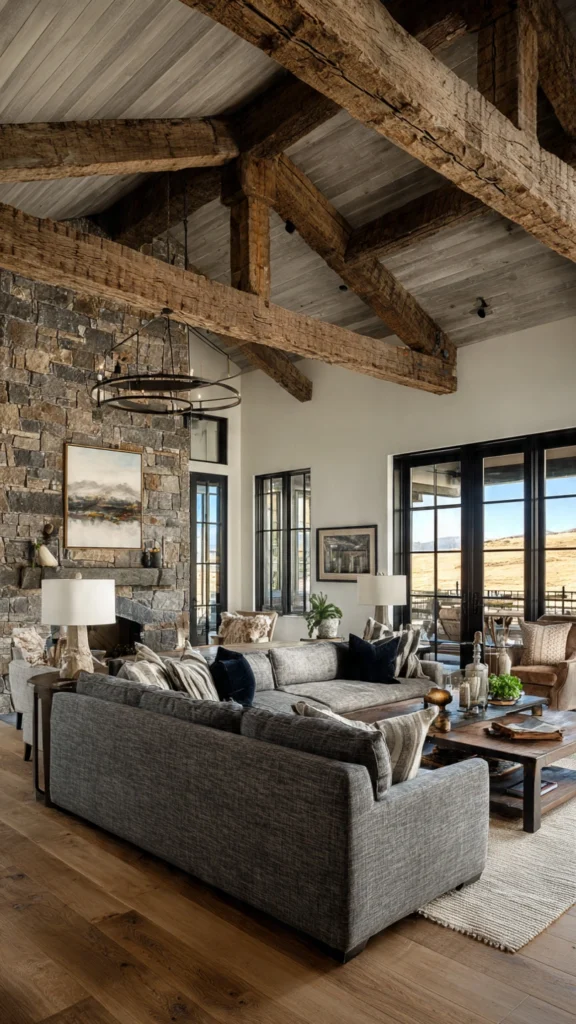
A ranch living room is more than a decorating style; it’s a feeling. It’s the sense of stepping into a space that’s grounded, welcoming, and quietly rugged, like a sunset over open pasture. On Pinterest, the best ranch-inspired spaces balance rustic elements with modern comfort, so they feel intentional rather than theme-y. Think natural textures, hardy materials, generous seating, and layered details that look collected over time, not bought in one trip.
Idea 1: Start with a Ranch-Worthy Color Palette
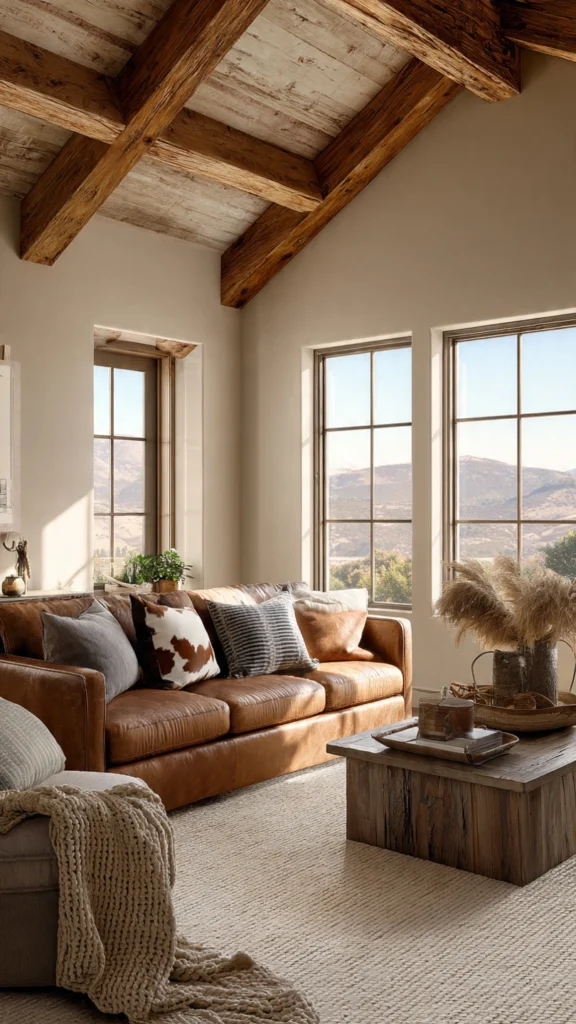
A ranch-inspired living room begins with a grounded color palette that echoes the landscape. Look to the colors you’d see on a long drive through open country: wheat, sand, clay, stone, weathered wood, and faded sky. Base your walls, biggest furniture pieces, and large rugs in warm neutrals like ivory, greige, tan, and soft taupe. These shades create a calm, cohesive backdrop that lets texture and materials take the lead, rather than loud color.
Once you’ve established the neutral foundation, layer in earthy accent tones that feel sun-faded rather than loud. Think dusty sage, rust, terracotta, denim blue, and deep charcoal. Use these for pillows, throws, smaller chairs, and art, so you can swap them out seasonally. This approach mimics how a real working ranch evolves over time: sturdy basics stay, while textiles and details change. The result is a room that always feels warm and inviting, never flat or boring.
When choosing paint, avoid colors that read overly cool or sterile. Blue-grays and icy whites can fight against the warmth you’re trying to build. Instead, lean into creams with a hint of yellow or beige, and greiges that have a subtle brown undertone. If you’re tempted by a bolder wall, try a deep, clay-inspired accent behind shelves or a fireplace. Keep everything else soft and simple, so the room feels cohesive and comfortably worn in.
Idea 2: Layer Natural Materials and Textures
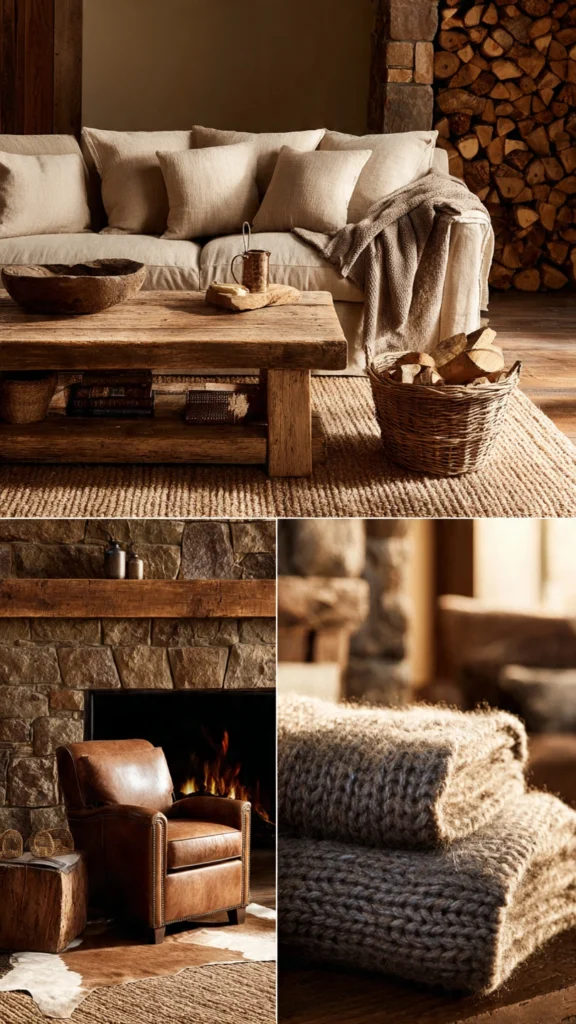
Texture is the secret ingredient that makes a ranch living room feel authentic instead of staged. Ranch life is rooted in nature and work, so your materials should reflect that honesty. Combine wood, leather, wool, stone, and metal in a way that looks casual and practical. Aim for finishes that feel tactile and slightly imperfect: knotty wood grain, worn leather, nubby linen, and chunky woven textiles. These surfaces invite touch and soften even the most straightforward furniture.
Instead of one large, flat rug, consider layering textures underfoot. Start with a generous jute or sisal rug to ground the room, then add a cowhide or smaller wool rug on top to break up the floor visually. This adds depth and movement, especially in open-concept spaces. On sofas and chairs, swap out shiny synthetic throws for cotton, linen, and wool. The goal is a mix of smooth, rough, soft, and rugged that feels collected and lived-in.
Don’t forget vertical surfaces when thinking about texture. A stone or brick fireplace surround is classic, but you can also add wood planking, beadboard, or limewashed walls to introduce subtle dimension. Even if your home is newer, choosing a slightly distressed finish for furniture or exposed wood beams across the ceiling can hint at history. Just keep a balance: pair rougher pieces with smoother ones, so the room feels cozy and composed, not cluttered or overwhelming.
Idea 3: Choose Furniture That Feels Substantial but Inviting
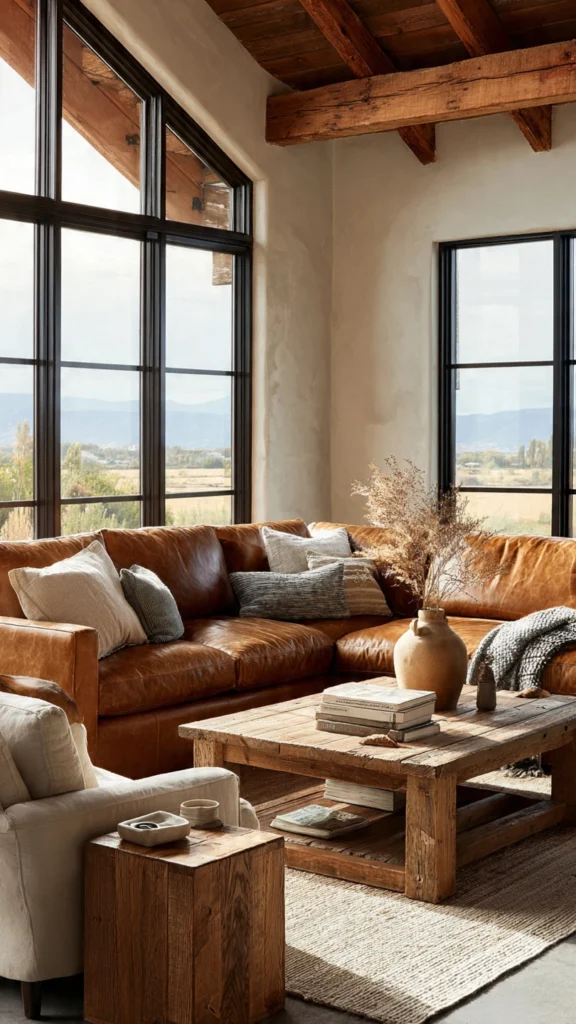
Ranch-inspired furniture should feel like it could actually handle daily life: boots on the floor, dogs on the sofa, and friends dropping by. Instead of delicate pieces, look for substantial silhouettes with sturdy frames. Think deep sofas you can curl up on, wide armchairs, and generous coffee tables. Leather is a natural fit here, especially in medium to dark browns that only look better with age. Don’t worry about minor scuffs; they contribute to the story and charm.
Balance the weight of leather with softer, lighter elements so the room doesn’t feel heavy. Pair a leather sofa with linen or cotton-upholstered chairs in cream or soft gray. If you already have a modern sofa, you can still capture the ranch mood by adding leather accent chairs or an ottoman. Avoid overly sleek, shiny finishes. Instead, choose wood with visible grain, simple lines, and a slightly rustic or handmade feel to keep the room grounded and approachable.
Function matters as much as aesthetics. Ranch living is about practicality, so make sure your furniture layout supports conversation, relaxation, and real life. Arrange seating to face each other, not just the television, with a table within reach of every seat. Opt for a big coffee table that can host board games, snacks, and boots-up lounging. If you’re short on space, nesting tables or a sturdy storage bench can add surface area without crowding the room.
Idea 4: Create a Focal Point with a Ranch Fireplace or Feature Wall
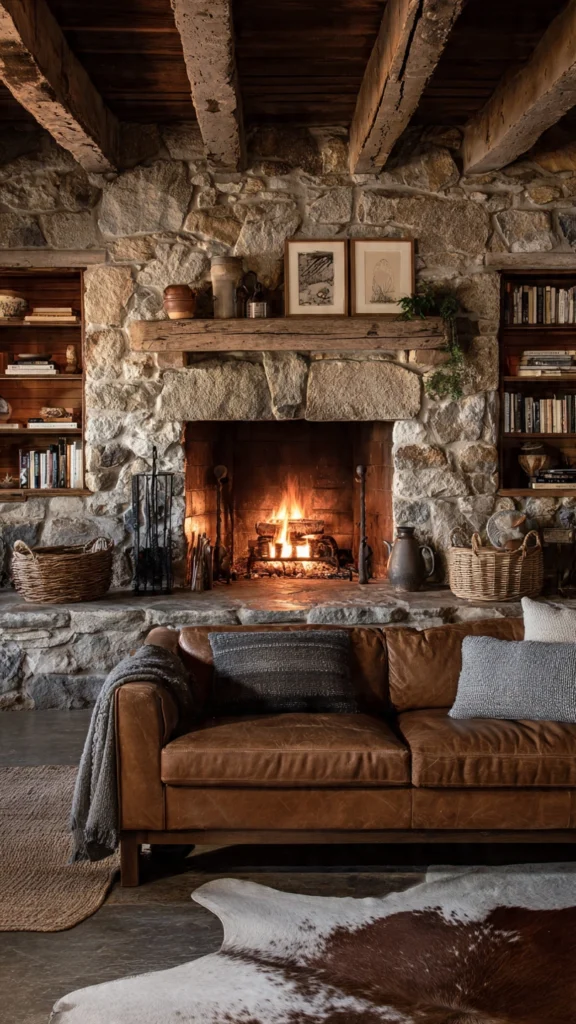
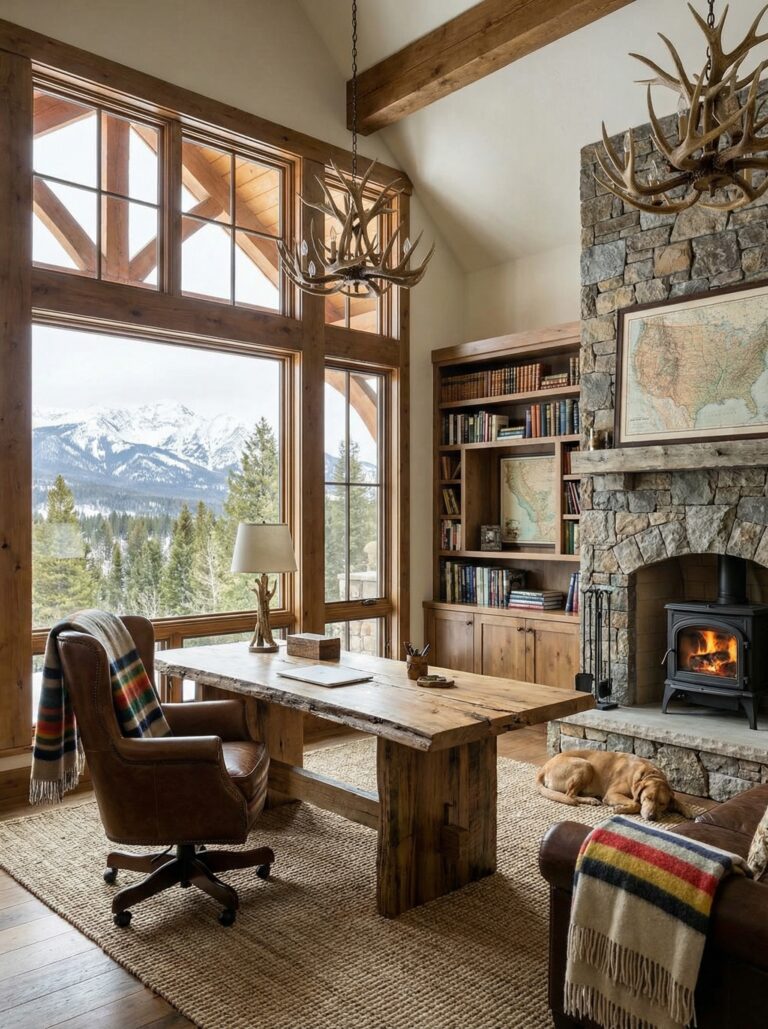
Every ranch living room deserves a strong focal point, something that naturally draws people together and anchors the space. Traditionally, that’s a fireplace: stone, brick, or plaster with a solid wood mantel that feels like it belongs in a farmhouse or lodge. Even if you don’t have a working fireplace, you can create a similar effect with an electric insert, a wood stove, or a faux fireplace surround styled thoughtfully. The key is presence and purpose.
If a fireplace isn’t an option, build a feature wall that captures the same cozy gravity. You might install vertical shiplap, rustic wood paneling, or textured plaster behind your main seating. Mount a simple wood mantel shelf or ledge to display art, pottery, and a few meaningful objects. Avoid overloading this area; ranch style leans more toward edited, storied pieces than clutter. The wall should feel like a natural gathering point, not a busy gallery.
Once you have your focal element, arrange furniture to honor it. Position the largest seating piece facing the fireplace or feature wall, then angle chairs or a bench to create a U-shape or L-shape around it. Use a rug to visually tie all the pieces together. This layout encourages conversation and makes the room feel centered and intentional. Add subtle lighting—like sconces or a floor lamp—near the focal point to emphasize warmth and depth.
Idea 5: Bring in Western-Inspired Textiles and Patterns
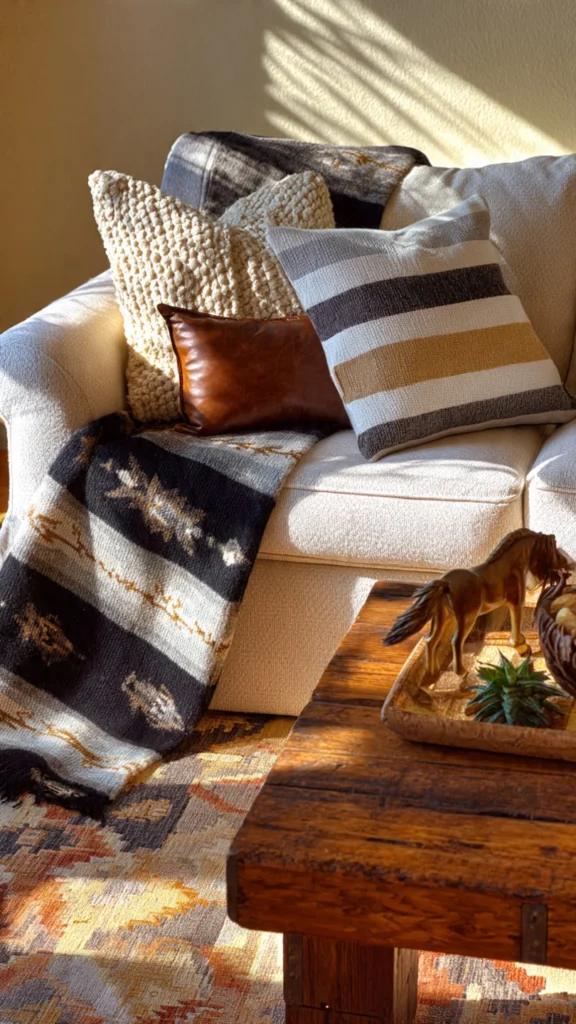
Textiles are where you can lean into Western influence without overwhelming the room. Start by grounding the floor with a substantial rug that nods to Navajo, Kilim, or geometric Western patterns. Choose colors that complement your existing palette: rust, indigo, cream, and charcoal are classic. If a bold rug feels too strong, try a more muted pattern and let blankets and pillows carry the bolder motifs. The goal is subtle storytelling, not a costume-like theme.
Layer throws and pillows in a mix of solids, stripes, and small-scale patterns. A single statement textile—like a handwoven blanket or Pendleton-style throw—can instantly shift a basic sofa into ranch territory. Mix in leather or faux leather pillows, wool cushions, and maybe one or two with discreet Western symbols, like simple arrows or diamonds. Avoid over-using overt cowboy imagery; a few thoughtful references go much further than a room full of themed decor.
Pay attention to how you style these textiles. A perfectly folded blanket can look stiff, while a slightly rumpled throw draped over the arm of a chair feels lived-in. Stack larger pillows at the back of the sofa and layer smaller ones in front, varying texture and pattern size. For visual calm, keep to a limited color story and repeat it around the room: a rust pillow here, a rust stripe in the rug, a rust detail in a piece of art.
Idea 6: Style Coffee and Side Tables with Collected Details
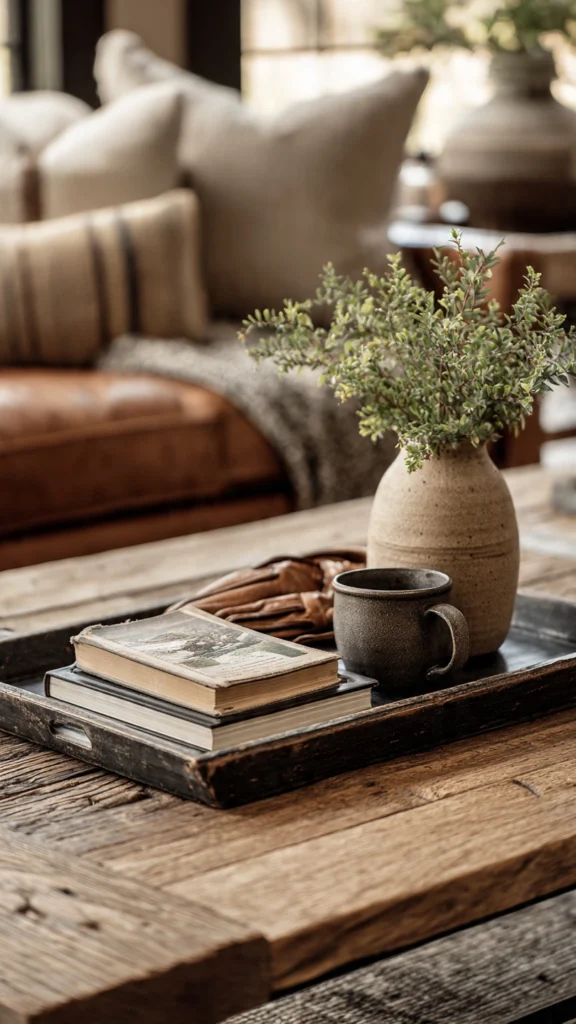
The way you style your coffee and side tables tells the story of who lives in your ranch-inspired room. Instead of generic decor, use pieces that feel functional, personal, or tied to the land. Start with a tray to corral items and create structure. On top, layer a few coffee table books—maybe Western landscapes, ranch architecture, or horse photography—alongside a small bowl, candle, or ceramic object that feels handmade and earthy.
Mix in subtle nods to ranch life: a coiled lasso, a small horseshoe, an antique pocketknife, or a pair of well-worn gloves can all work if styled with restraint. The key is authenticity; one meaningful object carries more weight than a dozen store-bought replicas. Add something living or natural, like a branch of greenery, wildflowers in a jar, or a simple cactus. These touches soften the harder materials and tie your interior back to the outdoors.
Keep negative space in mind as you arrange. Resist the urge to cover every inch of surface; open areas let each item breathe and feel intentional. Vary height and texture: stack books for elevation, place a low bowl beside a taller vase, and include something smooth, something rough, and something soft. Step back occasionally and check the overall balance from different angles. The table should look casually styled, as if it evolved naturally over time.
Idea 7: Add Art, Vintage Finds, and Western Motifs
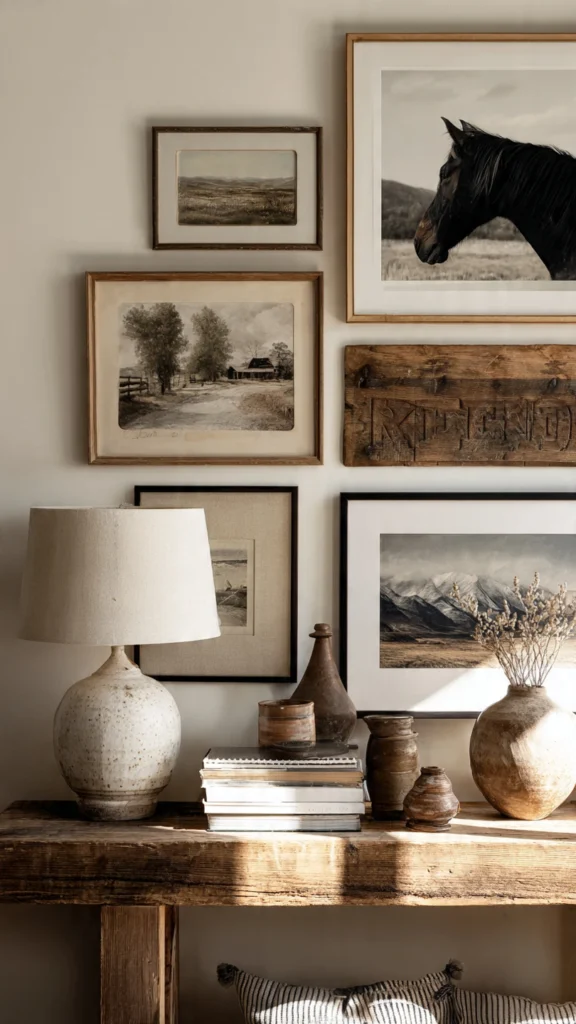
Art and vintage pieces are where your ranch living room gains personality and depth. Start by choosing a few key artworks that echo Western themes without feeling like souvenir-shop decor. Landscape paintings of open plains, mountains, or deserts, black-and-white horse portraits, or abstract art in earthy tones all work beautifully. Mix media—photographs, paintings, prints—to keep the wall interesting and avoid a matchy-matchy look that feels flat or staged.
Vintage finds add soul and a sense of history. Hunt for old signs, framed maps, worn leather saddlebags, or weathered tools at flea markets and antique shops. Rather than covering every wall, pick one or two areas to highlight these treasures thoughtfully. A single, large-scale vintage piece can have more impact than many small ones. Place it over a console, mantel, or bench where it can be appreciated up close and styled with complementary objects.
When incorporating Western motifs, practice editing. A few bandanas framed as art, a vintage belt buckle displayed on a stack of books, or a pair of spurs tucked onto a shelf can suggest ranch life without shouting it. Keep frames simple—wood, black metal, or distressed finishes—and let the art be the focus. Arrange pieces at eye level and keep enough space between them so each can breathe. The overall effect should feel curated, warm, and genuinely personal.
Idea 8: Soften with Greenery, Lighting, and Finishing Touches
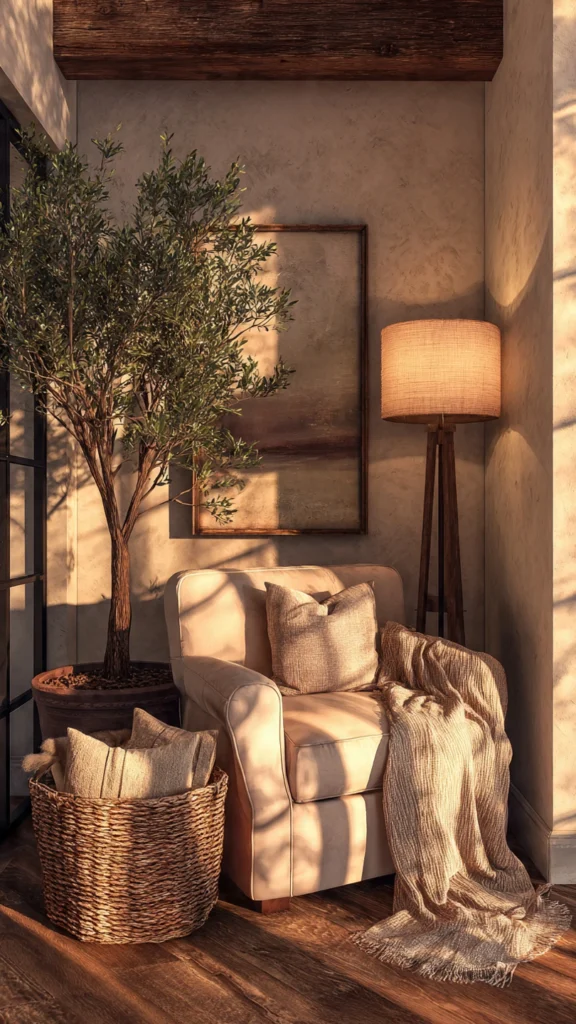
Even the most rugged ranch room needs softness and life to feel truly welcoming. Greenery is an easy way to bring the outdoors in and break up all the browns and neutrals. Large potted plants, like olive trees, ficus, or even tall cacti, add sculptural height. Smaller plants or wildflower-style arrangements on side tables and mantels lend color and movement. Choose simple, earthy pots—terracotta, stoneware, or basket planters—to keep the look grounded.
Lighting is another powerful tool for creating that home-on-the-range warmth. Instead of relying solely on overhead fixtures, layer multiple light sources at different heights. Floor lamps beside chairs, table lamps on consoles, and wall sconces near your focal point all contribute to a cozy glow. Look for shades in linen or burlap, and fixtures in black metal, aged brass, or rustic wood. Aim for warm bulbs, not harsh blue-white, to mimic sunset and firelight.
Finally, pay attention to the little things that make a room feel truly lived in. A woven basket with extra blankets, a stack of well-loved books, a hat hanging casually on a hook, or a pair of boots by the door all tell quiet stories. Edit regularly so the room doesn’t become cluttered; remove what feels random and keep what feels like part of the ranch narrative. Over time, these finishing touches will make the room feel undeniably yours.
For visual inspiration, explore ranch fireplace ideas on Pinterest and save the looks that feel most like home.