Japandi Guest Room Ideas: Minimalist Designs for a Calm Stay
Creating a guest room that balances Japanese minimalism with Scandinavian warmth yields a serene sanctuary that your visitors will never want to leave. Japandi design philosophy celebrates simplicity, functionality, and natural beauty, making it the perfect approach for a welcoming guest space. This harmonious blend creates rooms that feel both uncluttered and inviting, offering travelers a peaceful retreat from their busy lives. Whether you’re redesigning a spare bedroom or crafting a dedicated guest suite, these carefully curated Japandi ideas will help you achieve that coveted balance of form and function while ensuring your guests feel pampered and restored.
1. Natural Wood Platform Bed with Linen Bedding
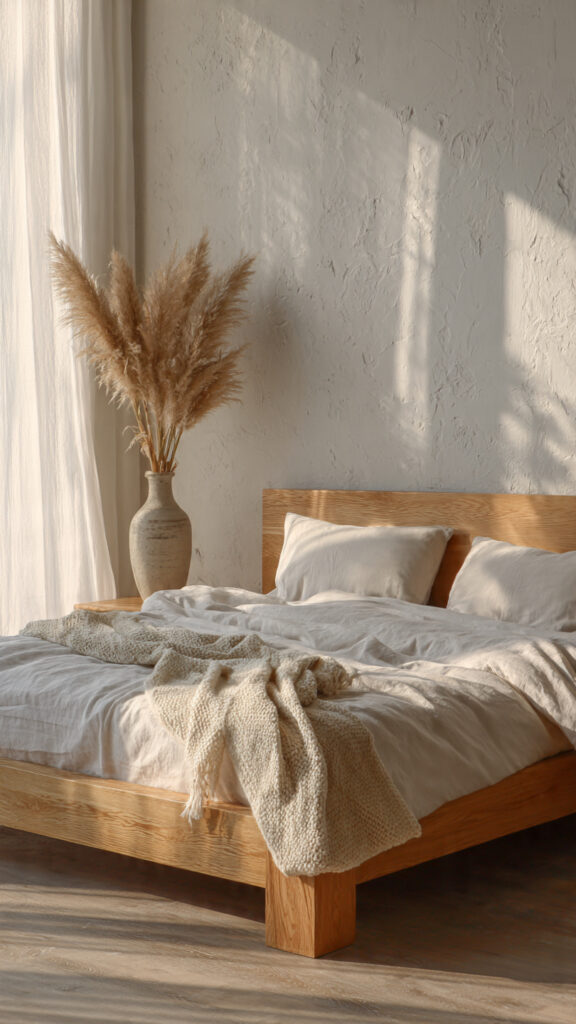
The foundation of any Japandi guest room begins with the bed itself. A low-profile platform bed crafted from light-toned wood such as oak, ash, or birch embodies the minimalist aesthetic while providing exceptional comfort. The clean horizontal lines create visual calm and make the room feel more spacious. Natural wood grain patterns add organic warmth without overwhelming the senses, serving as a beautiful focal point that grounds the entire space.
Choose a platform bed without ornate headboards or excessive detailing. The beauty lies in the simplicity of the wood’s natural characteristics and the craftsmanship of joinery. Japanese design principles favor furniture that sits closer to the ground, promoting a sense of stability and connection to the earth. This lower sight line also makes ceilings appear higher, enhancing the feeling of openness that’s essential in Japandi interiors.
Dress the bed with high-quality linen bedding in neutral tones like warm white, sand, or soft gray. Linen’s natural texture and breathability align perfectly with both Japanese and Scandinavian sensibilities. The fabric’s slightly rumpled appearance adds lived-in comfort while maintaining elegance. Layer with a chunky knit throw or lightweight wool blanket in complementary earth tones to provide visual interest and practical warmth for guests during cooler evenings.
2. Sliding Shoji Screen Room Divider
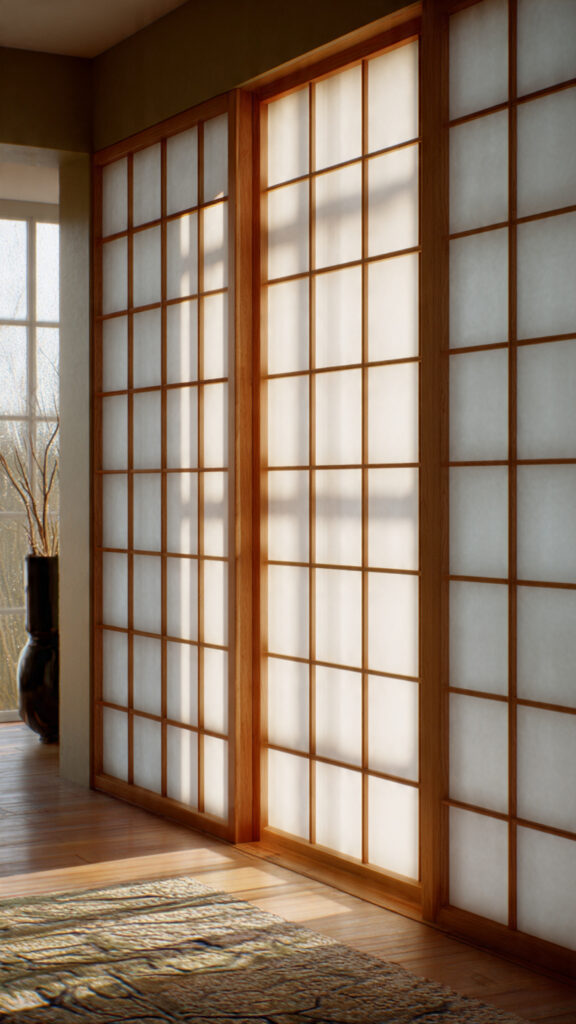
Incorporating a sliding shoji screen adds authentic Japanese character while serving practical purposes in your guest room. These traditional translucent panels diffuse natural light beautifully, creating a soft, ambient glow that changes throughout the day. Unlike solid walls or heavy curtains, shoji screens maintain visual connection between spaces while providing privacy. They’re particularly useful for dividing sleeping areas from sitting nooks or concealing storage spaces with elegant simplicity.
The delicate wooden lattice framework paired with translucent washi paper exemplifies Japanese craftsmanship at its finest. These screens introduce geometric patterns that add visual interest without competing with other design elements. The grid structure creates rhythm and order, fundamental principles in both Japanese and Scandinavian design. When backlit, shoji screens become luminous artworks, transforming ordinary sunlight into something meditative and contemplative for your guests to enjoy.
Modern interpretations allow for customization while honoring traditional construction methods. Consider screens with adjustable panels that slide smoothly along tracks, offering flexibility for guests to control their environment. Some versions incorporate frosted glass or fabric alternatives to rice paper for easier maintenance. Whether you install them as closet doors, room dividers, or window treatments, shoji screens instantly elevate the Japandi aesthetic while demonstrating thoughtful attention to both beauty and functionality.
3. Minimalist Floating Nightstands
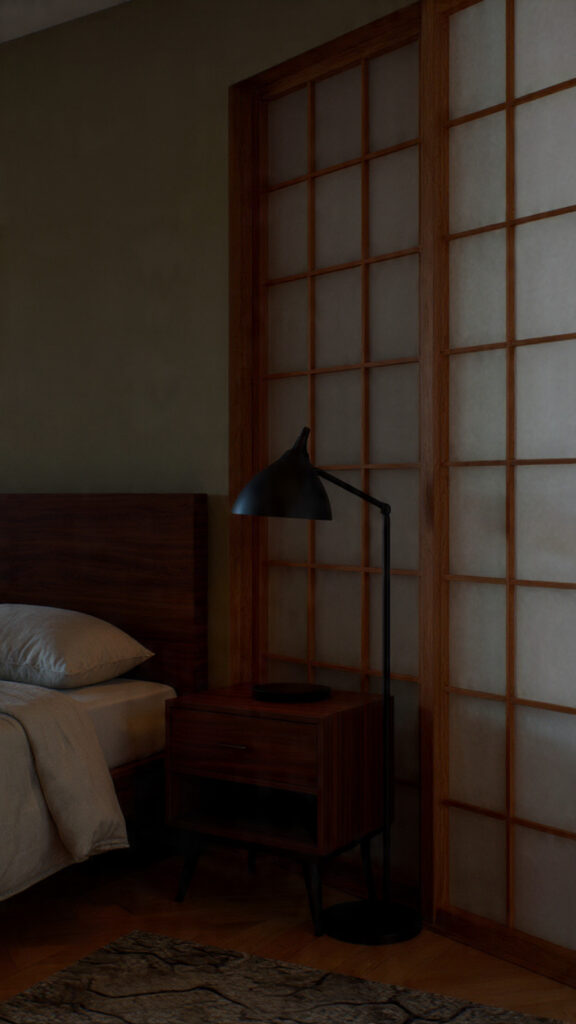
Floating nightstands epitomize the Japandi principle of creating visual lightness while maintaining functionality. These wall-mounted pieces eliminate bulky furniture legs, allowing floor space to flow uninterrupted beneath them. This clever design choice makes the room feel larger and easier to clean, while the suspended appearance creates an almost weightless quality that enhances the minimalist atmosphere. Your guests will appreciate having convenient bedside storage without the visual clutter of traditional nightstands.
Select floating nightstands with clean geometric forms and minimal hardware. A simple rectangular design in light wood with perhaps one drawer and one open shelf provides adequate storage for guests’ essentials like books, phones, or reading glasses. The wood grain should remain prominent, celebrating natural materials central to Japandi philosophy. Rounded corners soften the overall look while maintaining the sleek contemporary feel that bridges Japanese and Scandinavian sensibilities perfectly.
Install these nightstands at a height that feels comfortable when reaching from the bed, typically around twenty-three to twenty-seven inches from the floor. Consider adding subtle LED strip lighting underneath to create a soft ambient glow for nighttime navigation. This thoughtful detail provides guests with gentle illumination without harsh overhead lights, contributing to the serene atmosphere. The floating design also offers creative styling opportunities, allowing you to display small decorative objects that enhance the room’s peaceful character.
4. Neutral Color Palette with Warm Undertones
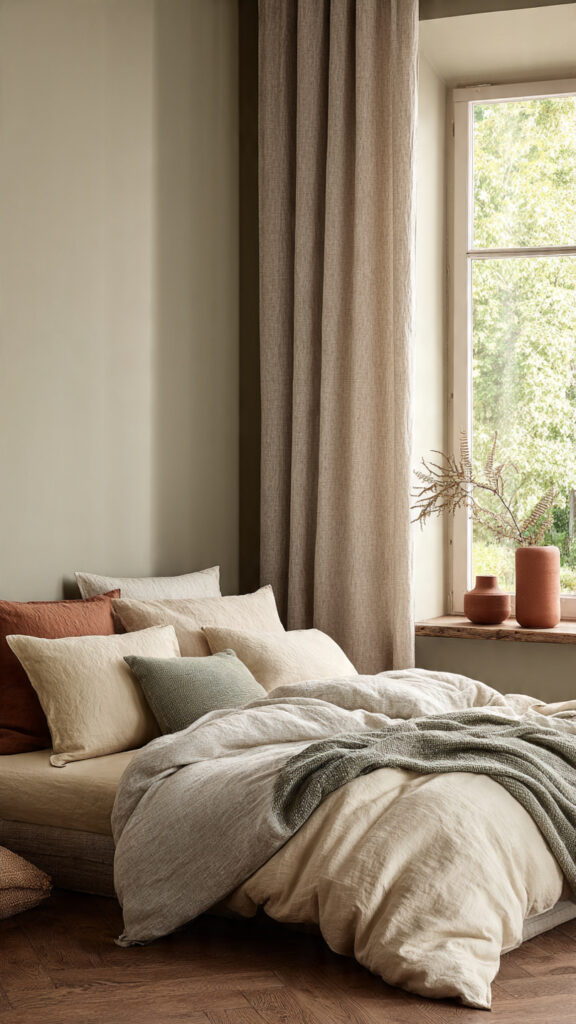
The Japandi color palette draws inspiration from nature’s most soothing hues. Begin with a foundation of warm whites, soft grays, and beiges that create a tranquil backdrop for your guest room. These neutral tones promote relaxation and make the space feel larger and airier. Unlike stark white minimalism, Japandi embraces warmth, so choose paint colors with subtle undertones of taupe, mushroom, or greige that add depth and coziness without overwhelming the senses.
Natural materials contribute their own colors to the palette. Warm wood tones, linen’s creamy beige, ceramic’s soft clay hues, and stone’s gentle grays all work together to create a cohesive environment. This approach ensures that even with minimal decoration, the room feels complete and thoughtfully designed. You can learn more about the balance between Scandinavian functionality and Japanese rustic minimalism to better understand how these textures interact. The layering of similar neutral tones creates sophisticated depth that appears effortless, making guests feel immediately welcomed into a space designed specifically for their comfort and restoration.
Natural materials contribute their own colors to the palette. Warm wood tones, linen’s creamy beige, ceramic’s soft clay hues, and stone’s gentle grays all work together to create a cohesive environment. This approach ensures that even with minimal decoration, the room feels complete and thoughtfully designed. The layering of similar neutral tones creates sophisticated depth that appears effortless, making guests feel immediately welcomed into a space designed specifically for their comfort and restoration.
5. Paper Lantern Pendant Lighting
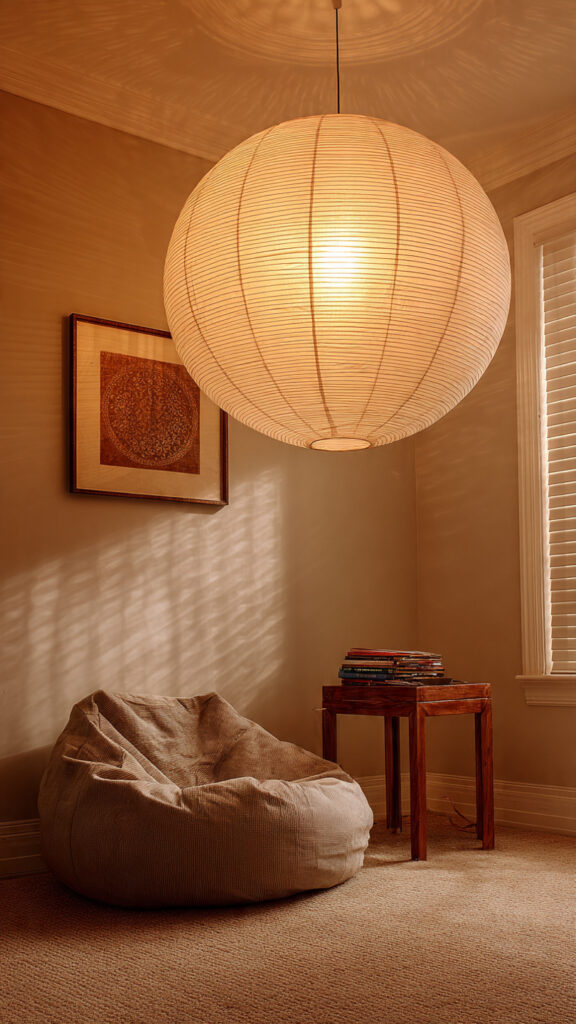
Paper lantern pendant lights perfectly embody Japandi lighting philosophy by providing soft, diffused illumination that creates atmosphere rather than harsh visibility. These sculptural pieces serve as functional art, drawing the eye upward while maintaining the minimalist aesthetic. The translucent material filters light gently, creating a warm glow that transforms the room into a sanctuary. Whether spherical, cylindrical, or geometric, paper lanterns add organic softness that balances harder architectural elements in the space.
Traditional Japanese akari lanterns designed by Isamu Noguchi represent the pinnacle of this lighting style. Their simple bamboo ribbing and handmade washi paper construction create stunning shadows and depth when illuminated. Modern interpretations offer various sizes and shapes while honoring these traditional techniques. Hanging a larger lantern as a central fixture creates a focal point, while smaller versions clustered at different heights add dynamic visual interest and layered lighting options for guests.
Consider the practical aspects of lighting in a guest room where visitors need both ambient and task lighting. Paper lanterns provide excellent overall illumination for the space while maintaining softness that promotes relaxation. Pair them with dimmer switches so guests can adjust brightness according to their needs and time of day. The warm light cast through paper creates an inviting atmosphere that feels worlds away from institutional hotel rooms, offering instead a personalized retreat that demonstrates genuine hospitality and design sophistication.
6. Low-Profile Floor Seating Area
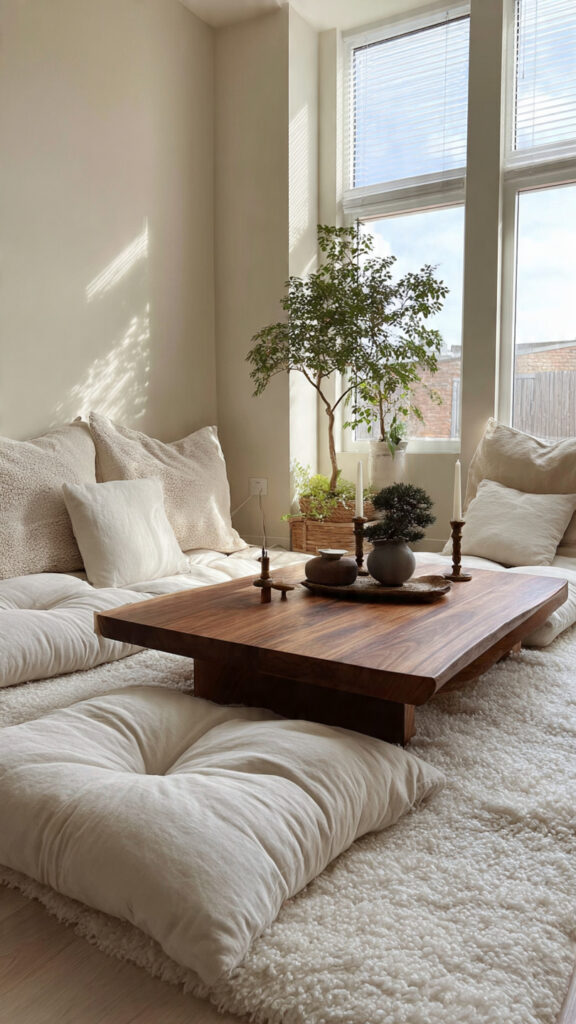
A dedicated floor seating area honors Japanese traditions while providing guests with alternative relaxation spaces beyond the bed. Low seating creates intimacy and encourages mindfulness, allowing visitors to disconnect from typical Western furniture expectations and embrace a different way of being in space. This zone becomes perfect for morning meditation, reading, journaling, or simply enjoying tea while watching the day unfold through nearby windows.
Select oversized floor cushions covered in natural fabrics like linen or organic cotton in neutral tones. These zabuton-style cushions should be thick enough for comfortable extended sitting, filled with supportive materials like buckwheat hulls or dense foam. Arrange them around a low coffee table crafted from solid wood, creating a functional gathering spot. The lower perspective changes how guests experience the room, making ceilings feel taller and creating a grounded, peaceful energy throughout the space.
Layer this seating area over a high-quality area rug that defines the zone and adds warmth underfoot. Natural fiber rugs like jute, sisal, or wool in neutral tones complement the Japandi aesthetic while providing texture and comfort. This arrangement gives guests options for how they want to use the space, acknowledging that people have different comfort preferences and ways of relaxing. The thoughtfulness of providing this alternative seating demonstrates sophisticated hospitality that goes beyond basic accommodation to genuine care for guest wellbeing.
7. Built-In Minimalist Closet with Hidden Storage
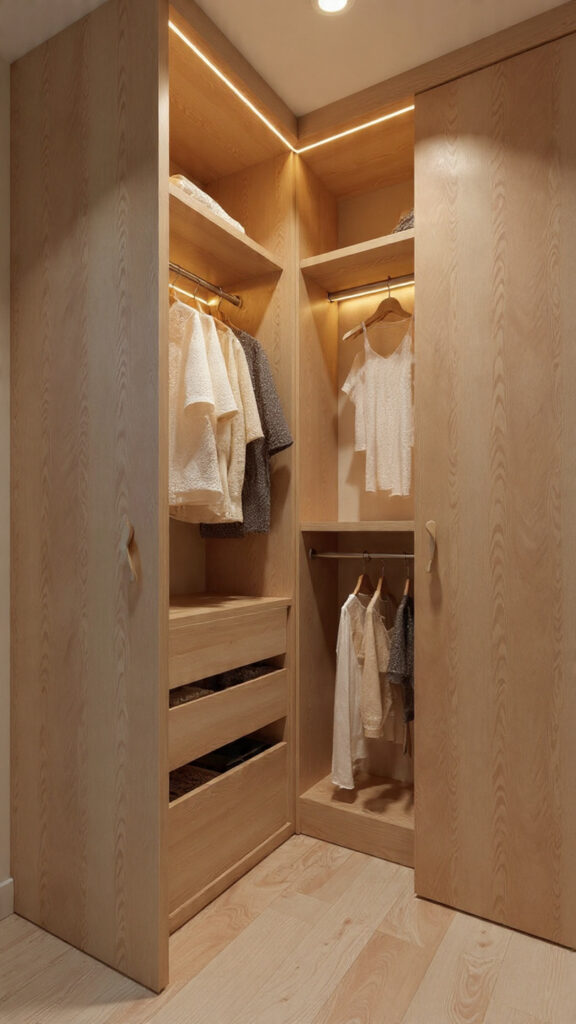
Hidden storage solutions maintain the uncluttered appearance essential to Japandi design while providing guests with ample space for belongings. A built-in closet with sliding doors eliminates the visual interruption of swinging doors and keeps the room’s lines clean and unbroken. Choose door fronts in the same light wood as other furniture pieces to create continuity, or opt for solid panels in neutral tones that blend seamlessly with walls, making the closet virtually disappear when closed.
The interior organization should be thoughtfully designed with a mix of hanging space, shelving, and drawers that accommodate different types of belongings. Install a quality hanging rod at a comfortable height with matching wooden hangers already in place, a small detail that shows exceptional care. Include several shelves for folded clothes or luggage, and consider pull-out drawers for smaller items. This variety ensures guests can unpack completely and settle in, transforming the space from temporary accommodation to a true home away from home.
Incorporate subtle interior lighting with motion sensors or touch controls that illuminate the closet’s contents when doors open. This practical feature prevents fumbling in darkness while adding a luxurious touch guests will appreciate. Finish the interior with the same quality materials as visible spaces, demonstrating that design excellence extends beyond what’s immediately seen. Thoughtful storage that remains hidden when not in use allows the room’s beautiful minimalist design to remain the focal point while ensuring functionality doesn’t suffer.
8. Bamboo or Natural Fiber Window Treatments
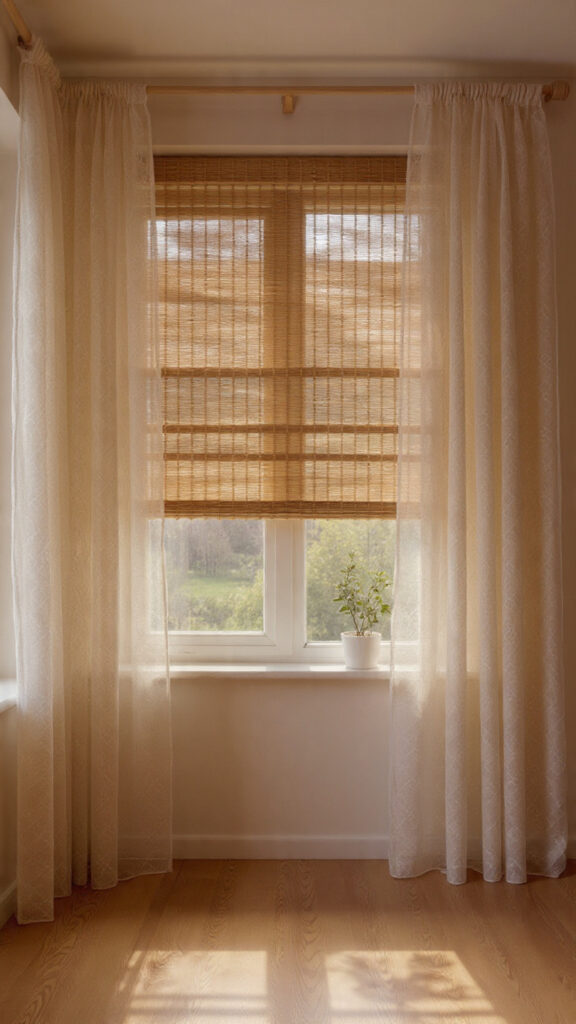
Window treatments in Japandi guest rooms should balance privacy, light control, and natural beauty. Bamboo or woven grass shades offer organic texture while filtering sunlight into beautiful dappled patterns that change throughout the day. These natural materials align perfectly with both Japanese and Scandinavian appreciation for bringing nature indoors. When lowered, they provide privacy while maintaining connection to the outdoors, and when raised, they roll up compactly to maximize window views and natural light.
Layer bamboo shades with flowing linen curtains for added softness and flexibility. Choose curtains in natural undyed linen or subtle neutral tones that complement the room’s color palette. These dual layers give guests control over their environment, adjusting coverage based on privacy needs, desired darkness for sleeping, or preferred light levels. The combination of structured bamboo and soft flowing fabric creates appealing contrast while maintaining the cohesive natural aesthetic central to Japandi design philosophy.
Install window treatments on simple wooden or matte metal rods that blend with the overall design rather than drawing attention. Hardware should be minimal and functional, avoiding ornate finials or decorative elements that conflict with the minimalist approach. Ensure all mechanisms operate smoothly and quietly, as attention to these functional details demonstrates the Japanese concept of hospitality through meticulous care. Well-designed window treatments frame views like living artwork, connecting the interior sanctuary with the natural world beyond.
9. Ceramic and Handmade Pottery Accents
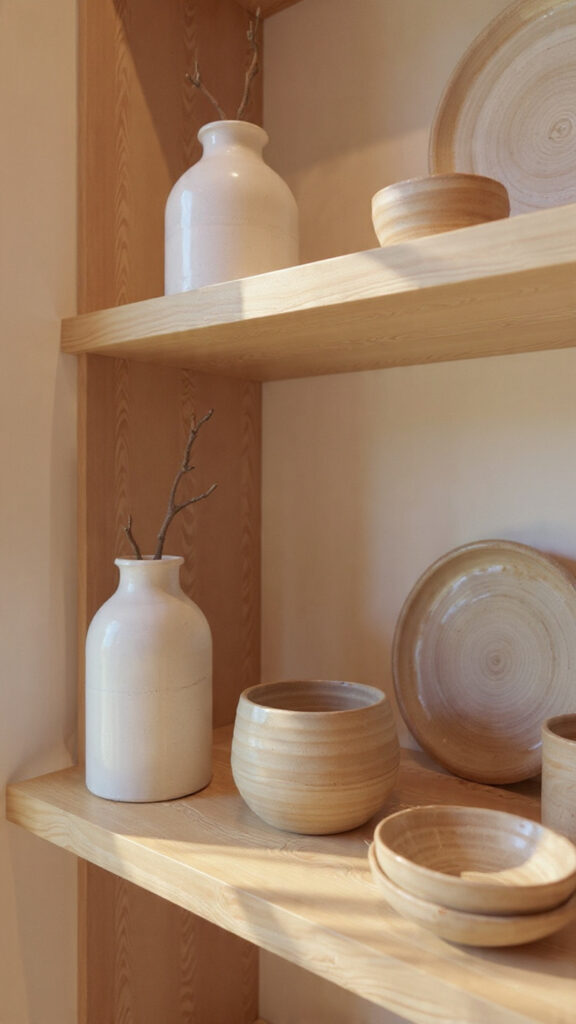
Handcrafted ceramics introduce the wabi-sabi principle of finding beauty in imperfection while adding functional artistry to your guest room. Select pieces with visible wheel marks, subtle glaze variations, and organic forms that celebrate the maker’s hand. These imperfections create character and warmth, distinguishing the space from mass-produced hotel environments. A simple ceramic vase holding a single branch or dried flower demonstrates the Japanese art of ikebana’s restraint and intentionality.
Choose pottery in natural earth tones that complement your color palette without introducing jarring contrasts. Matte finishes feel more organic and tactile than glossy glazes, inviting touch and creating subtle visual interest through texture rather than shine. Display ceramics with purpose, perhaps a small bowl for jewelry on the nightstand, a larger vessel for blanket storage, or decorative plates mounted as wall art. Each piece should serve a function or bring genuine aesthetic value, avoiding clutter that contradicts minimalist principles.
Scandinavian and Japanese ceramic traditions share appreciation for simplicity, functionality, and honest materials, making pottery the perfect bridge between these design philosophies. Seek out work from local artisans or small studios whose pieces reflect traditional techniques with contemporary sensibilities. These carefully chosen ceramics become conversation pieces that demonstrate your commitment to quality and craftsmanship, while their handmade nature adds irreplaceable warmth and humanity to the space that manufactured decor simply cannot achieve.
10. Indoor Plants and Natural Greenery
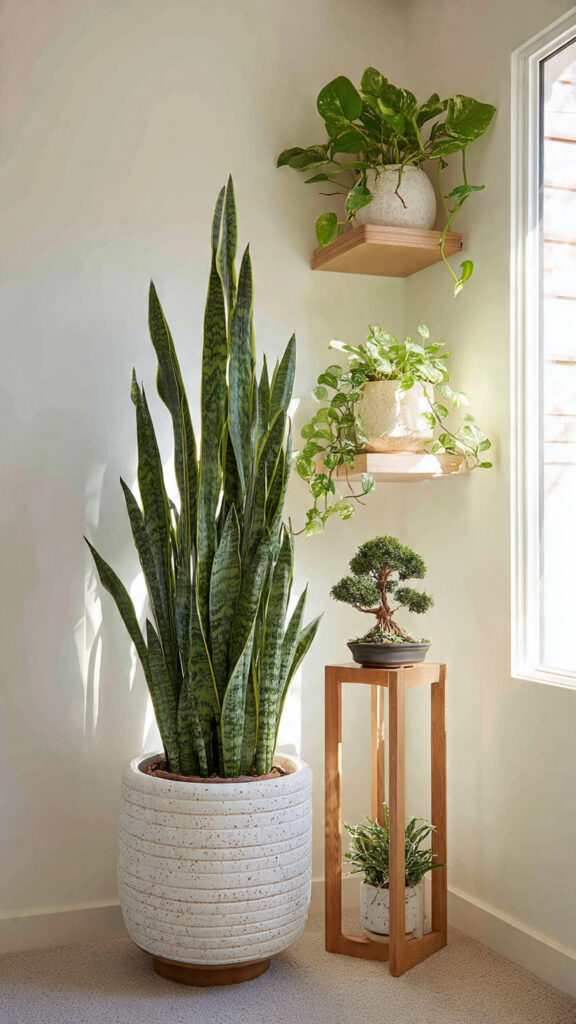
Living plants breathe life into Japandi guest rooms while purifying air and creating visual connections to nature. Select low-maintenance species that thrive indoors with minimal care, ensuring they’ll remain healthy between guest visits. Snake plants, pothos, peace lilies, and ZZ plants all tolerate varying light conditions and forgive occasional watering lapses. Their verdant presence softens hard edges and introduces organic shapes that contrast beautifully with geometric furniture and architectural elements.
Display plants in simple ceramic or terra cotta containers that align with the natural material palette. Avoid overly decorative pots that compete for attention, instead choosing vessels in neutral tones with clean lines. Vary the heights and sizes of plants to create visual interest, perhaps placing a tall floor plant in one corner, a medium specimen on a nightstand, and a small succulent on a shelf. This layered approach adds dimension while maintaining the uncluttered feel essential to the aesthetic.
Consider incorporating a small bonsai tree as a nod to Japanese horticultural artistry and patience. These miniature trees embody the principles of balance, harmony, and simplicity central to Japandi design. Display the bonsai on a dedicated wooden stand at an appropriate height where guests can appreciate its sculptural beauty. The careful cultivation required for bonsai reflects the same attention to detail and respect for natural beauty that should permeate every aspect of your guest room design and hospitality.
11. Tatami Mat or Natural Fiber Area Rug
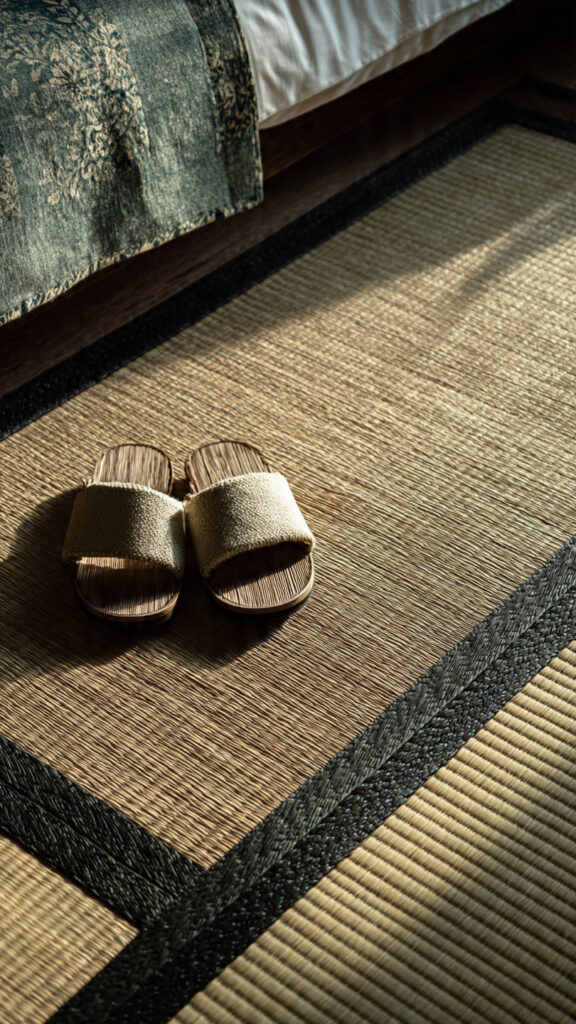
Tatami mats represent quintessential Japanese design elements that add authentic character while providing practical benefits. These woven rush grass mats offer natural cushioning underfoot, insulation properties, and a subtle fresh scent that promotes relaxation. Traditional tatami follows standardized dimensions that historically determined room sizes in Japanese architecture, typically measuring about three feet by six feet. Incorporating even one or two tatami mats creates designated zones within the guest room while introducing organic texture and natural materials.
If authentic tatami feels too specialized, natural fiber area rugs in jute, sisal, seagrass, or wool provide similar aesthetic and tactile benefits. These materials add warmth and define spaces while maintaining the neutral color palette and organic feel central to Japandi interiors. Choose rugs with simple weaves and minimal patterns, allowing the natural beauty of the fibers themselves to create visual interest. The slight variations in color and texture inherent to natural materials add depth without introducing busy patterns.
Position area rugs strategically to anchor furniture groupings or define activity zones like the bedside area or floor seating space. The right rug adds comfort while protecting flooring and reducing noise, creating a quieter, more peaceful environment for guests. Natural fiber rugs also regulate humidity and improve air quality, contributing to the overall wellness atmosphere you’re creating. Their organic composition aligns perfectly with sustainable design principles that both Japanese and Scandinavian cultures value deeply.
12. Minimalist Wall Art with Natural Themes
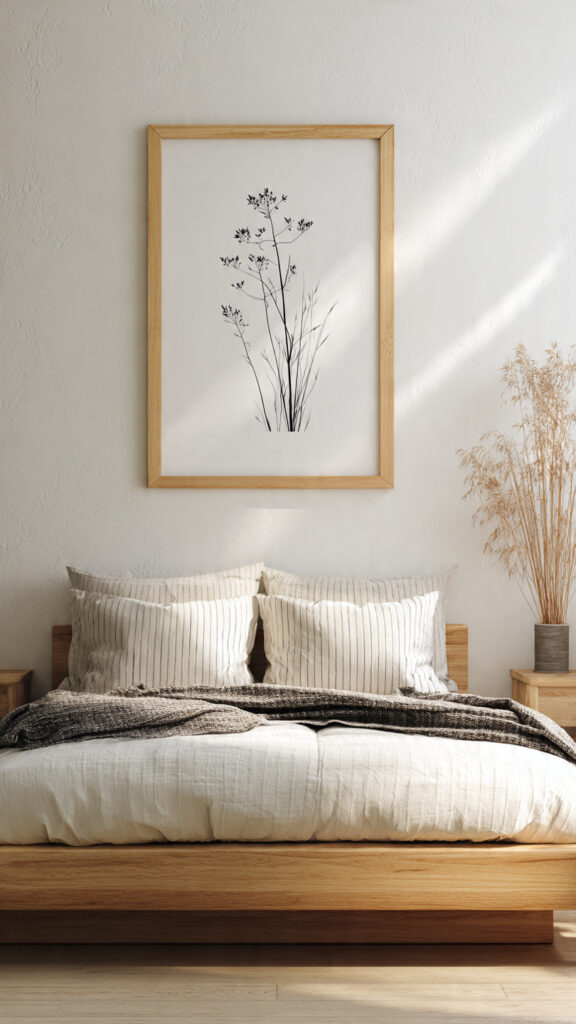
Wall art in Japandi guest rooms should enhance tranquility rather than demanding attention. Select one or two significant pieces rather than creating gallery walls that compete for visual attention. Minimalist botanical prints, abstract landscapes in muted tones, or traditional Japanese calligraphy all work beautifully. The artwork should feel like a natural extension of the room’s peaceful atmosphere, offering guests something meditative to contemplate without overstimulating the senses or disrupting the carefully cultivated calm.
Consider line drawings, sumi-e ink paintings, or contemporary minimalist photography featuring natural subjects like stones, water, branches, or mountains. Black and white or sepia-toned works maintain the neutral palette while adding visual interest. Frame selections matter tremendously—choose simple wooden frames in light finishes or thin metal frames that complement rather than compete with the artwork. The frame should virtually disappear, allowing the art itself to communicate without decorative interference.
Placement requires careful consideration of scale and sight lines. Position artwork at eye level when seated if it’s near the floor seating area, or at standing eye level above the bed or dresser. Leave generous negative space around each piece, resisting the urge to fill every wall. In Japandi design, empty space isn’t wasted space but rather breathing room that allows both the art and the architecture to be fully appreciated. This restraint demonstrates confidence in your design choices and respect for the meditative quality you’re creating.
13. Wooden Ladder Display for Textiles
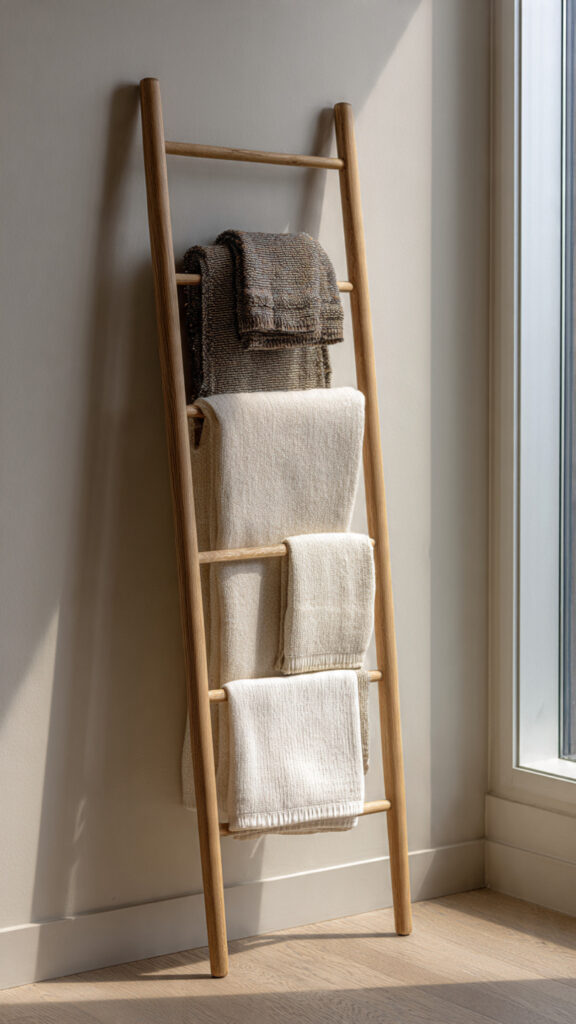
A decorative wooden ladder serves multiple purposes in a Japandi guest room while maintaining the aesthetic’s clean lines and functional beauty. Leaning against a wall, it provides attractive storage for extra blankets, throws, or towels that guests might need during their stay. This vertical storage solution utilizes wall space efficiently while keeping essentials accessible and visible. The ladder’s linear structure adds visual interest without bulk, and its natural wood finish integrates seamlessly with other furniture pieces.
Choose a ladder with clean, straight lines and minimal embellishment. The wood should be sanded smooth and finished with natural oils that enhance grain patterns while protecting the surface. Rungs should be evenly spaced and sturdy enough to hold textiles without sagging. The ladder’s height should be proportional to your ceiling and wall space, typically ranging from five to six feet tall for standard rooms. Its angled position creates dynamic geometry that contrasts nicely with horizontal and vertical elements.
Style the ladder thoughtfully with high-quality textiles in your established color palette. Drape a chunky knit throw over one rung, fold linen towels over another, leaving some rungs empty to maintain visual lightness. This functional display demonstrates thoughtful hospitality by providing guests with everything they might need while doubling as sculptural decor. The ladder embodies Japandi philosophy perfectly by merging beauty with utility, proving that practical objects can be aesthetically pleasing when chosen and positioned with care and intention.
14. Japanese Soaking Tub or Spa Elements
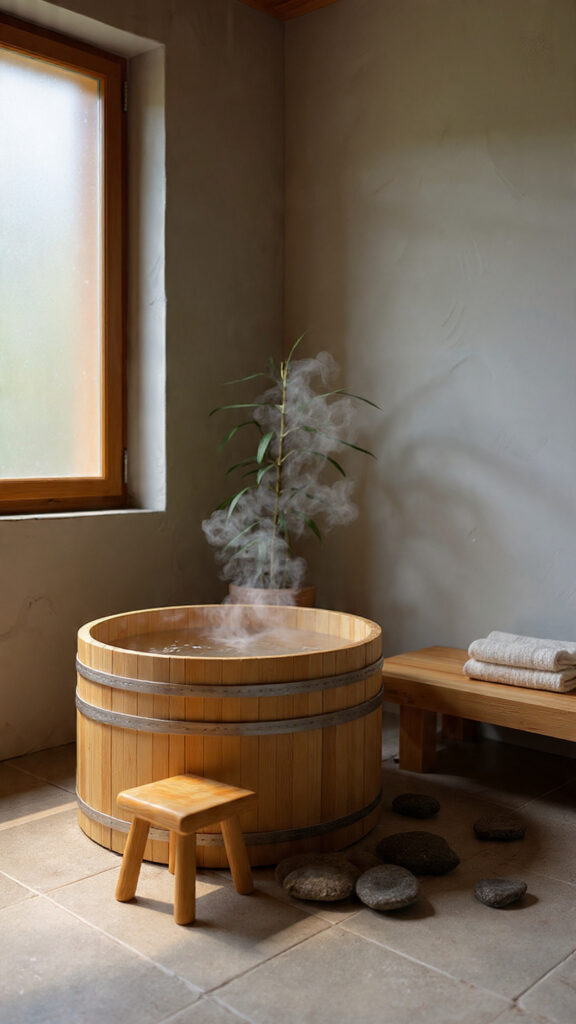
If your guest room includes an ensuite bathroom, incorporating Japanese bathing elements elevates the experience from ordinary to extraordinary. A traditional ofuro soaking tub, crafted from hinoki wood or modern materials that replicate its deep, compact form, allows for full-body immersion and ultimate relaxation. These tubs are designed for sitting rather than reclining, with depths that submerge shoulders while minimizing water usage. The experience promotes meditation and stress relief, giving guests a truly restorative ritual during their stay.
Even without a dedicated soaking tub, you can introduce spa-like elements that enhance the bathing experience. Install a wooden bath mat or bench crafted from water-resistant teak or bamboo. Provide organic cotton towels in neutral tones, perhaps warmed on a minimalist heated towel rack. Add a small wooden stool in the shower area, following Japanese bathing traditions where one rinses while seated before soaking. These details transform routine hygiene into intentional self-care, demonstrating exceptional hospitality through thoughtful amenities.
Extend the Japandi aesthetic into the bathroom with similar materials and restraint. Use natural stone tiles, wooden vanities with clean lines, and minimalist fixtures in matte black or brushed nickel. Display toiletries in simple glass or ceramic dispensers rather than plastic bottles. Add a small potted plant that thrives in humidity, like bamboo or fern. Maintain the same neutral color palette and uncluttered surfaces found in the bedroom, creating a seamless flow between spaces that reinforces the overall sense of tranquility and cohesive design throughout the guest suite.
15. Minimalist Desk or Writing Surface
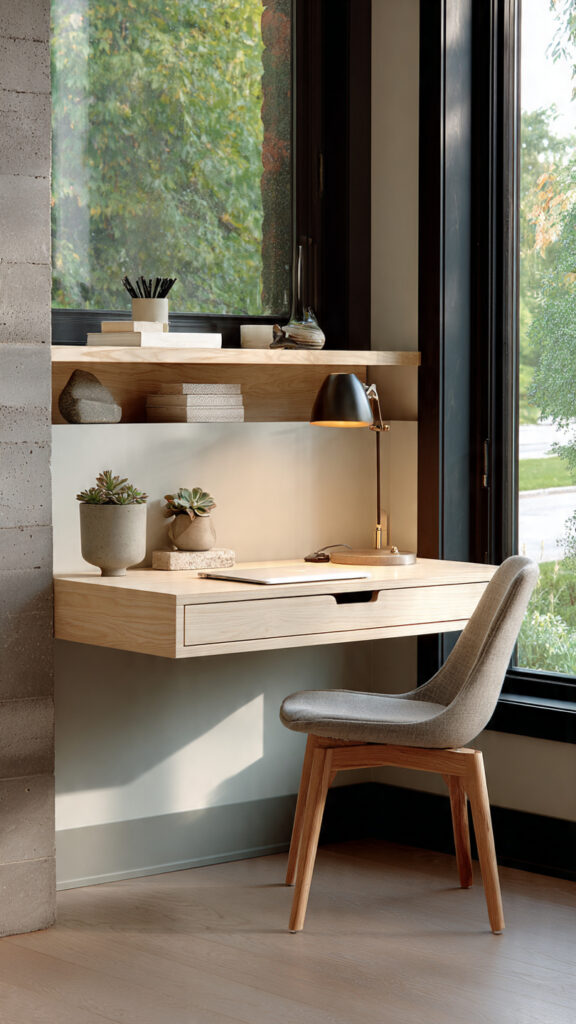
Even in a guest room primarily designed for rest, a dedicated workspace shows consideration for modern travelers who may need to catch up on emails or journaling. A minimalist desk or wall-mounted writing surface provides this functionality without dominating the room. Choose a compact floating desk that attaches directly to the wall, or select a simple console table with clean lines that can serve multiple purposes. The desk should feel intentional yet unobtrusive, blending into the room’s design when not in use.
Keep the desktop completely clear except for one or two carefully chosen items: perhaps a small ceramic vessel holding pens, a simple task lamp with adjustable positioning, and maybe a small plant. Resist adding decorative objects that clutter the work surface, as the whole point is providing guests with clean space they can use according to their needs. Include one shallow drawer for storing charging cables, notepads, or other small items, maintaining the uncluttered appearance while ensuring functionality.
Pair the desk with a comfortable chair that complements the room’s aesthetic. A simple wooden chair with clean lines or a mid-century inspired design in natural materials works beautifully. Consider adding a small cushion in neutral linen for comfort during extended sitting. Position the desk near a window to maximize natural light, which is both practical for working and psychologically beneficial. This thoughtful inclusion demonstrates understanding of your guests’ potential needs while maintaining the serene, uncluttered atmosphere that defines exceptional Japandi design.
16. Wabi-Sabi Imperfect Details

Wabi-sabi, the Japanese aesthetic philosophy celebrating imperfection and impermanence, should permeate your Japandi guest room through thoughtfully chosen details. Select furniture with visible wood grain, natural knots, and variations that tell the story of the tree it came from. Choose handmade textiles with slight irregularities in weave that prove human craftsmanship rather than machine precision. These imperfections aren’t flaws but rather evidence of authenticity and natural beauty that mass production cannot replicate.
Incorporate vintage or antique elements that show their age gracefully. A weathered wooden stool, a ceramic vessel with crackling in the glaze, or aged brass hardware all contribute character that new items lack. These pieces demonstrate the passage of time as something to honor rather than hide, teaching a valuable philosophical lesson about accepting change and finding beauty in all life stages. This approach makes the room feel collected over time rather than purchased all at once from a catalog.
Embrace natural materials as they age in the space. Allow linen to soften and develop character with washing, let wooden surfaces develop a patina from use, and welcome the way natural light gently fades colors over time. This acceptance of impermanence aligns with both Japanese philosophy and Scandinavian practicality, which values durability and items that improve with age. Your guest room becomes a living space that evolves rather than a static display, offering authentic warmth that sterile perfection can never achieve.
17. Subtle Ambient Scent
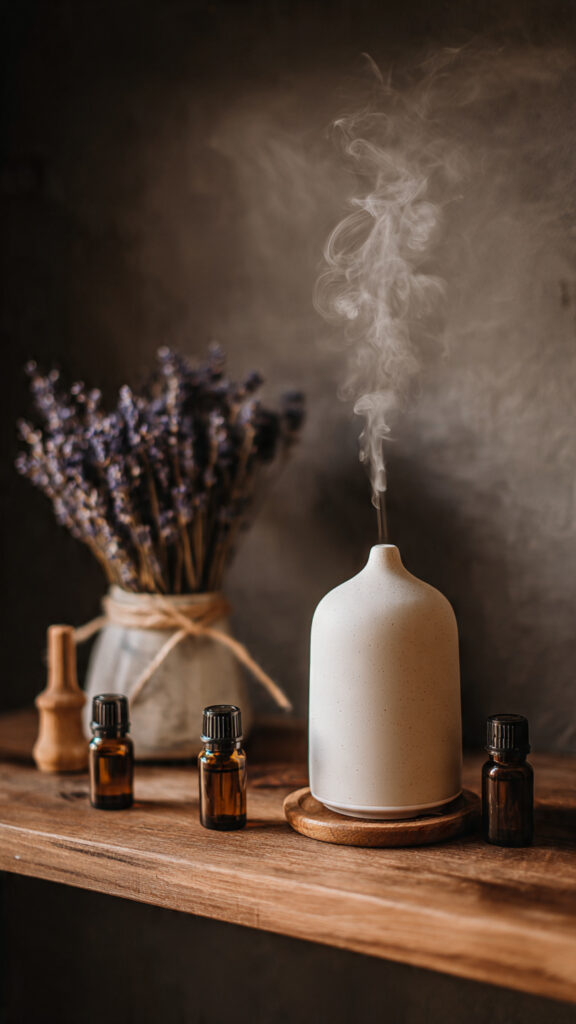
Scent profoundly affects how we experience spaces, making it an important consideration for your guest room design. Introduce subtle natural fragrances through Japanese incense, essential oil diffusers, or linen sprays made with organic ingredients. Choose calming scents like hinoki cypress, cedarwood, lavender, or green tea that promote relaxation without overwhelming sensitive noses. The fragrance should be barely perceptible, discovered gradually rather than announcing itself immediately upon entering the room.
Japanese incense traditions offer particularly refined options that align with Japandi aesthetics. Select high-quality incense made from natural ingredients without synthetic fragrances or chemical binders. The gentle smoke and subtle aroma create meditative ambiance while the ritual of lighting incense can become a meaningful daily practice for guests. Display incense in a simple ceramic holder or wooden tray, keeping the presentation as minimal and beautiful as everything else in the room.
Consider seasonal adjustments to scent profiles, using lighter citrus or floral notes in warmer months and deeper woody or resinous scents during cooler seasons. Provide options so guests can choose their preferred fragrance or opt for no scent at all if they’re sensitive. This attention to sensory details demonstrates sophisticated hospitality that considers the complete guest experience, not just visual aesthetics. A subtly scented room feels more welcoming and intentional, completing the multisensory sanctuary you’ve created for your visitors’ comfort and wellbeing.
18. Smart Storage Benches
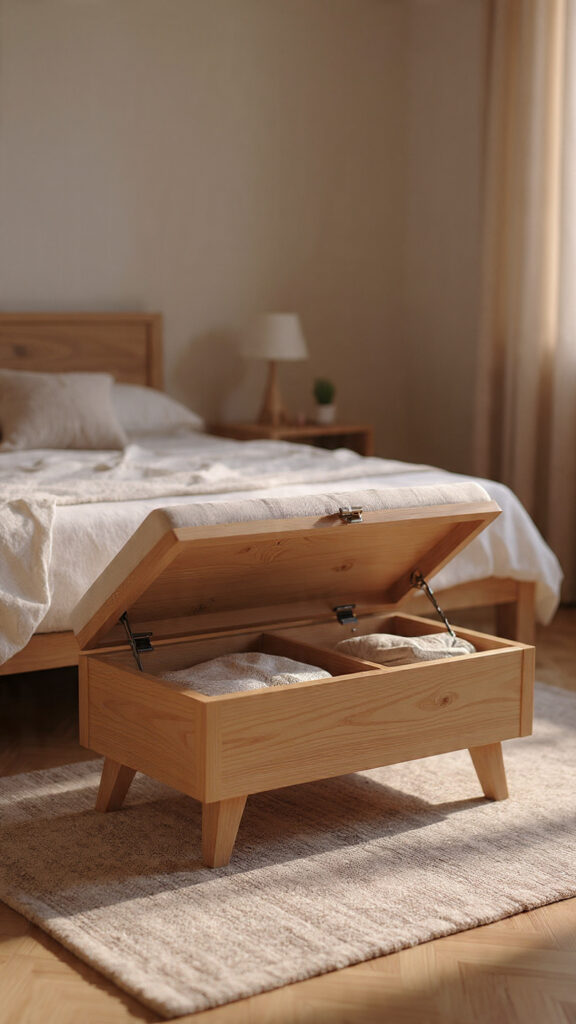
A storage bench positioned at the foot of the bed serves triple duty as seating, luggage rack, and concealed storage while maintaining clean lines essential to Japandi design. Choose a bench with a simple rectangular form crafted from light wood with minimal ornamentation. The top should lift to reveal interior storage where guests can stow luggage, extra linens, or other items you want accessible but hidden. This clever solution maximizes functionality without adding visual clutter or requiring additional furniture pieces.
Upholster the bench top with a cushion covered in durable natural fabric like linen or cotton canvas in neutral tones. The cushioning makes the bench comfortable for sitting while putting on shoes or setting down bags. Keep the padding relatively firm to maintain the bench’s structured appearance rather than creating a soft, overstuffed look that would conflict with the minimalist aesthetic. The upholstery should appear intentional and tailored, with clean corners and minimal detailing.
Consider adding interior dividers or organization systems within the bench to keep stored items tidy and accessible. Cedar lining can protect textiles while adding natural moth-repelling properties and pleasant scent. Ensure the lid mechanism operates smoothly and safely, perhaps with soft-close hinges that prevent slamming. This functional furniture piece exemplifies Japandi principles by being beautiful enough to stand as a design element while working hard to maintain the room’s organized, peaceful atmosphere that allows guests to truly relax.
19. Textured Accent Wall
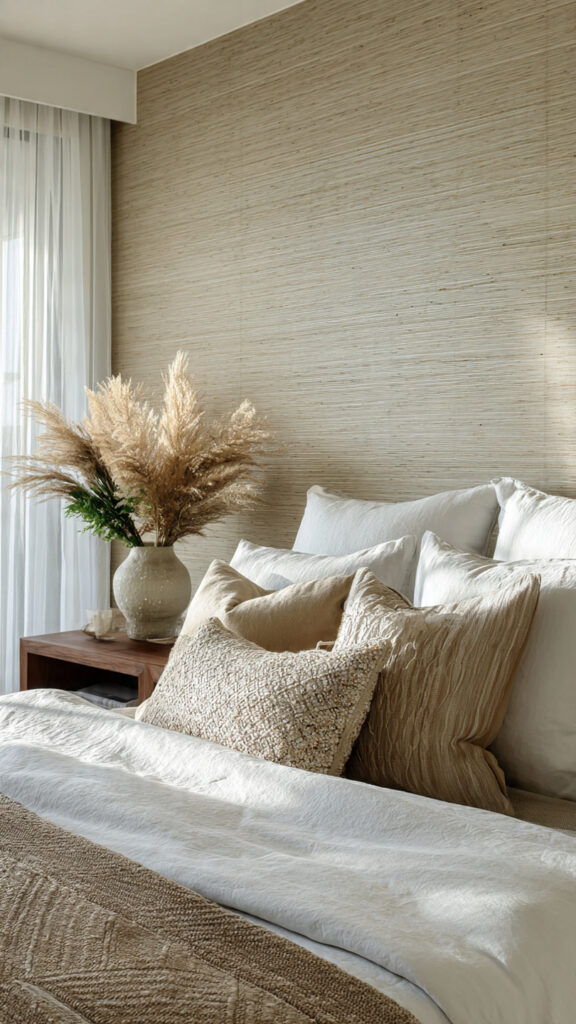
A textured accent wall adds dimension and interest while maintaining the neutral color palette central to Japandi design. Grasscloth wallpaper, with its organic variations and natural fiber composition, introduces subtle pattern through texture rather than print. The gentle horizontal or vertical lines created by woven grasses add movement and depth while the natural material continues the theme of bringing organic elements indoors. Position this textured wall behind the bed to create a focal point without overwhelming the space.
Alternative texture options include venetian plaster, which creates subtle variations through hand-application techniques, or three-dimensional wood paneling arranged in geometric patterns with varying depths. Limewash paint offers another approach, building up translucent layers that create depth and luminosity while maintaining the neutral palette. Whichever technique you choose, the texture should be discoverable rather than obvious, revealing itself gradually as light changes throughout the day and creating visual interest that rewards closer observation.
The textured wall should feel like a natural extension of the room’s design rather than a contrived accent. Keep the remaining walls smooth and simple to allow the textured surface to shine without competition. This restraint demonstrates the Japandi principle of highlighting one special element rather than layering multiple focal points that create visual chaos. The textured wall adds warmth and sophistication while maintaining the calm, uncluttered atmosphere that makes your guest room a true sanctuary for weary travelers seeking restoration.
20. Meditation Corner with Floor Cushion
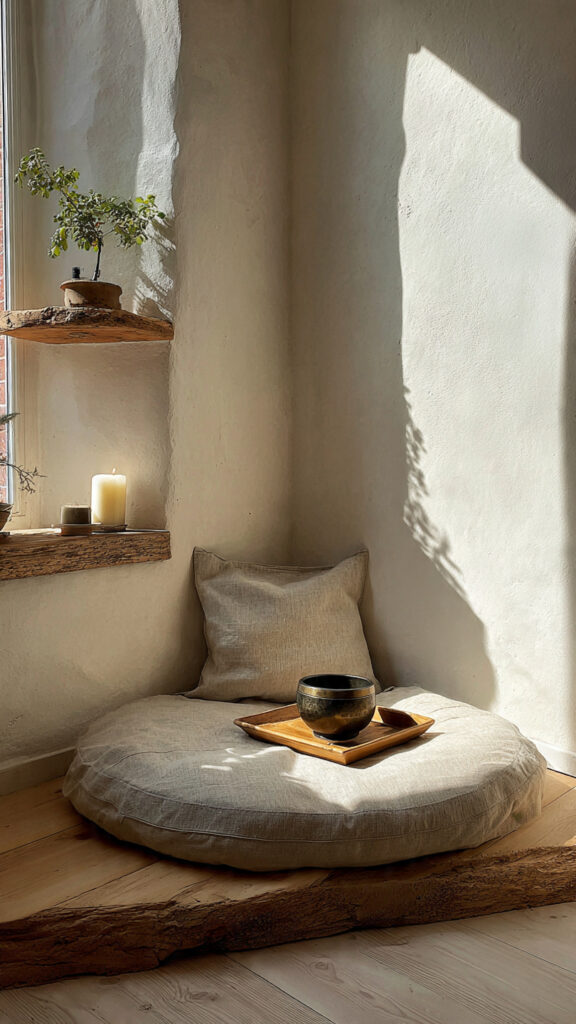
Designating a small meditation corner demonstrates exceptional hospitality by acknowledging guests’ potential wellness practices and providing dedicated space for mindfulness. A simple zafu meditation cushion placed on a small mat or platform creates an inviting spot for sitting practice, yoga, or quiet contemplation. This thoughtful inclusion shows you’ve considered guests’ complete wellbeing, not just their need for sleep and basic comfort, elevating your hospitality to a more holistic level.
Keep this area beautifully simple with just essential elements. A meditation cushion in natural linen or organic cotton, perhaps a small wooden platform to define the space, and minimal accessories like a small singing bowl or candle holder. Position the corner near a window where natural light and views of nature can enhance the meditative experience. Avoid cluttering this zone with decorative objects, as the whole point is providing clear, calm space for inner focus and stillness.
Include a small booklet or card explaining the meditation corner’s purpose and perhaps offering simple breathing exercises or mindfulness prompts for guests unfamiliar with meditation practices. This gentle introduction might inspire visitors to try something new during their stay, potentially introducing them to practices that enhance their lives beyond their visit. The meditation corner becomes a gift of space and possibility, demonstrating that true hospitality extends beyond physical comfort to supporting guests’ mental and emotional wellbeing through thoughtfully designed environments.
Final Thoughts on Creating Your Japandi Guest Room
Designing a Japandi guest room requires balancing minimalism with warmth, simplicity with sophistication, and restraint with comfort. Every element should serve a purpose while contributing to the overall aesthetic of calm simplicity. The beauty of this design philosophy lies in its flexibility—you can incorporate as many or as few of these ideas as suit your space, budget, and personal interpretation of what makes a welcoming environment.
Remember that Japandi design isn’t about following rigid rules but rather embracing principles: natural materials, neutral colors, functional beauty, and intentional simplicity. Start with foundational elements like the bed and storage, then layer in textiles, lighting, and accessories that reflect your understanding of what creates sanctuary. Each choice should feel considered and purposeful, avoiding impulse additions that clutter the carefully cultivated serenity.
The ultimate goal is creating a space where guests feel immediately relaxed, welcomed, and cared for. When they enter your Japandi-inspired guest room, they should experience a sense of coming home to themselves, finding respite from busy lives in an environment that promotes rest, reflection, and restoration. Through thoughtful design choices rooted in Japanese and Scandinavian wisdom, you offer visitors more than just accommodation—you provide an experience of beauty, tranquility, and genuine hospitality they’ll remember long after their stay concludes.
