Small Space Designs That Feel Open: Japandi Apartments
Japandi apartments have revolutionized how we think about small space living, blending Japanese minimalism with Scandinavian functionality to create homes that feel remarkably open and spacious. This trending design philosophy embraces clean lines, natural materials, muted color palettes, and intentional simplicity — making it the perfect solution for compact urban dwellings. Whether you’re styling a cozy studio or a small one-bedroom, Japandi design principles help maximize every square foot without sacrificing beauty or comfort. From low-profile furniture and multifunctional pieces to strategic lighting and the art of meaningful emptiness, these inspiring ideas will transform your cramped apartment into a serene, airy sanctuary. Get ready to discover how small spaces can feel wonderfully, breathtakingly open.
1. The Minimalist Entryway with Floating Shelves
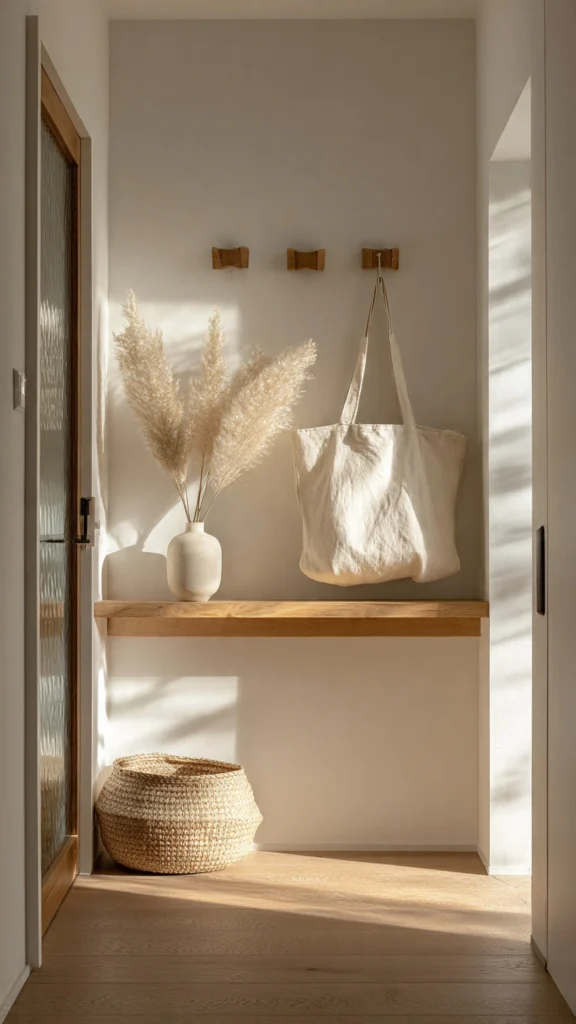
The entryway sets the entire tone for your Japandi apartment, and in a small space, it needs to work harder than ever. Instead of bulky furniture pieces that crowd the doorway, opt for a simple floating shelf mounted at waist height. This creates visual breathing room underneath while providing a landing spot for keys, wallets, and a small decorative element. Choose light-toned wood like oak or birch to maintain that signature Japandi warmth without overwhelming the space.
Beneath your floating shelf, place a single woven basket or a low wooden bench to handle shoe storage discreetly. The Japanese concept of “genkan” — a dedicated entryway area where shoes are removed — translates beautifully into small apartment living. By keeping this area intentionally sparse, you create an immediate sense of calm upon entering your home. A single ceramic vase with seasonal branches adds organic beauty without cluttering this precious transitional zone between outside and inside.
Wall hooks in natural wood or matte black metal provide vertical storage for bags and outerwear without consuming floor space. The Scandinavian influence shines through in the functionality of every element — nothing exists purely for decoration. Each piece serves a dual purpose, combining beauty with practicality. This philosophy is essential when designing small spaces that need to feel open, welcoming, and uncluttered from the very first step inside your apartment door.
2. Open-Plan Living with Defined Zones Using Low Furniture
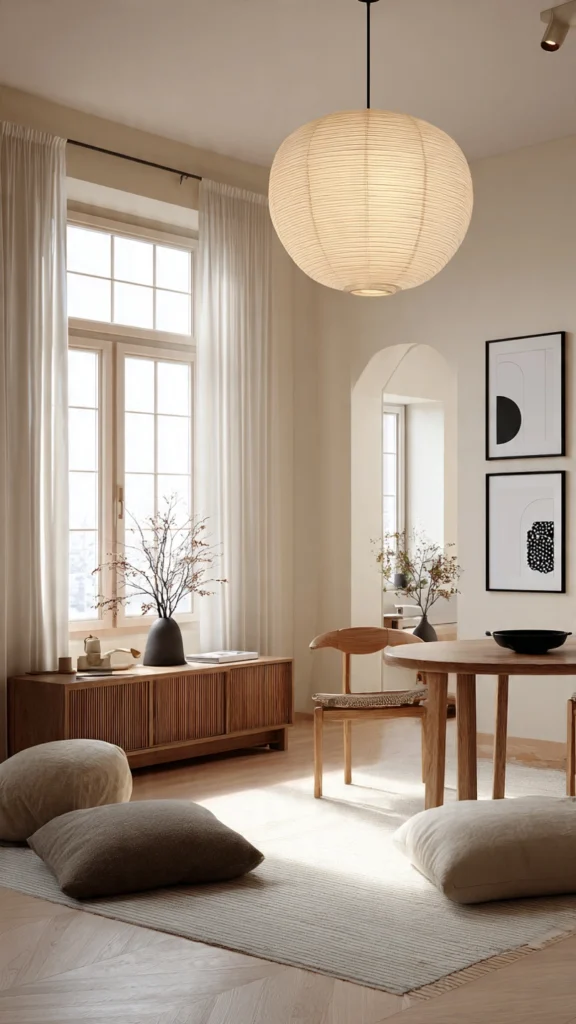
In small Japandi apartments, open-plan layouts are essential for creating the illusion of spaciousness. Rather than using tall bookshelves or room dividers that block sightlines and natural light, choose low-profile furniture to subtly define different living zones. A credenza standing no higher than waist level can separate the living area from the dining space while still allowing your eyes to travel freely across the entire room. This uninterrupted visual flow is the secret to making compact spaces feel generous and expansive.
The Japanese tradition of living close to the ground inspires furniture choices that sit low and maintain horizontal emphasis throughout the room. A platform sofa, floor cushions, or a low coffee table all contribute to this grounded aesthetic while opening up vertical space above. When ceilings appear taller because furniture hugs the floor, even the tiniest apartments feel remarkably spacious. Pair this approach with Scandinavian clean lines and functional simplicity for the perfect Japandi balance in your layout.
Color continuity across zones further enhances the sense of openness in your small apartment. Use a consistent palette of warm whites, soft beiges, and gentle grays throughout the entire space. When different zones share the same color language, boundaries dissolve and the apartment reads as one cohesive, expansive environment. Add subtle texture variations through natural linen, raw wood, and handmade ceramics to create visual interest without introducing the chaos that competing colors can bring to compact homes.
3. The Japandi Kitchen: Clean Counters and Hidden Storage
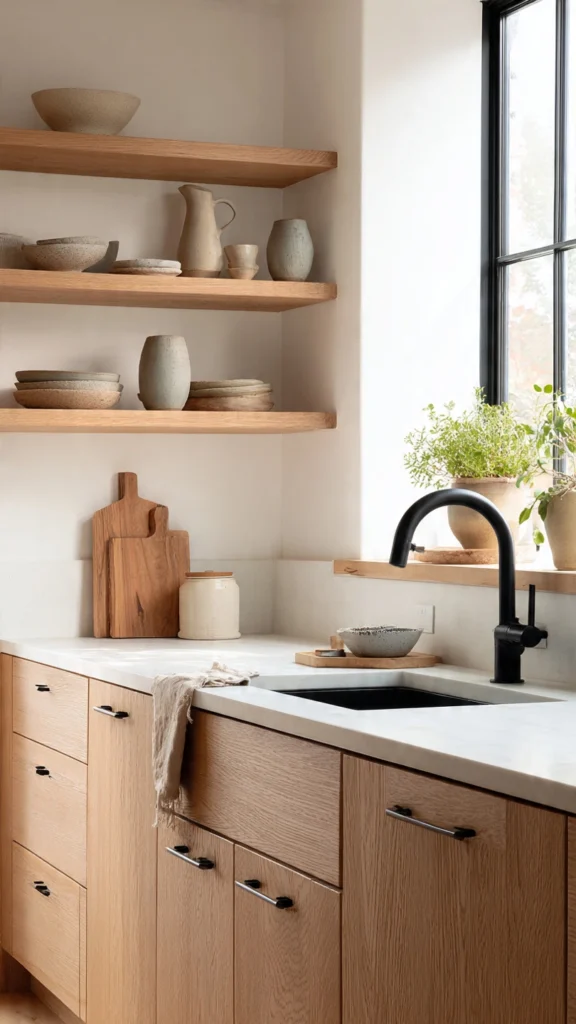
The kitchen is often the most challenging area in a small Japandi apartment because it must balance heavy functionality with visual calm. The golden rule is clear countertops. Every appliance, utensil, and ingredient that can be stored away should be hidden behind clean cabinet fronts. Handleless cabinetry with push-to-open mechanisms maintains the seamless, unbroken lines that define Japandi aesthetics while maximizing storage capacity in every available inch of your compact kitchen space.
Open shelving is a Japandi kitchen hallmark, but it requires discipline and curation in small spaces. Select one wall section for wooden floating shelves and display only your most beautiful functional items — handmade ceramic bowls, a wooden pepper mill, or a simple glass jar of dried goods. This approach brings the Japanese philosophy of finding beauty in everyday objects directly into your kitchen. Each displayed item should be something you use regularly and genuinely find beautiful to look at daily. For more inspiration on curating functional kitchen displays, check out Architectural Digest’s guide to open shelving.
Natural materials take center stage in your Japandi kitchen design with light wood cabinetry paired against white or light stone countertops. A matte black faucet adds the perfect Scandinavian contrast without overwhelming the space. Small potted herbs on the windowsill bring living greenery into the kitchen while serving a practical cooking purpose. Every element in this kitchen tells a story of intentional living — nothing wasteful, nothing excessive, just thoughtful design that makes cooking in small spaces a peaceful experience.
4. Bedroom Sanctuary with Platform Bed and Soft Textiles
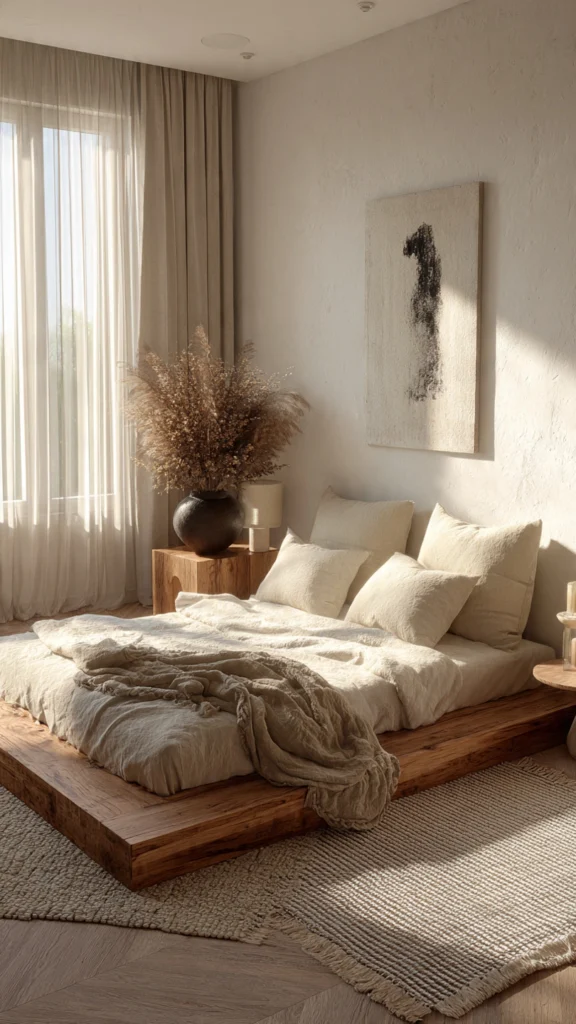
The bedroom in a Japandi apartment should feel like a retreat from the world, and in small spaces, achieving this sanctuary quality requires careful restraint. A low platform bed is the centerpiece — its grounded profile creates the illusion of higher ceilings while paying homage to Japanese sleeping traditions. Choose a frame in light natural wood with clean, simple lines that whisper rather than shout. The bed itself becomes a sculptural element that anchors the room without dominating its precious square footage.
Bedding choices dramatically impact how spacious your small bedroom feels. Layer natural linen sheets in warm whites and soft creams to create an inviting cloud-like surface that reflects light beautifully throughout the room. Add one textured throw in a muted earth tone — perhaps terracotta, sage, or warm gray — for visual depth and cozy warmth. The Scandinavian hygge influence encourages these tactile, comforting layers while Japanese minimalism keeps the arrangement restrained and purposeful rather than overly decorated or fussy.
Floating nightstands eliminate visual weight at floor level, making the room feel more open and easier to clean beneath. Choose simple wooden shelves mounted at mattress height, each holding only essentials — a ceramic lamp, a book, perhaps a small plant. Avoid the temptation to add excessive furniture like dressers or vanities in a small Japandi bedroom. Instead, invest in a well-organized closet system that keeps clothing hidden and maintains the calm, clutter-free atmosphere essential for restful sleep.
5. Bathroom Zen: Spa-Inspired Compact Spaces
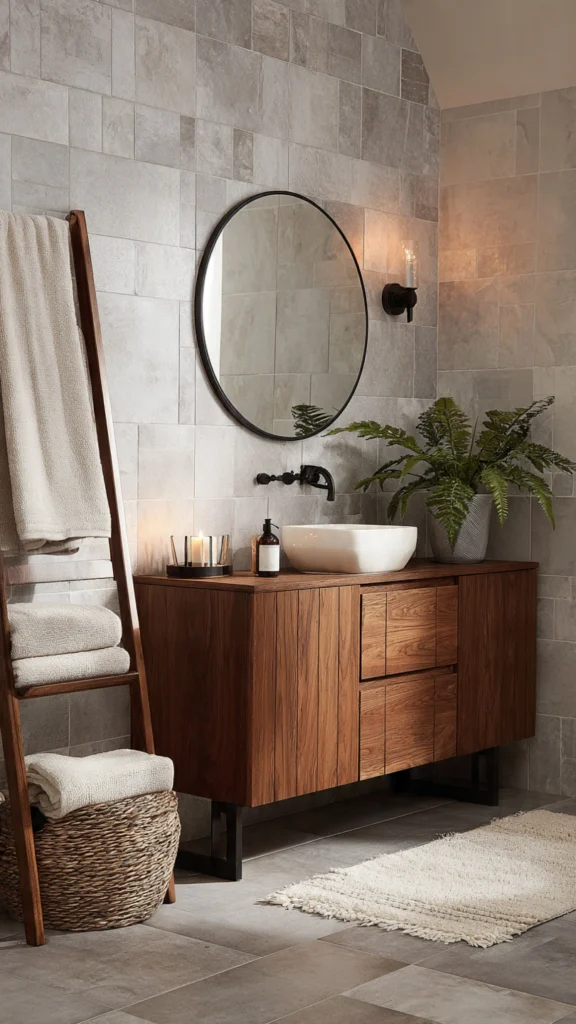
Transforming a small bathroom into a Japandi spa experience is entirely possible with the right design choices and a disciplined approach to accessories. Start with a warm wood vanity that brings natural texture and organic beauty to the space. The Japanese bathing tradition elevates the bathroom from a purely functional room to a place of ritual and renewal. Carry this philosophy into your small apartment bathroom by choosing quality materials and keeping surfaces clean and uncluttered at all times.
A round mirror with a thin black or wooden frame becomes a striking focal point while softening the angular geometry typically found in compact bathrooms. Position it to reflect natural light from windows or thoughtfully placed fixtures, instantly doubling the perceived brightness and depth of the room. Below the mirror, limit counter items to absolute essentials — a soap dispenser in ceramic or stone, a small plant, and nothing more. Store everything else inside the vanity or behind closed cabinet doors.
Natural stone or wood-look tile flooring grounds the space with organic warmth, connecting your bathroom aesthetically to the rest of your Japandi apartment. A simple wooden ladder shelf provides towel storage vertically, taking advantage of wall height rather than consuming valuable floor area. Roll fluffy white towels for a spa-worthy presentation that is both beautiful and functional. Add a single green plant like a fern that thrives in bathroom humidity to bring life and freshness into this small but perfectly serene space.
6. Multifunctional Furniture for Flexible Living
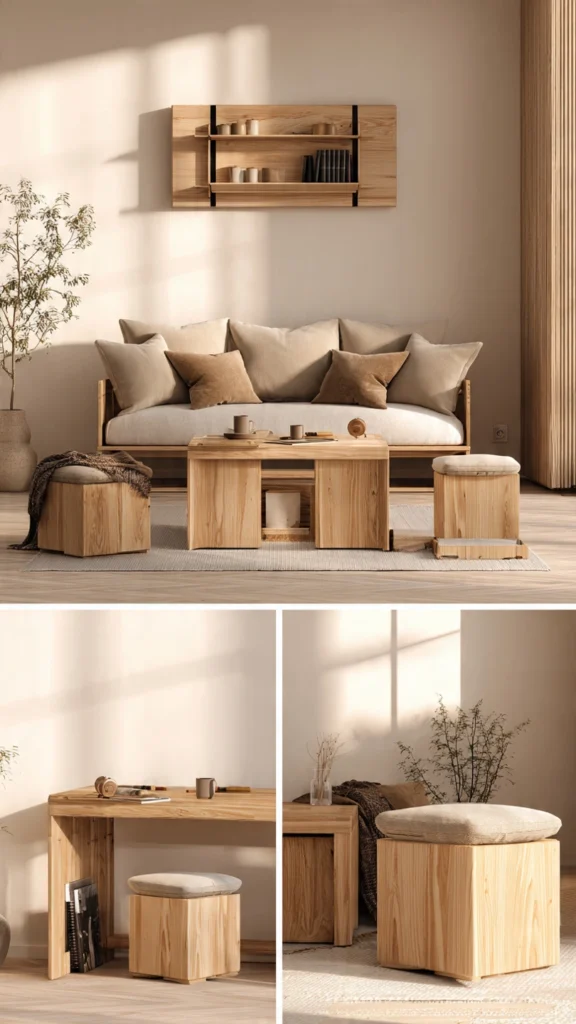
Multifunctional furniture is the backbone of any successful small Japandi apartment. Every piece must earn its place by serving multiple purposes without sacrificing aesthetic beauty or clean design lines. A coffee table that rises to dining height eliminates the need for a separate dining table, freeing up significant floor space for daily living activities. Look for pieces crafted in natural wood with simple mechanisms that align with the clean, honest design language that defines the Japandi style.
Storage sofas offer another brilliant solution for compact Japandi apartments, hiding blankets, books, and seasonal items beneath their clean-lined cushions. The key is choosing pieces where the storage function is completely invisible — no visible latches, no awkward proportions, no design compromises. Scandinavian design excels at this kind of thoughtful engineering, where practical solutions hide seamlessly within beautiful forms. Pair your storage sofa with stackable wooden stools that serve as extra seating, side tables, or plant stands depending on the moment.
A wall-mounted fold-down desk transforms any wall into a home office that disappears completely when work hours end. This is especially valuable in studio apartments where maintaining boundaries between work and relaxation spaces is crucial for mental wellbeing. Choose a desk in light birch or oak that complements your other furniture when folded down, and matches the wall tone when folded up. This flexibility embodies the Japandi philosophy of intentional living — everything has purpose, nothing wastes space.
7. Wabi-Sabi Decor: Imperfect Beauty in Small Spaces
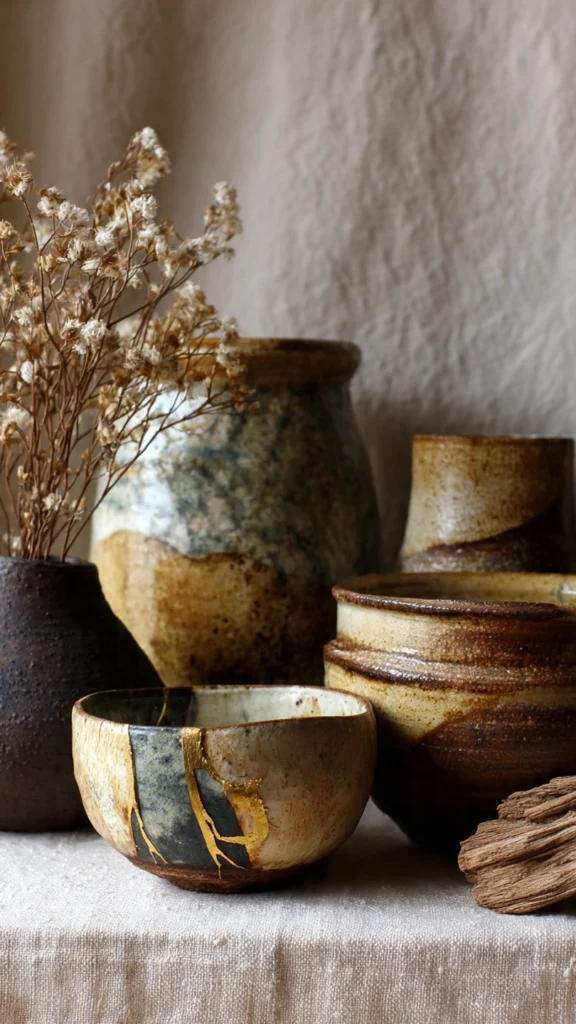
The Japanese philosophy of wabi-sabi — finding beauty in imperfection and impermanence — adds soul and depth to small Japandi apartments without adding clutter. Instead of mass-produced decorations, choose a few handmade ceramic pieces with visible maker’s marks, irregular glazes, and organic shapes. These imperfect objects tell stories and create emotional connections that factory-perfect items simply cannot achieve. In a small space where every decorative piece must be carefully chosen, wabi-sabi ensures each item carries genuine meaning and artistic significance.
Kintsugu, the Japanese art of repairing broken pottery with gold, perfectly embodies the wabi-sabi aesthetic and creates stunning conversation pieces for small apartments. A single kintsugu bowl displayed on a shelf becomes a powerful statement about beauty, resilience, and the value of embracing flaws rather than hiding them. This philosophy extends beyond objects to the apartment itself — exposed concrete walls, slightly uneven plaster textures, and natural wood grain variations all contribute to a space that feels authentically lived-in and genuinely beautiful.
Natural found objects like driftwood, stones, and dried botanical elements bring the outside world into your compact Japandi apartment without financial cost or spatial burden. A piece of sculptural driftwood on a shelf, a smooth river stone as a paperweight, or dried seed pods in a ceramic dish all celebrate the organic beauty of the natural world. These elements ground your space in nature’s rhythms and imperfect harmony, creating a deeply calming atmosphere that transcends the physical limitations of small apartment living.
8. Natural Light Maximization and Lighting Design
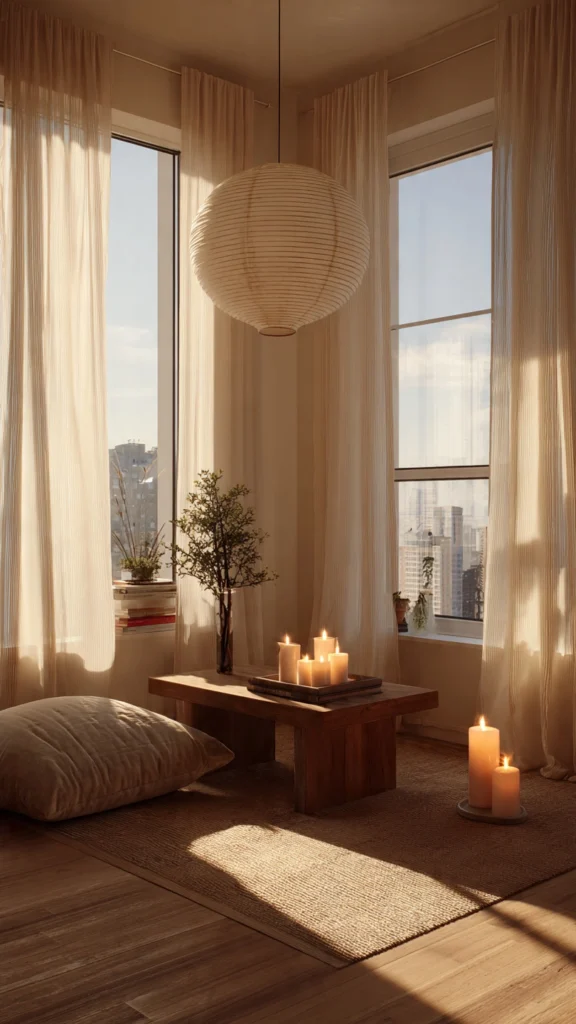
Natural light is perhaps the most powerful tool for making small Japandi apartments feel open and expansive. Treat your windows as sacred architectural features — never block them with heavy curtains or bulky furniture. Sheer linen curtains in warm white or cream filter sunlight beautifully while maintaining privacy, creating a soft, diffused glow that washes across your walls and floors throughout the day. This gentle light quality is central to both Japanese and Scandinavian design traditions and costs nothing.
When natural light fades, your artificial lighting scheme must maintain the same warm, inviting atmosphere. Japanese paper lantern pendants (known as akari) cast a gorgeous diffused glow that eliminates harsh shadows and creates an enveloping sense of warmth in compact spaces. Layer your lighting with a wooden floor lamp in one corner and ambient candlelight on surfaces for evening hours. Avoid overhead fluorescent fixtures that flatten the atmosphere and create institutional feelings completely incompatible with the Japandi design philosophy.
Strategic placement of mirrors and light-colored surfaces amplifies whatever natural light your small apartment receives. Position a simple round mirror opposite your largest window to bounce light deeper into the space, effectively doubling your light source without additional windows. Light wooden floors, white walls, and pale furniture surfaces all work as reflectors, keeping the space luminous even on overcast days. This thoughtful approach to light management transforms even north-facing compact apartments into bright, welcoming Japandi sanctuaries that feel remarkably spacious.
9. Indoor Plants and Biophilic Design Elements
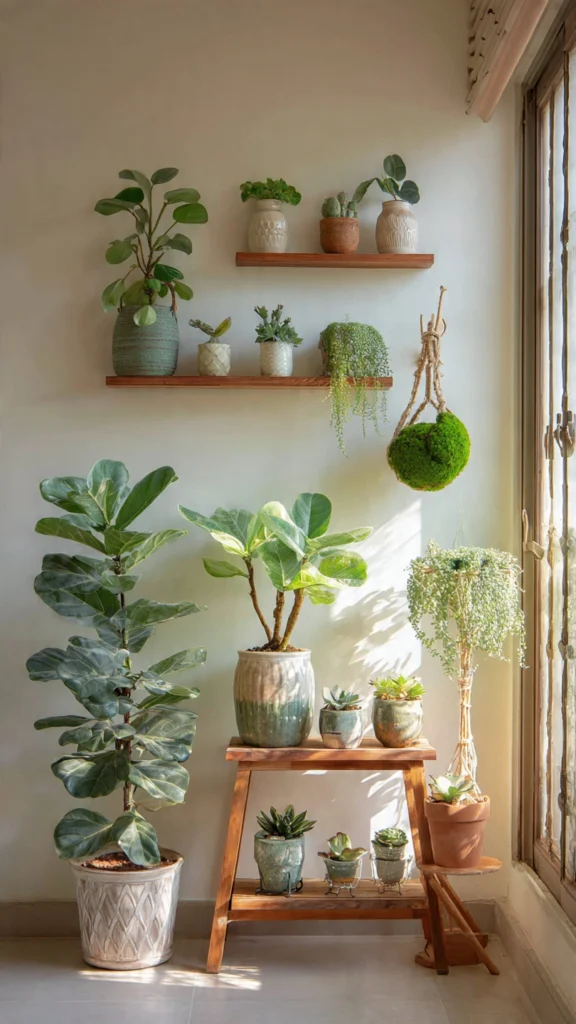
Bringing nature indoors is a fundamental principle shared by both Japanese and Scandinavian design traditions, and in small apartments, plants create an extraordinary sense of life and freshness without consuming much physical space. Choose a curated collection of plants in varying heights and textures rather than cramming every surface with greenery. A single tall plant like a fiddle leaf fig creates dramatic vertical interest, while trailing plants on shelves add movement and soften hard architectural edges beautifully throughout the room.
Kokedama — Japanese moss ball plants — offer a uniquely Japandi way to display greenery in small spaces. These living sculptures can be suspended from ceiling hooks near windows, bringing green beauty to eye level without using any shelf or floor space whatsoever. The organic, slightly wild appearance of kokedama embodies the wabi-sabi appreciation for natural forms while the hanging display method solves the perpetual small-space challenge of where to put things when every surface is already claimed.
Choose planters that complement your Japandi aesthetic — handmade ceramic pots with organic shapes, simple terracotta vessels, or wooden plant stands with clean lines. Avoid colorful plastic pots or overly decorative containers that compete with the plants themselves for visual attention. The vessels should recede while the living greenery takes center stage, creating small pockets of natural beauty throughout your apartment. This biophilic approach to small space design has proven psychological benefits, reducing stress and improving air quality in compact environments.
10. The Art of Negative Space and Intentional Emptiness
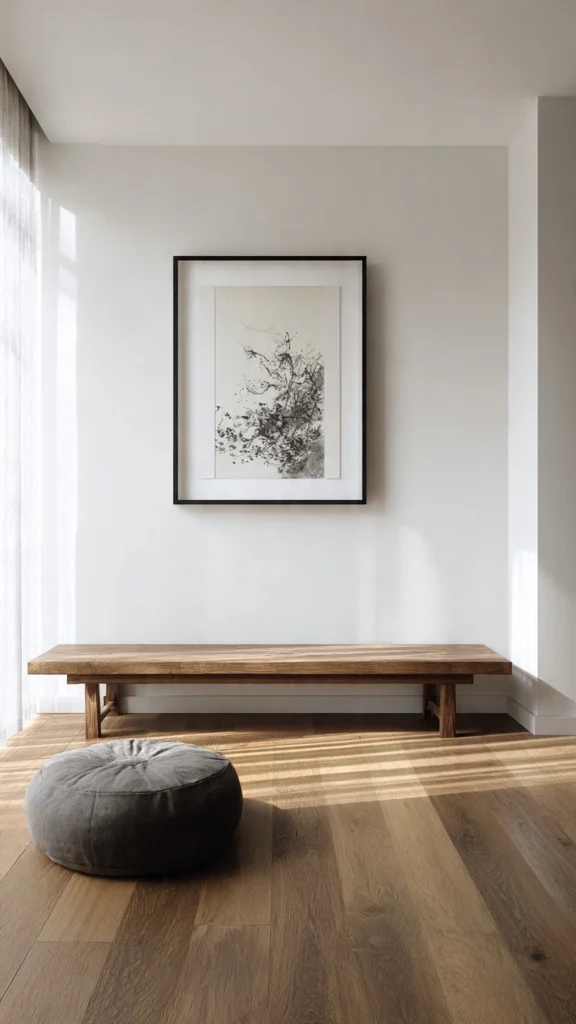
Perhaps the most challenging yet transformative Japandi principle for small apartments is the deliberate embrace of negative space — the intentional areas of emptiness that allow rooms to breathe and inhabitants to think clearly. In Western design culture, empty walls and bare surfaces often feel unfinished or neglected. In Japandi philosophy, these spaces are celebrated as essential components of beautiful design. They give your eyes resting places and your mind room to decompress after busy days in the outside world.
Resist the powerful urge to fill every corner, cover every wall, and accessorize every surface in your small apartment. Instead, choose one focal point per room and let it shine against a backdrop of intentional simplicity. A single piece of minimal artwork on an otherwise empty wall creates far more visual impact than a gallery wall crammed with competing images. A lone ceramic vase on an empty shelf speaks more eloquently than a crowded collection of decorative objects fighting for attention in a limited space.
This commitment to emptiness actually makes small apartments feel significantly larger than apartments filled with beautiful furniture and accessories. When floor space is visible and walls have breathing room, the brain perceives the environment as spacious and calm regardless of actual square footage measurements. Practice the Japanese concept of “ma” — the meaningful pause between elements — in your small Japandi apartment, and discover how powerful restraint becomes when applied to interior design with genuine intention and unwavering consistency.
11. Textile Layering with Natural Fabrics
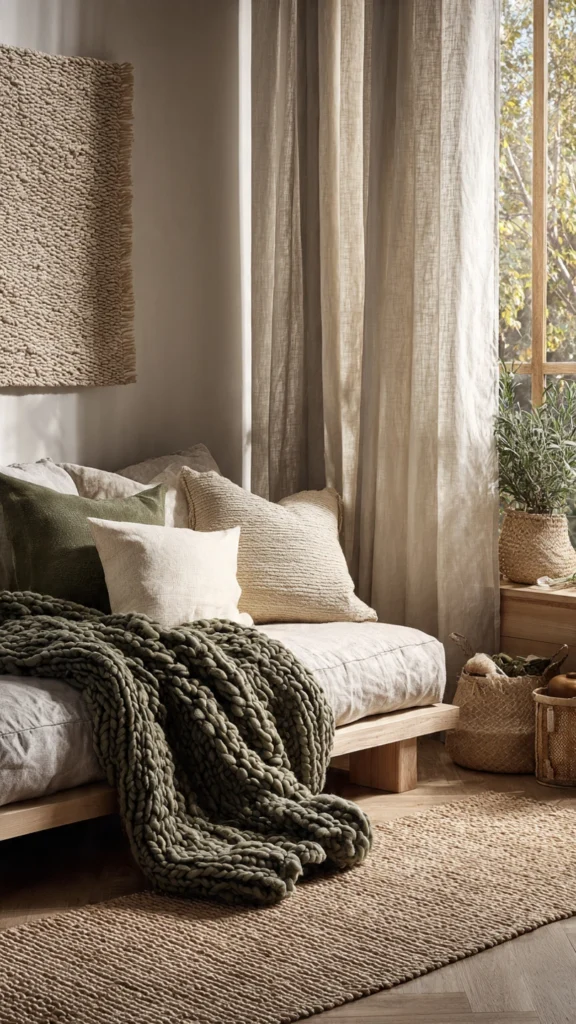
While Japandi design celebrates minimalism, it never feels cold or sterile — and the secret lies in thoughtful textile layering using natural fabrics throughout your small apartment. Linen, cotton, wool, and jute bring warmth, texture, and tactile pleasure to every room without adding visual clutter or overwhelming compact spaces. Choose textiles in a cohesive neutral palette where interest comes from varying weaves, weights, and textures rather than contrasting colors or bold printed patterns that can make small rooms feel busy.
A jute or wool area rug defines the living zone in an open-plan apartment while adding warmth underfoot and acoustic softness that reduces echo in hard-surfaced rooms. Layer linen cushions on your sofa in slightly different shades of cream, sand, and sage for depth that feels organic and effortless rather than overly styled or curated. The Scandinavian hygge tradition of surrounding yourself with cozy textures merges perfectly with Japanese appreciation for natural materials to create spaces that comfort both body and soul.
Window treatments in lightweight natural cotton or linen complete the textile story, filtering light beautifully while adding softness to hard window frames. Choose simple panels that hang cleanly without fussy valances or heavy draping that would overwhelm a small room visually. Even your kitchen can benefit from a simple linen tea towel hung on a wooden hook or a cotton runner on the dining table. These small textile touches accumulate throughout your apartment, creating an atmosphere of warmth and handmade quality.