The Unusual Case of a Modern Barndominium Basement
Modern Barndominium Basement living redefines comfort and style, blending the rustic allure of a barndominium with sleek, contemporary design. Imagine transforming your lower level into a vibrant, functional extension of your home, far beyond a typical storage area. These basements are increasingly popular for their versatility, offering endless possibilities for customisation. Whether you envision a chic entertainment hub, a cozy guest suite, a dedicated home office, or a personal gym, a modern barndominium basement provides the perfect canvas. With thoughtful planning, you can incorporate natural light solutions, smart storage, and stylish finishes to create a space that’s both inviting and highly efficient, truly elevating your barndominium experience.
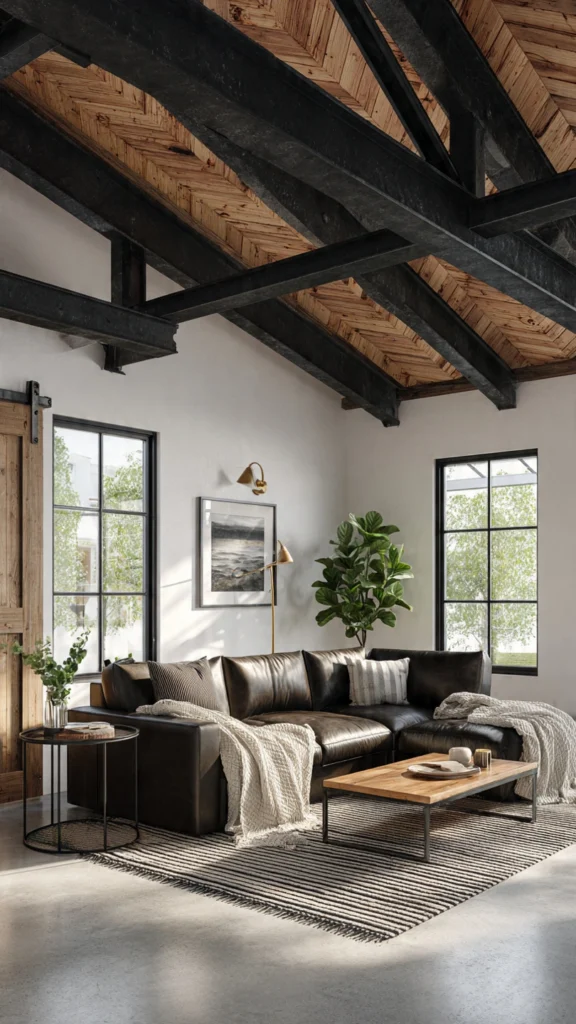
Idea 1: The Basement That “Shouldn’t” Work—But Does
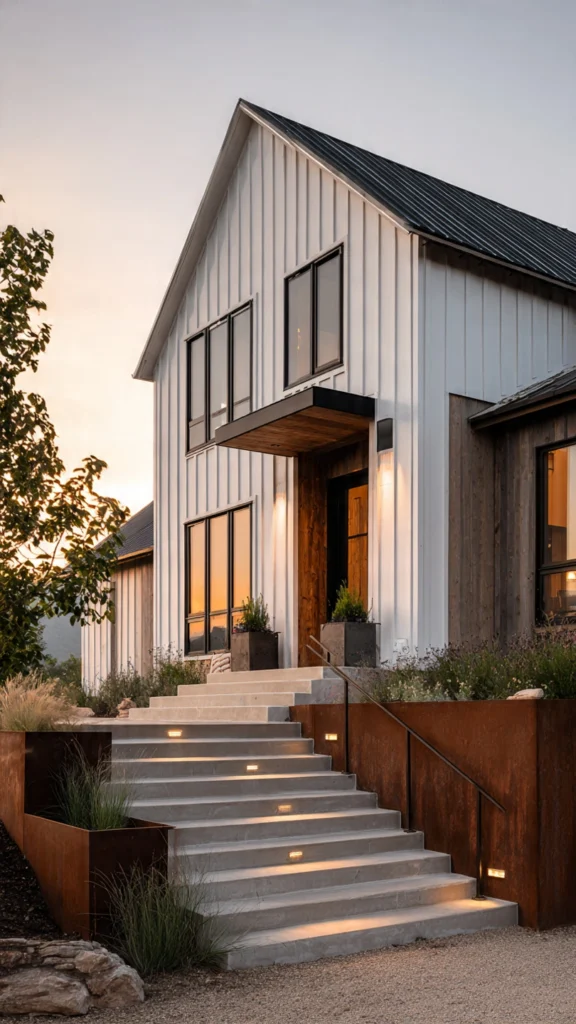
A modern barndominium is usually all about big volume above grade: soaring ceilings, open-plan living, and that iconic barn-like silhouette. So when you hear “barndominium basement,” it feels like an odd pairing—almost a contradiction. But in the right build, the basement becomes the most practical, design-forward layer of the home. It can hide the messy functions, add square footage, and still feel stylish enough to pin.
The unusual part isn’t only that it exists—it’s that it can look intentional. A well-planned basement complements the barndo’s clean structure and industrial vibe, while solving everyday needs like storage, mechanical systems, overflow entertaining, and guest space. It also gives you a “second world” to decorate differently. Think moodier paint, warmer lighting, and more texture, without competing with the airy main floor.
This case works best on sloped sites, where the basement can become a walkout on one side and fully buried on the other. That single move changes everything: windows become possible, patio doors make sense, and you can create a real connection to outdoors. In Pinterest terms, it’s a dream scenario—before-and-after potential, dramatic lighting transformations, and plenty of architectural interest.
If you’re collecting ideas, treat the basement as a design opportunity rather than leftover square footage. The most successful modern barndominium basements feel like curated destinations: a lounge, a studio, a gym, a guest suite, or a pantry-meets-storm-shelter. The “unusual case” is simply a basement that’s planned as carefully as the open-concept great room upstairs.
Idea 2: A Stairwell Worth Photographing (Not Just Passing Through)
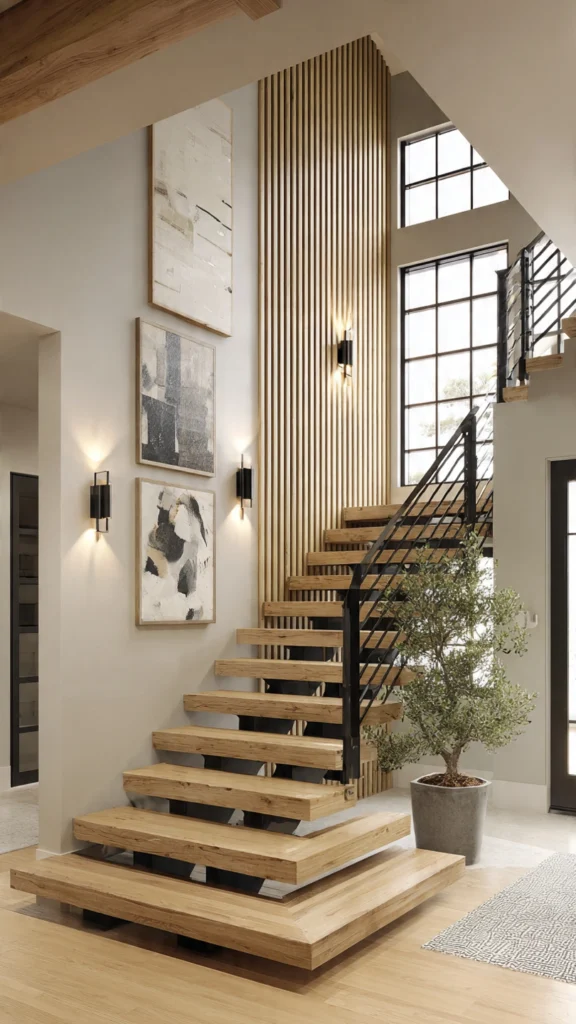
Most basements fail the Pinterest test at the stairwell. The transition feels like a downgrade—darker, narrower, and purely functional. In a modern barndominium, the fix is to treat the stairwell like an architectural feature, not a hallway. Use materials that echo the barndo’s mix of metal and wood: black steel rails, warm treads, and a clean wall treatment that photographs well in both daylight and evening lighting.
A landing window is the secret weapon. If the lot and layout allow it, add a tall fixed window or a grid-style window that matches the home’s exterior glazing. Even a modest window changes the emotional tone of the descent. It removes the “going underground” feeling and replaces it with a sense of intention. Bonus: you get natural light for paint colors to read accurately in photos and in real life.
Lighting matters more here than almost anywhere else. Layer it: recessed ceiling lights, step lights, and one statement fixture at the bottom if ceiling height allows. Warm temperatures (around 2700K) keep the space from feeling like a utility zone. If you love a modern look, keep the fixtures simple and repeat finishes—matte black, aged brass, or a muted bronze—so the space looks cohesive in one quick glance.
Finally, style the stairwell like a mini-gallery. One oversized art piece, a slim ledge for framed prints, or a vertical slat wall creates rhythm and texture. Basements often rely on drywall alone, which can feel flat in photos. Add at least one tactile element—wood, plaster, or stone—and the stairwell becomes a “pin moment” that makes people want to see what’s downstairs.
Idea 3: Daylight Hacks—Egress Windows, Light Wells, and Borrowed Light
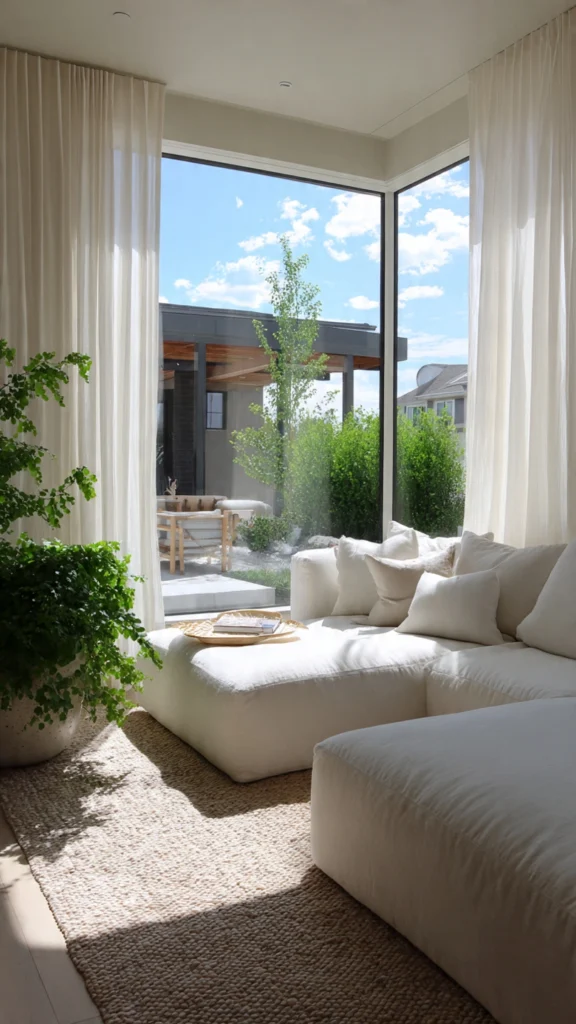
Natural light is the difference between “basement” and “lower level.” The unusual win in a modern barndominium basement is making it bright enough to forget it’s partially underground. Start with code-compliant egress windows where sleeping or living areas exist. Oversize them if possible, and align the window style with the barndo’s exterior—black frames, clean grids, and consistent proportions—so the basement feels like part of the home, not an afterthought.
Light wells can be beautiful rather than purely functional. Instead of bare corrugated metal wells, consider upgraded materials and landscaping: stone edging, gravel, low-maintenance shrubs, and a clean cover that still allows air and sunlight. When photographed from inside, these details read like a courtyard. It’s an easy Pinterest-friendly trick—your “basement window” suddenly looks like a designed outdoor vignette.
Borrowed light adds another layer. Interior windows between rooms, transoms over doors, or glass-paneled doors can pull light deeper into the plan. This works especially well if only one side of the basement has exterior exposure. Keep the glass simple and modern, and use privacy film where needed. The effect is subtle but powerful: brighter corners, fewer shadowy hallways, and a more open, studio-like feel.
Don’t forget reflectance. Basements do better with lighter ceilings and strategically chosen wall colors that bounce light without feeling stark. Think warm whites, soft greige, or muted clay tones. Pair that with mirrors or glass-front built-ins in targeted spots. The goal isn’t to make it “white everywhere,” but to shape light so the space looks intentional, comfortable, and easy to photograph at almost any time of day.
Idea 4: Floors That Handle Real Life—Moisture, Warmth, and Style
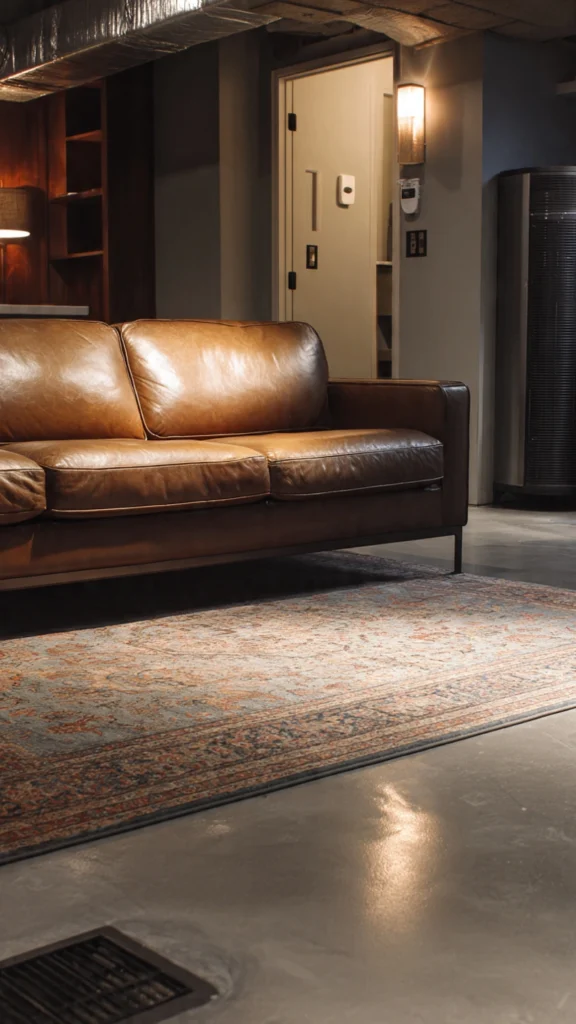
Flooring is where many basement dreams break. A modern barndominium basement needs surfaces that handle moisture swings, heavy use, and temperature differences. Polished concrete is a natural fit for the barndo aesthetic—industrial, clean, and nearly indestructible. With the right sheen level, it looks high-end rather than shiny. Add rugs for comfort and sound control, and you get a floor that survives boots, pets, workouts, and movie nights.
If you want warmth underfoot, radiant heating pairs beautifully with concrete. It turns the “cold basement” stereotype into a cozy surprise, especially in winter climates. The comfort shows up in the design decisions, too: you can use slimmer rugs, sit on the floor with kids, or create a yoga space without feeling like you’re in a garage. For Pinterest readers, it’s also a strong “luxury upgrade” talking point.
Engineered options can work, but choose carefully. Many floating vinyl or laminate products claim waterproof performance, yet they still need a dry, properly prepared slab. The unusual case succeeds because it respects building science: vapor barriers, sealed cracks, perimeter drainage, and a dehumidification plan. Design is easier when you’re not hiding problems. A beautiful basement is usually a dry basement first, and an aesthetic basement second.
Finishing touches matter. Baseboards should be moisture-aware, trim should be clean and minimal, and transitions should feel intentional. Consider flush vents, concealed access panels, and a consistent finish palette. When the “technical” elements are designed, they stop reading as compromises. The result is a basement that looks calm, edited, and modern—exactly what performs well in saved pins and inspiration boards.
Idea 5: A Movie Lounge with Real Acoustic Comfort (Not an Echo Chamber)
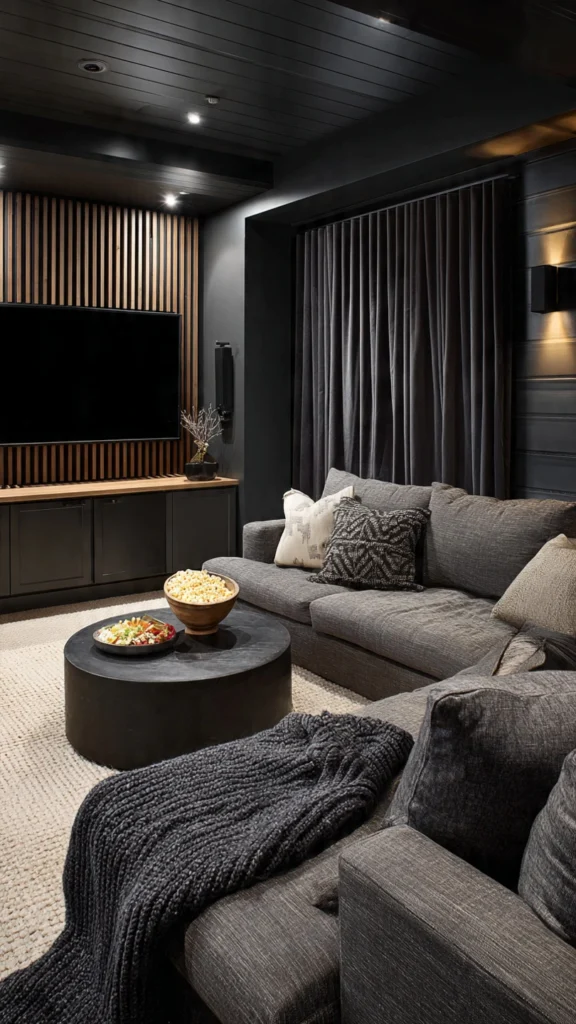
Open-plan barndominiums can be loud, which makes a basement lounge feel like a secret upgrade. The unusual case turns the lower level into a dedicated media room that’s cozy rather than cavernous. Start with sound absorption: rugs, upholstered seating, curtains, and acoustic panels that double as decor. Wood slat panels over felt backing are especially on-brand for modern barndo style, adding warmth without looking like a recording studio.
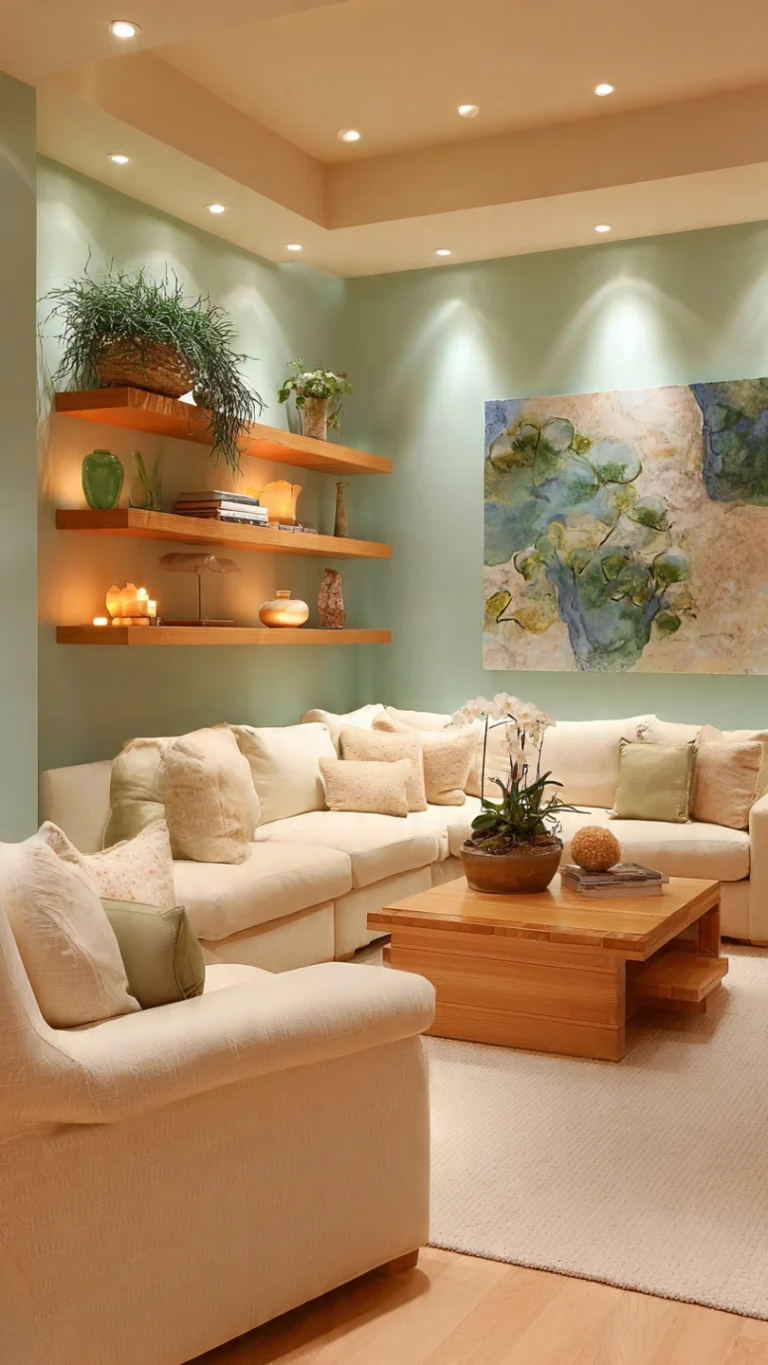
Lighting should be layered and dimmable. Recessed lights alone can feel harsh, so add sconces, cove lighting, or a backlit feature wall behind the screen. Warm, indirect light makes the room feel expensive in photos and in person. Keep ceiling heights in mind: low-profile fixtures, flush mounts, and concealed LED strips prevent the “basement ceiling” from becoming the main character.
Layout is everything. Float the sectional if you can, rather than pushing everything against walls. That single move makes the room read like a living room, not a rec room. Add a narrow console behind the sofa for charging stations and drinks, and consider built-in storage to hide cables, controllers, and board games. When clutter disappears, the room photographs like a styled shoot.
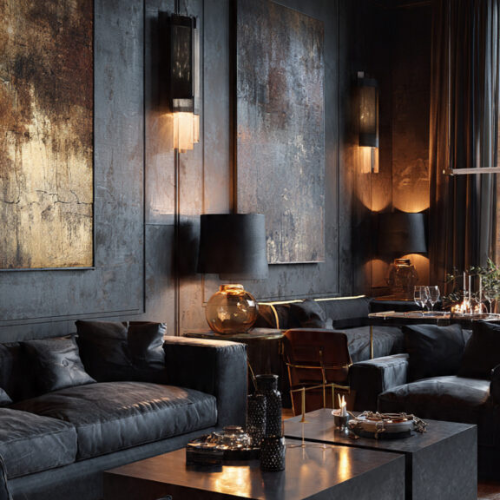
To keep the barndominium identity, repeat exterior finishes subtly: matte black accents, warm wood tones, and simple shapes. Avoid overly themed decor. Instead, lean into texture—bouclé pillows, woven rugs, leather accents, and a few oversized prints. The best pins aren’t busy; they’re balanced. This kind of basement lounge becomes a mood board for “cozy modern” without losing the home’s industrial roots.
Idea 6: The Basement Gym That Doesn’t Feel Like a Storage Room
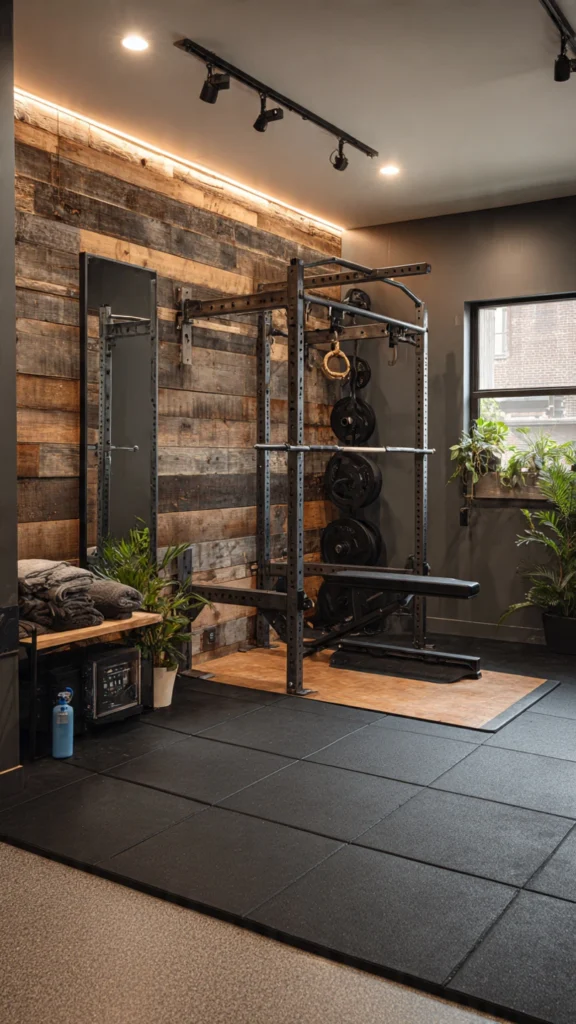
A basement gym is common, but a basement gym that feels designed is unusual—in the best way. The modern barndominium approach treats fitness like part of lifestyle design. Choose durable flooring first, like rubber tiles or rolled rubber, and frame the space with clean baseboards and strong lighting. If you plan for mirrors, place them to reflect the brightest area or window, instantly making the room feel bigger and more energetic.
Storage is what separates “gym” from “dumping ground.” Wall-mounted hooks for bands, a vertical rack for mats, and a closed cabinet for supplements keep the space visually calm. Pinterest-friendly gyms are tidy because they’re simple to reset. Add a narrow bench with baskets for towels, and suddenly it’s styled and functional. The barndo aesthetic shows up naturally with black hardware, steel shelving, and warm wood accents.
If you want an unusual twist, add recovery features in a small corner: a compact sauna, an infrared panel, or even a cold-plunge-ready waterproof zone if your plumbing allows. You don’t need a spa wing—just a deliberate, well-lit corner that reads as “wellness.” That’s a strong pin hook because it turns a typical basement room into something aspirational and story-worthy.
Ventilation and humidity control are the quiet heroes here. Workouts create moisture, and basements already manage moisture by nature. Plan a ventilation strategy so the room stays fresh, and include a dehumidifier that’s properly sized and discreetly placed. When air feels clean, the gym gets used more. A gym that gets used stays tidy, and a tidy gym is exactly what people want to save.
Idea 7: A Guest Suite That Feels Like a Boutique Stay
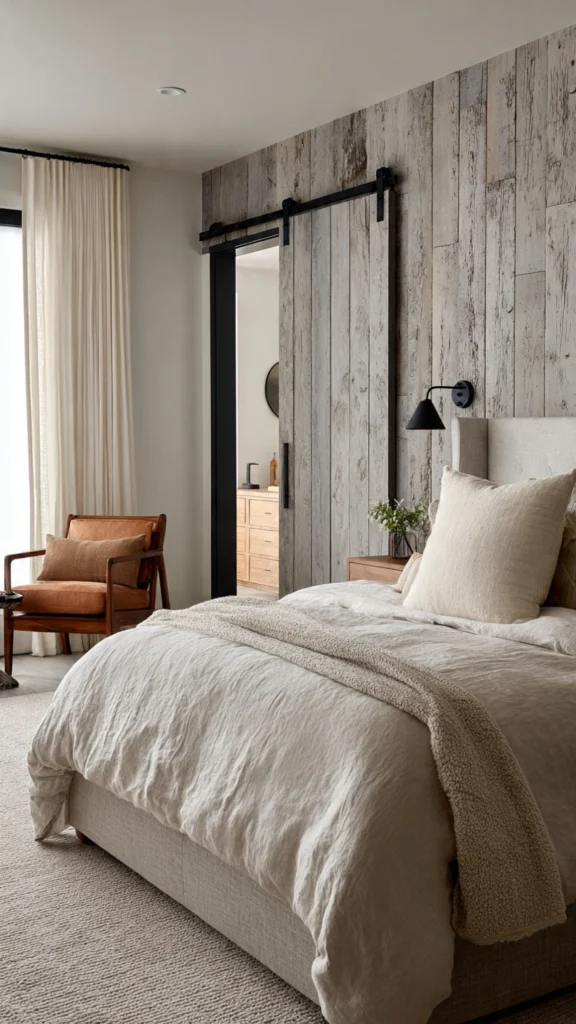
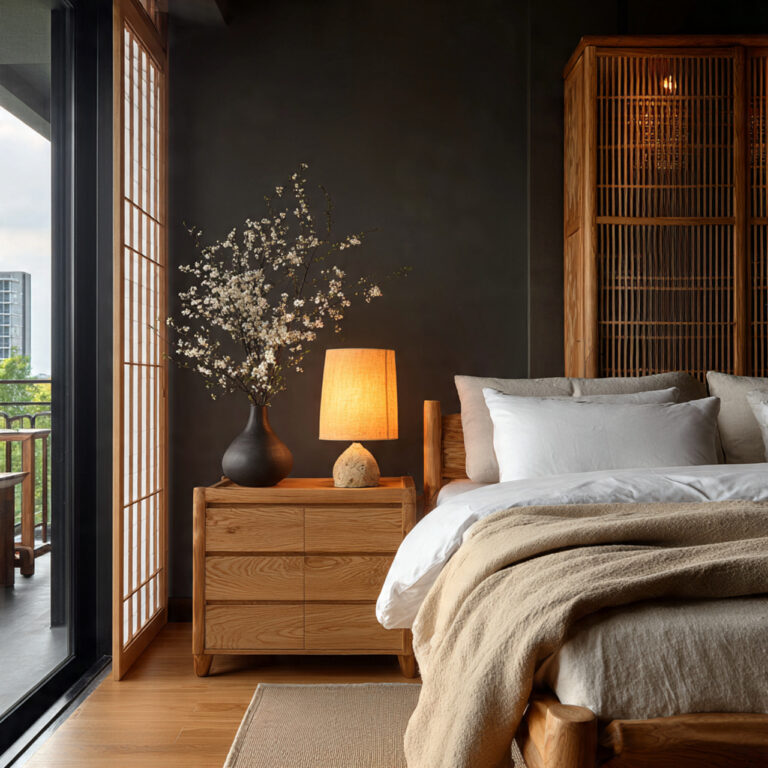
Turning a barndominium basement into a guest suite is a smart way to add privacy for visitors and flexibility for your household. The unusual case makes the suite feel intentional, like a boutique rental rather than a spare room. Start with the basics: a real headboard, layered bedding, proper bedside lighting, and a rug that anchors the bed. These details photograph well and also make guests feel genuinely welcomed.
Color palette is your best tool. Basements often look better with warm, grounded tones—soft taupe, clay, muted olive, or warm cream—paired with black accents that match modern barndo window frames. Avoid overly cool grays, which can look dull under artificial lighting. Add texture through linen curtains, woven baskets, and a tactile throw. Pinterest readers respond strongly to “cozy but elevated” styling.
If you can include an ensuite bath, keep it consistent with the home’s overall vibe: black fixtures, simple tile choices, and warm wood. Even a compact bathroom can feel upscale with thoughtful lighting and a niche shelf. Make sure the bedroom has code-compliant egress if it’s legally considered a sleeping room. That’s not just a detail—it’s what makes the space safe and truly livable.
Finish with small hospitality touches: a mirror near the door, a luggage bench, a carafe and glasses, and hooks for jackets. These are the details people notice in photos because they tell a story. A basement guest suite isn’t just “extra space.” Done well, it becomes a destination that makes your home feel bigger, calmer, and more flexible for every season of life.
Idea 8: A Craft Studio + Storage Wall That Makes Organization Look Beautiful
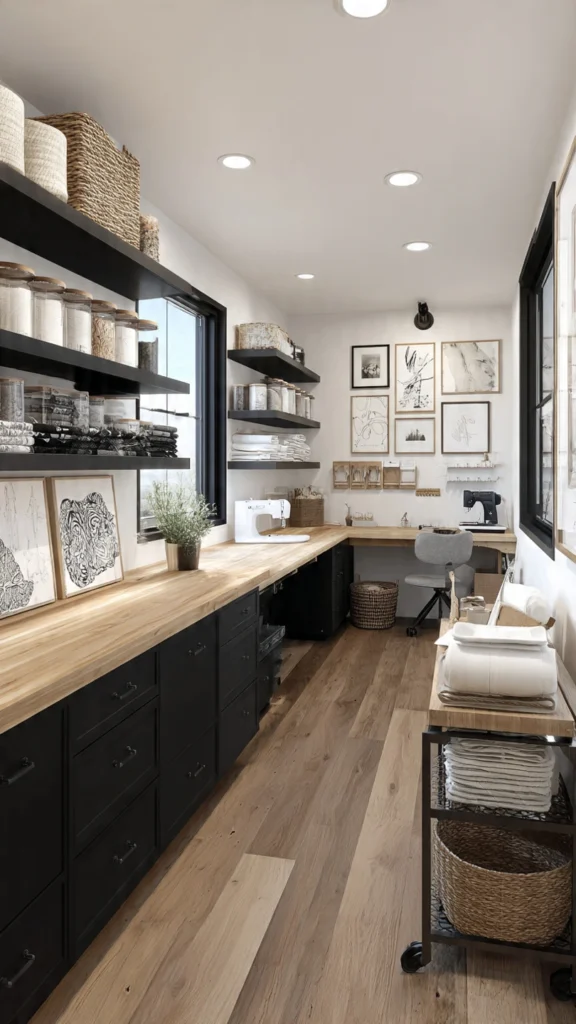
The modern barndominium basement is an ideal place for messy creativity—painting, sewing, woodworking projects, or a home business—without taking over the main floor. The unusual case is when the studio looks as good as it functions. Start with one continuous work surface, preferably wall-to-wall, so the room reads like a built-in. Butcher block adds warmth and ties into the barndo’s wood-and-metal identity.
Organization becomes decor when it’s consistent. Choose matching jars, bins, and labels, and limit your visible color palette so the space feels calm in photos. A pegboard can look modern if you keep the layout tidy and repeat black hooks. Open shelves work best when you treat them like a styled display: a few practical items, a few beautiful objects, and enough negative space for breathing room.
Lighting should be bright and accurate. Mix overhead lights with under-shelf LEDs or task lamps so you can work at night without harsh shadows. If your basement has even one generous window, place the main work area near it. Natural light makes the room feel legitimate, like a professional studio. It also makes it easier to keep the space inviting rather than purely utilitarian.
Add a storage wall for seasonal decor, tools, and overflow household supplies. Closed cabinets at the bottom hide visual clutter, while open shelves above keep frequently used items accessible. In Pinterest terms, this is a high-saves space because it promises a lifestyle: creative time that doesn’t require a full cleanup every time. The room becomes a controlled, beautiful system rather than a chaotic catch-all.
Idea 9: Pantry, Canning Room, and Storm Safety—A Surprisingly Perfect Combo
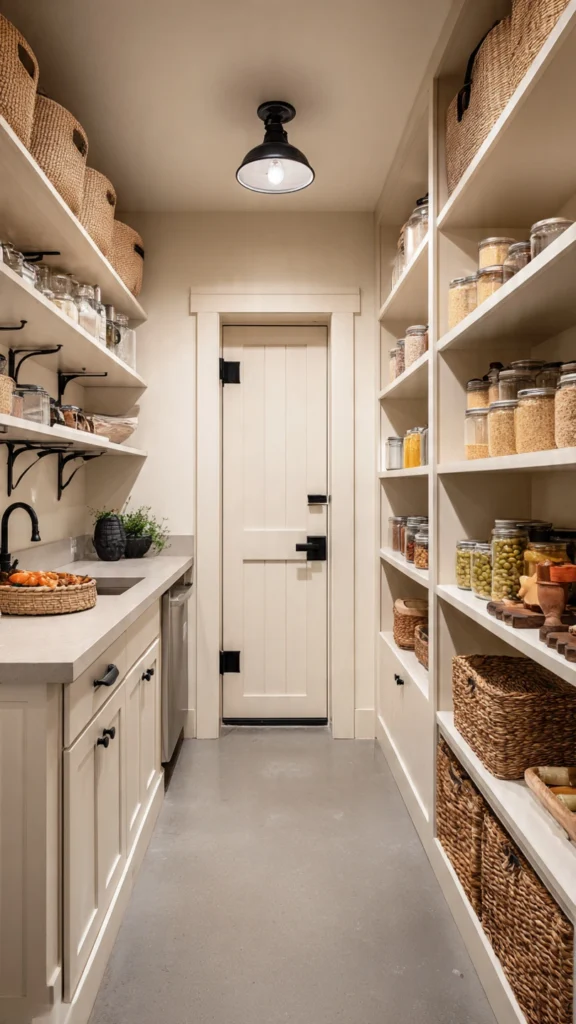
Barndominiums often prioritize big kitchens, but a basement can quietly become the real food-storage powerhouse. The unusual case is a lower-level pantry that also supports storm preparedness. Basements naturally stay cooler, which helps with storing bulk items, beverages, and canned goods. With strong shelving and a dedicated counter, it can double as a canning room, baking supply hub, or overflow refrigerator zone during holidays.
Design it like a store, not a closet. Use consistent containers, clear labels, and shelves deep enough for bins but not so deep that items disappear. A small sink is a major upgrade if plumbing allows, making cleanup easy and enabling food prep without running upstairs. Keep finishes moisture-tolerant: sealed concrete, painted shelving, and hardware that won’t rust in humid seasons.
If storms are a concern, consider integrating a reinforced safe room area. The key is to make it blend into the design so it doesn’t feel alarming or out of place. A solid door can be disguised with a matching paint color, cabinetry panels, or a simple trim detail. Safety features can coexist with beautiful design when you plan them early, rather than treating them like last-minute add-ons.
This kind of basement space resonates on Pinterest because it feels smart and responsible while still being aesthetic. It’s also highly replicable: even if someone doesn’t need a storm shelter, they can copy the pantry layout, labeling approach, and shelving style. The takeaway is that “practical” doesn’t have to mean ugly. In fact, the most pinned spaces are often the most functional ones.
Idea 10: The Final Layer—Styling, Tech, and “Basement-Proof” Finishing Touches
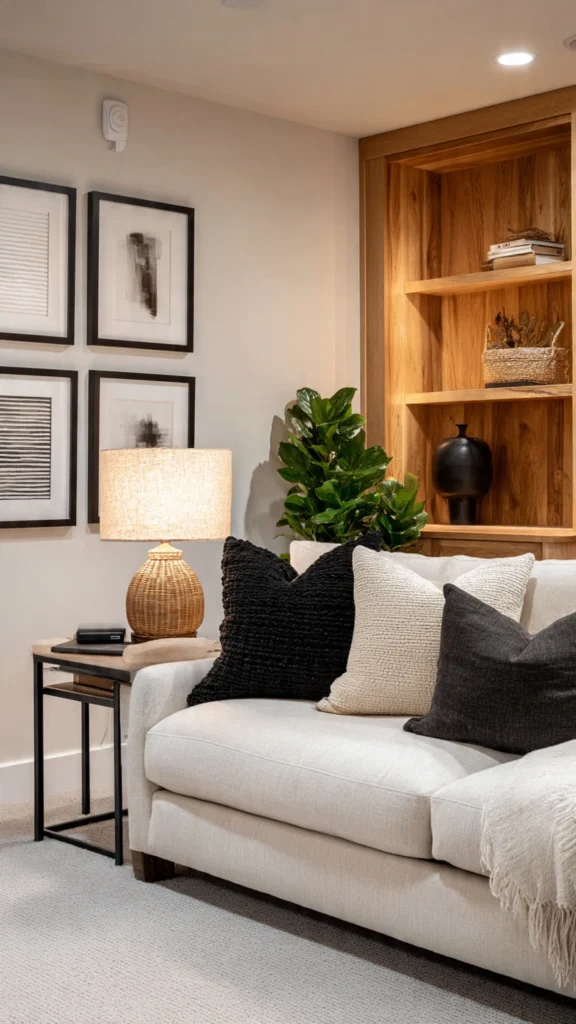
What makes this modern barndominium basement unusual is that it finishes like a main-floor space. That means paying attention to the “boring” elements: HVAC vents aligned neatly, returns placed strategically, doors that match the home’s style, and trim profiles that look intentional. If you can, use taller baseboards and solid-core doors to increase the sense of quality. These details don’t scream for attention, but they elevate every photo.
Smart tech can help the basement feel effortless. A humidity sensor, smart thermostat scheduling, and leak detectors near mechanical areas reduce stress and protect your finishes. Consider a discreet network closet or structured wiring panel if the basement hosts media and workspaces. Good Wi‑Fi coverage is a design feature now, because it determines whether the lounge, studio, and guest suite actually get used the way you imagined.
Decor choices should respect the basement’s lighting conditions. Choose art with strong contrast, rugs with pattern or texture, and a cohesive palette that works under warm LEDs. Large-scale pieces usually look better than lots of small items, especially in lower ceilings. Plants can work if there’s daylight, but pick varieties that tolerate lower light or use high-quality grow lights. A styled basement should feel calm, not crowded.
Finally, create one signature moment: a built-in bar nook, a fluted-wall feature, a fireplace-style media wall, or a sculptural light fixture. Pinterest loves a focal point because it gives the viewer a clear idea to copy. In the unusual case of a modern barndominium basement, that focal point proves the entire concept—this isn’t extra space you settled for. It’s a designed level you’ll miss when you’re upstairs.