Warm Southwestern Desert Hallway Homes
The hallway is often the most overlooked space in home design, yet it serves as the connecting thread between all your living spaces. When infused with warm Southwestern desert aesthetics, these transitional spaces transform into stunning galleries that celebrate the rich cultural heritage and natural beauty of the American Southwest. From terracotta tiles to handcrafted textiles, discover how to bring the warmth and soul of desert living into your hallway.
1. Terracotta and Saltillo Tile Foundation
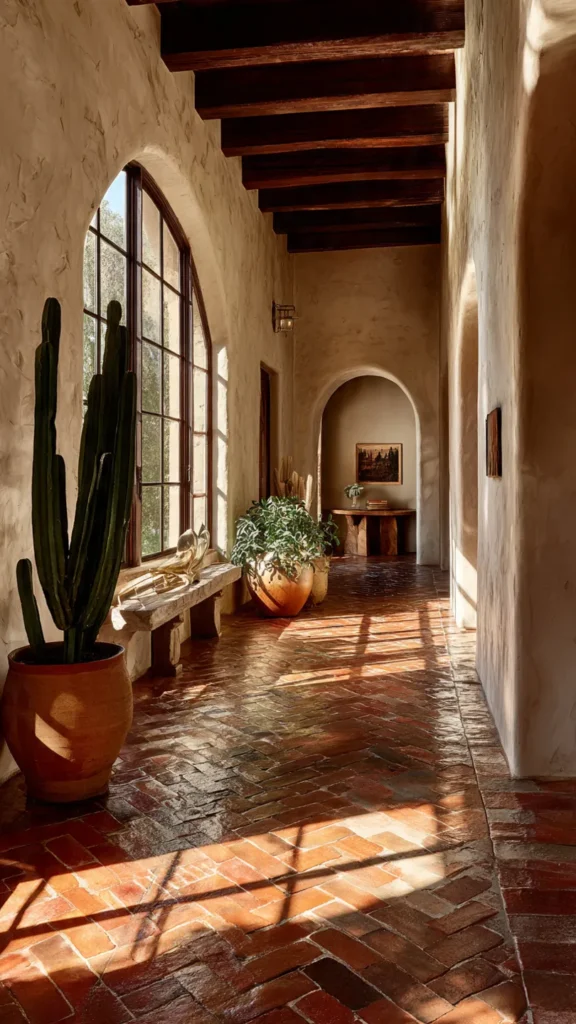
The foundation of any Southwestern hallway begins beneath your feet. Terracotta and Saltillo tiles bring immediate warmth and authenticity to your space with their sun-baked hues ranging from pale honey to deep rust. These handcrafted tiles, traditionally made in Mexico, feature natural variations in color and texture that tell a story of artisan craftsmanship. Each tile is unique, creating a floor that feels alive and organic rather than manufactured and sterile.
Installing these tiles creates an instant connection to centuries of Southwestern architectural tradition. The earthy tones work harmoniously with both traditional and contemporary design elements, making them incredibly versatile. Consider laying them in a diagonal pattern to visually widen a narrow hallway, or use contrasting grout colors to highlight their geometric beauty. The natural coolness of terracotta also provides practical benefits in warmer climates, keeping your hallway comfortable year-round.
To enhance the authentic desert feel, pair your terracotta floors with a hand-knotted wool runner in traditional Southwestern patterns. The contrast between the hard, cool tiles and soft, warm textiles creates sensory interest while protecting high-traffic areas. Choose runners featuring geometric designs inspired by Native American weaving traditions in colors that echo the desert landscape: burnt orange, turquoise, warm cream, and deep chocolate brown.
2. Adobe-Inspired Wall Treatments
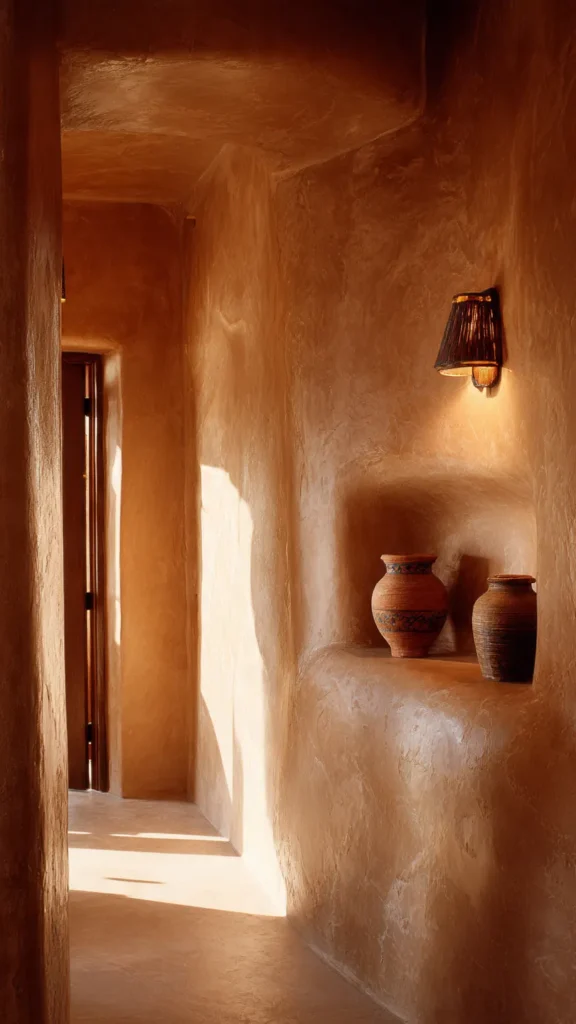
Adobe architecture defines Southwestern design, and bringing those soft, organic wall treatments into your hallway creates immediate warmth. Traditional adobe walls feature rounded corners, subtle undulations, and a hand-troweled finish that catches light beautifully throughout the day. You don’t need actual adobe bricks to achieve this look; Venetian plaster or specialized textured paints can replicate the appearance while meeting modern building codes and offering easier maintenance.
The color palette for adobe-inspired walls should draw from the desert landscape itself. Think warm sand, pale terracotta, soft cream, or the golden hue of sunbaked earth. These neutral tones provide a perfect backdrop for displaying Southwestern art and artifacts while creating a sense of warmth and enclosure. The slightly irregular surface texture adds depth and interest, preventing the monotony that can plague long, narrow hallways.
Consider incorporating traditional niches or hornacinas into your wall design. These small carved alcoves, often featuring arched tops, serve as perfect display spaces for pottery, candles, or small sculptures. In traditional adobe homes, these niches held religious icons, but in modern interpretations they showcase personal treasures and create focal points along the hallway’s length. The play of shadow and light within these recessed spaces adds architectural interest and visual rhythm.
3. Exposed Wood Beam Ceilings (Vigas and Latillas)
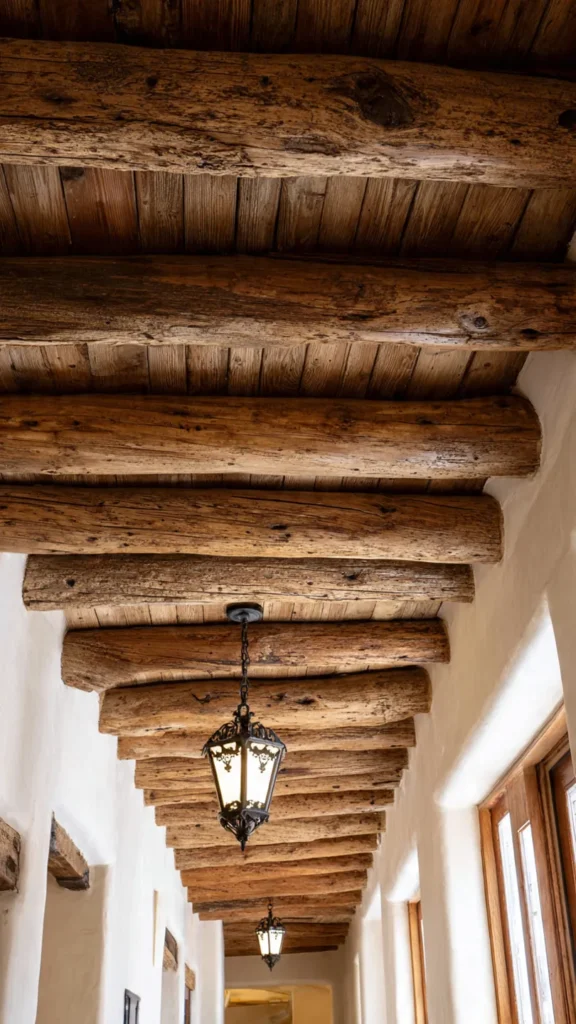
Nothing captures the essence of Southwestern architecture quite like exposed ceiling beams. Traditional vigas are large, round beams made from tree trunks, often extending through exterior walls with their ends visible from outside. Latillas are smaller saplings or branches arranged in decorative patterns between the vigas, creating beautiful geometric designs overhead. This structural element turned decorative feature brings rustic warmth and visual interest to what is often a forgotten ceiling plane.
Installing authentic vigas creates dramatic architectural interest in your hallway while drawing the eye upward and making the space feel larger. The natural wood tones ranging from honey blonde to deep chocolate brown add warmth without overwhelming the space. If authentic timber vigas aren’t feasible, quality faux beams made from lightweight polyurethane offer a convincing alternative that’s easier to install and more budget-friendly while still delivering visual impact.
The latilla patterns between vigas offer an opportunity for creativity. Traditional arrangements include herringbone, diagonal, or brick patterns, each creating different visual effects. These smaller branches add texture and complexity to your ceiling design while maintaining the organic, handcrafted quality essential to Southwestern style. The interplay of light and shadow across the latillas throughout the day creates ever-changing patterns that bring life to your hallway.
4. Wrought Iron and Metal Accents
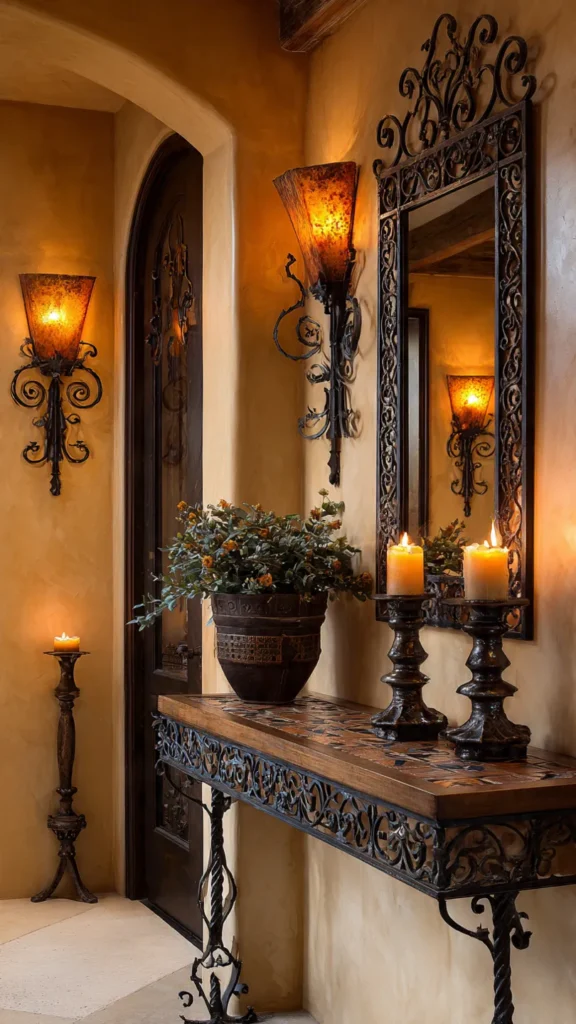
Wrought iron brings essential contrast and drama to the warm, earthy tones of Southwestern design. Hand-forged iron fixtures, from light sconces to curtain rods, introduce dark linear elements that ground the space and prevent it from feeling too soft or monotonous. The craftsmanship visible in quality wrought iron pieces adds another layer of artisan authenticity, celebrating the metalworking traditions that have flourished in the Southwest for centuries.
Look for wrought iron pieces featuring traditional Southwestern motifs such as geometric patterns, scrollwork, or stylized desert flora and fauna. Wall sconces with amber or mica shades cast a warm, flattering glow perfect for hallway lighting while the decorative ironwork creates beautiful shadow patterns on textured walls. Consider a wrought iron console table as a functional landing spot for keys and mail that also serves as a sculptural element in the space.
Don’t overlook smaller metal accents like door hardware, picture frame hooks, or decorative wall grilles. These details, though small, contribute significantly to the overall cohesiveness of your design. Aged or hand-hammered finishes on metal elements add character and prevent the sleek, industrial feel that polished metals can introduce. The goal is to evoke the work of traditional blacksmiths rather than modern manufacturing, connecting your hallway to centuries of Southwestern craft traditions.
5. Colorful Talavera Tile Accents
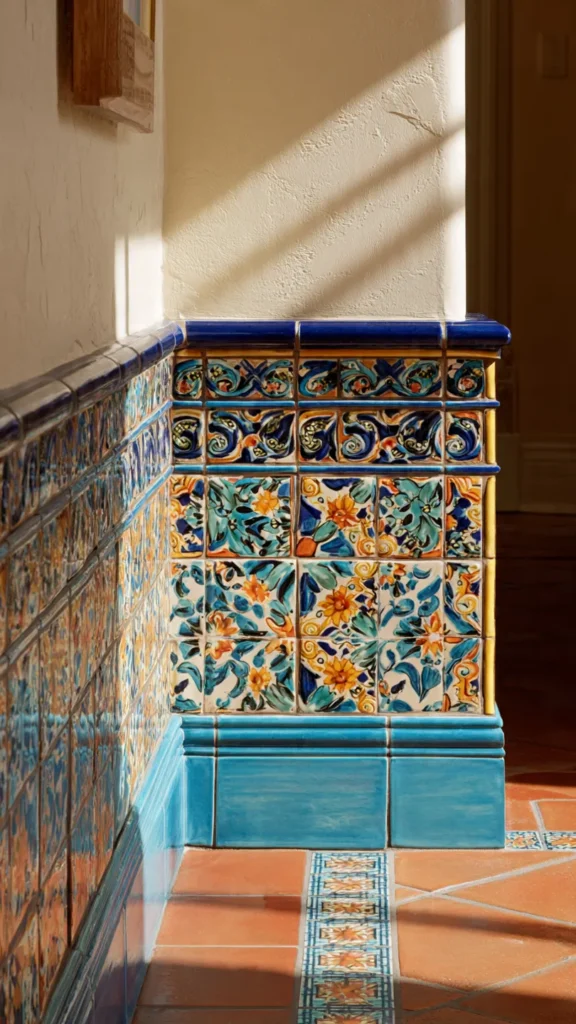
Talavera tiles bring vibrant color and intricate pattern to Southwestern hallways, offering a perfect counterpoint to earthy neutrals. These hand-painted ceramic tiles from Puebla, Mexico, feature bold colors and elaborate designs that range from geometric to floral motifs. While terracotta provides your foundational warmth, Talavera tiles introduce the brilliant blues, yellows, greens, and oranges that evoke Southwestern sunsets, turquoise jewelry, and blooming desert cacti.
Strategic placement of Talavera tiles creates maximum impact without overwhelming your hallway. Consider a decorative border at chair rail height running the length of your hallway, individual tiles interspersed randomly among plain terracotta floor tiles, or a stunning focal point around a doorway or niche. The glossy glazed surface of Talavera tiles catches light beautifully, creating jewel-like accents that draw the eye and add sophisticated color to your space.
Mix and match different Talavera patterns for an authentic, collected-over-time appearance rather than using perfectly matching sets. This approach mirrors traditional Southwestern homes where tiles were acquired gradually and reflects the handmade nature of these artisan pieces. The slight variations in glaze and pattern that occur in hand-painted tiles add character and ensure your hallway has a unique, personal quality that mass-produced materials simply cannot achieve.
6. Native American Textile and Rug Displays
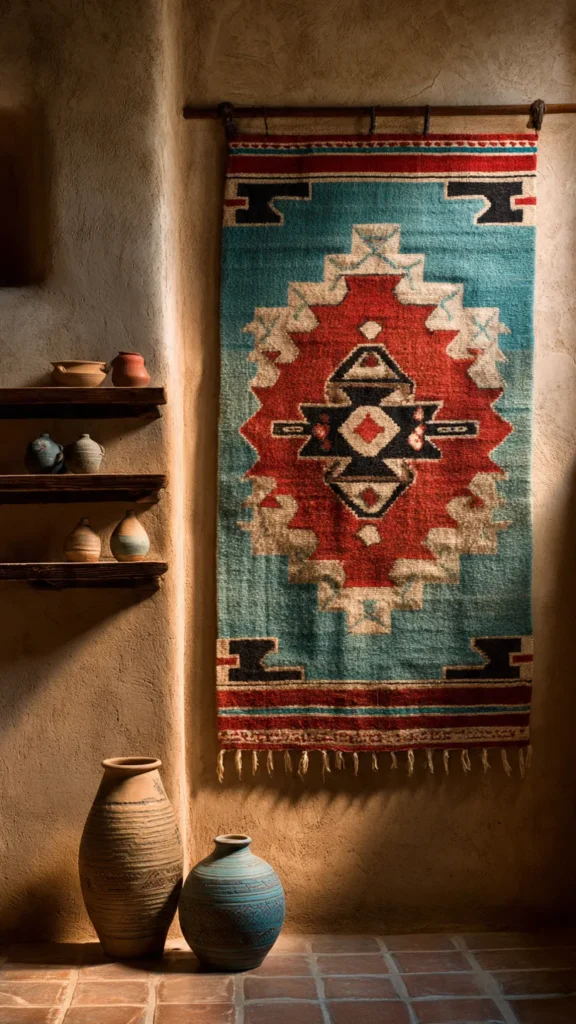
Native American textiles represent some of the world’s most sophisticated weaving traditions, and displaying them in your hallway honors this artistry while adding warmth and cultural depth. Navajo rugs, Zapotec weavings, and Chimayo textiles feature bold geometric patterns and natural dye colors that perfectly complement Southwestern architecture. These pieces serve as focal points and conversation starters while adding essential softness and texture to balance the hard surfaces of tile and plaster.
When displaying textiles on hallway walls, use proper mounting techniques that preserve the integrity of these valuable pieces. Wooden rods with leather loops or Velcro attachments distribute weight evenly and prevent damage. Position textiles away from direct sunlight to prevent fading, and consider rotating displays seasonally to minimize wear. The vertical display of textiles adds color and pattern at eye level, breaking up long expanses of wall and creating visual interest throughout the hallway’s length.
Floor runners in traditional Southwestern patterns add both beauty and function to your hallway. These woven pieces protect your terracotta tiles in high-traffic areas while introducing pattern and additional color. Look for wool rugs with tight weaves that will withstand foot traffic, and choose colors that either complement or thoughtfully contrast with your wall colors. The interplay between the geometric patterns of the textiles and the architectural elements creates a rich, layered design that feels both collected and cohesive.
7. Desert Plant and Succulent Integration
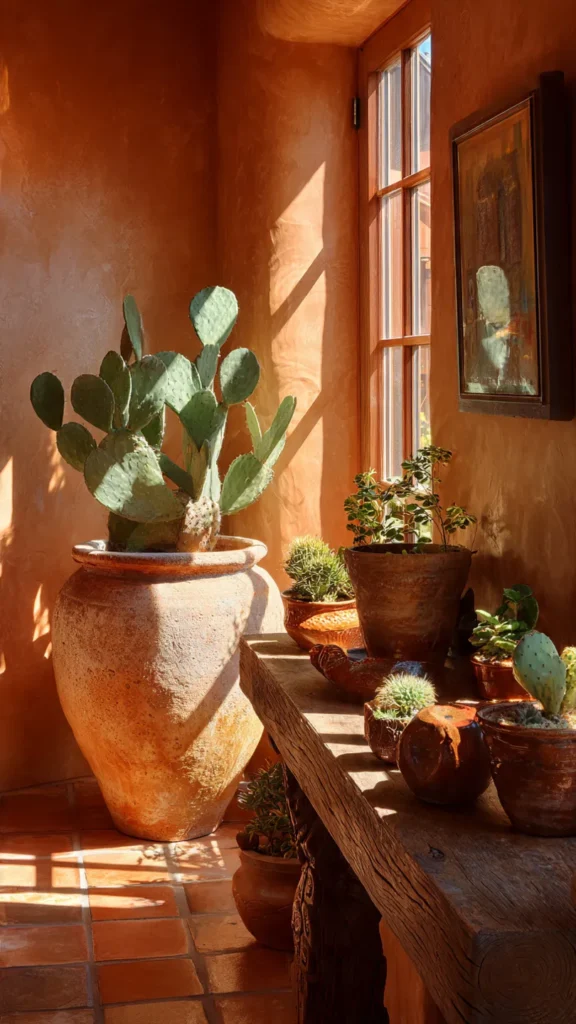
Bringing living desert plants into your hallway creates an immediate connection to the natural Southwestern landscape while adding organic shapes and vibrant greens to your color palette. Cacti and succulents thrive in the bright, dry conditions often found in hallways, making them both beautiful and practical choices. From towering saguaros to compact echeveria rosettes, desert plants offer incredible variety in form, texture, and size to suit any hallway dimension.
Select pottery that enhances your Southwestern theme while providing proper drainage for your plants. Handmade terracotta pots with unglazed finishes allow soil to breathe and wick away excess moisture, essential for succulent health. Consider traditional Mata Ortiz pottery with its distinctive black geometric designs, Talavera planters for colorful accents, or simple rustic terracotta that lets the plants take center stage. Group plants of varying heights to create visual interest and showcase the diversity of desert flora.
Position your desert garden where it will receive adequate natural light, typically near windows or under skylights if your hallway features them. Rotate plants occasionally to ensure even growth, and remember that despite their desert origins, these plants do need regular watering though far less than traditional houseplants. The presence of living, growing plants brings vitality to your hallway and reinforces the connection between your interior design and the magnificent Southwestern landscape that inspires it.
8. Arched Doorways and Window Openings
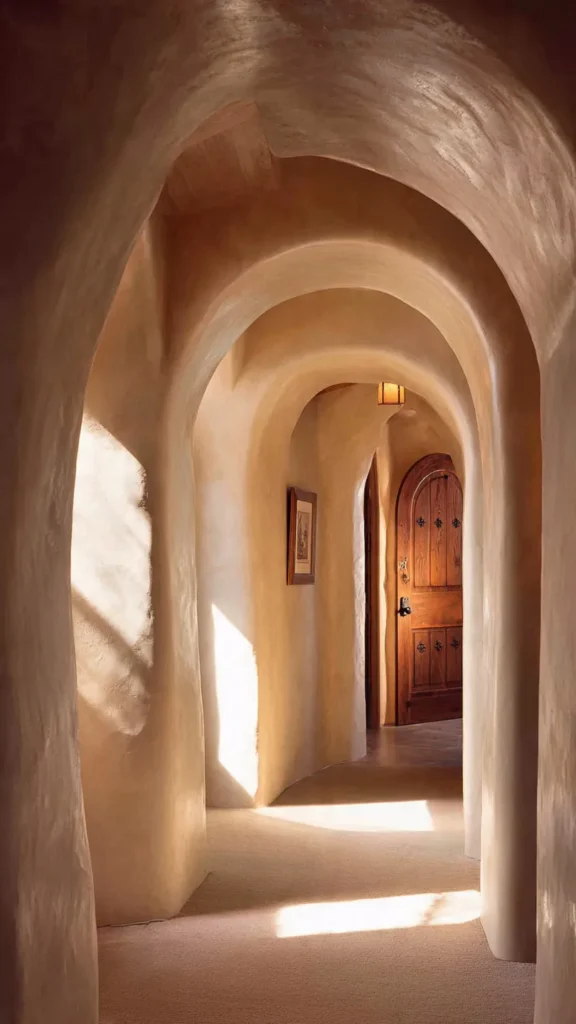
Arched openings represent one of the most distinctive architectural features of Southwestern design, softening the geometry of rectangular spaces with organic curves that echo the rolling hills and smooth stones of the desert landscape. These graceful transitions between rooms eliminate harsh right angles, creating a flowing, organic feel as you move through your home. The deep wall reveals characteristic of adobe construction add dramatic depth and shadow play to these arched passages.
Creating arched openings in existing hallways requires some construction expertise, but the transformation they bring justifies the investment. The arch itself should have gentle, organic curves rather than perfectly circular geometry, maintaining the handcrafted quality essential to authentic Southwestern style. The thickness of the wall reveal provides an opportunity to display special objects, creating impromptu niches that catch attention as you pass through the hallway toward different rooms.
If full archways aren’t feasible, consider adding decorative arch-topped niches or incorporating arched window openings where possible. Even suggesting the arch form through painted details or decorative molding can evoke the Southwestern aesthetic. The key is creating visual softness and organic flow rather than rigid, angular transitions. This architectural feature works particularly well in homes where hallways connect to living areas, bedrooms, or outdoor spaces, marking transitions while maintaining visual continuity.
9. Leather and Rustic Wood Furniture
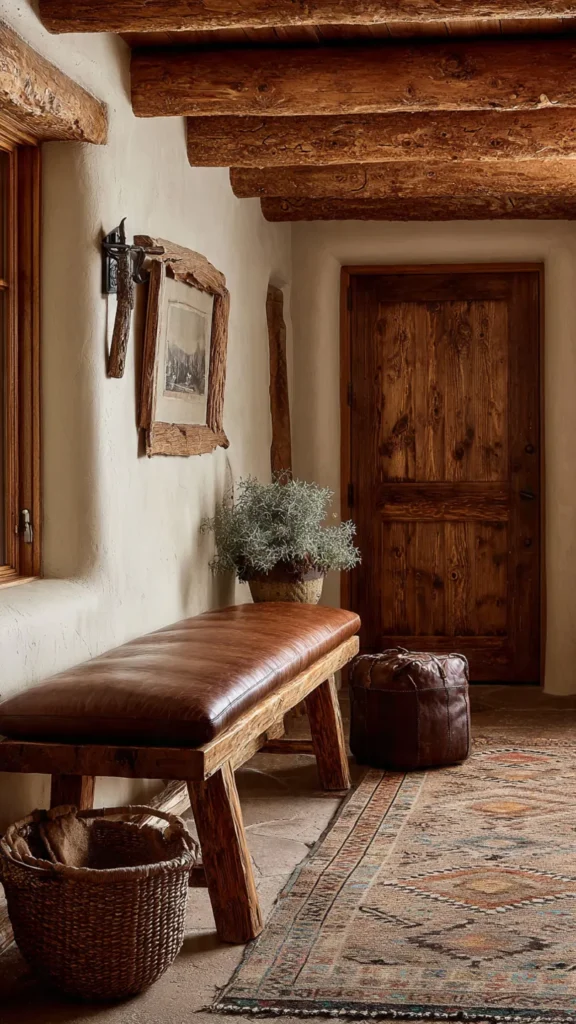
Rustic wood and leather furniture pieces bring essential warmth and functionality to Southwestern hallways while maintaining the organic, handcrafted aesthetic. A sturdy wooden bench provides both seating for removing shoes and a sculptural element that celebrates traditional joinery and woodworking. Look for pieces featuring visible construction techniques like mortise and tenon joints, hand-carved details, or the beautiful imperfections that come from working with natural materials.
Leather elements in rich browns, warm tans, or weathered cognac tones add luxury and durability to your hallway furniture. A leather cushion on a wooden bench provides comfort while introducing textural variety. Leather also appears beautifully in accessories like decorative boxes, magazine holders, or small storage ottomans. The natural material develops a rich patina over time, actually improving in appearance with age and use, making it perfect for high-traffic hallway locations.
Select furniture scaled appropriately for your hallway width, ensuring clear passage while maximizing function. In narrower hallways, a simple console table in distressed wood might be more appropriate than a bench, offering a surface for keys and mail without impeding traffic flow. The furniture should feel substantial and handcrafted rather than delicate or overly refined, maintaining the rustic character essential to Southwestern style while serving practical everyday needs.
10. Mission Style Lighting Fixtures
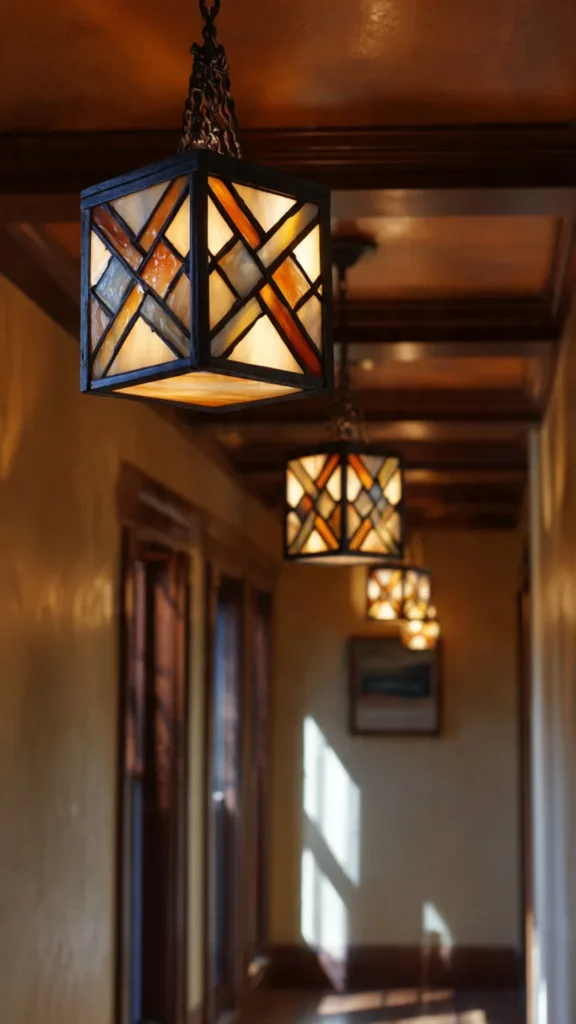
Mission style lighting brings the perfect blend of craftsmanship and clean-lined design to Southwestern hallways. Originating in the American Arts and Crafts movement but deeply connected to Spanish mission architecture, these fixtures feature geometric designs, quality materials, and honest construction that aligns beautifully with Southwestern aesthetics. The warm glow from amber glass panels creates inviting illumination perfect for transitional spaces while the fixtures themselves serve as functional art pieces.
Choose pendant lights for hallways with adequate ceiling height, positioning them to illuminate the length of the corridor without creating obstacles. Wall sconces in mission style provide excellent ambient lighting in lower-ceilinged hallways, mounting at appropriate heights to avoid glare while washing textured walls with flattering light. Look for fixtures featuring hand-hammered metal, art glass panels, or mica shades that diffuse light softly and create gentle patterns on surrounding surfaces.
The geometric patterns common in mission style lighting echo the patterns found in Native American textiles and pottery, creating visual harmony throughout your hallway design. The substantial quality and visible craftsmanship of these fixtures also reinforces the handmade, artisan-focused aesthetic essential to authentic Southwestern style. Proper lighting transforms your hallway from a mere passage into a welcoming space you’ll appreciate every time you move through your home.
11. Hand-Painted Folk Art and Santos
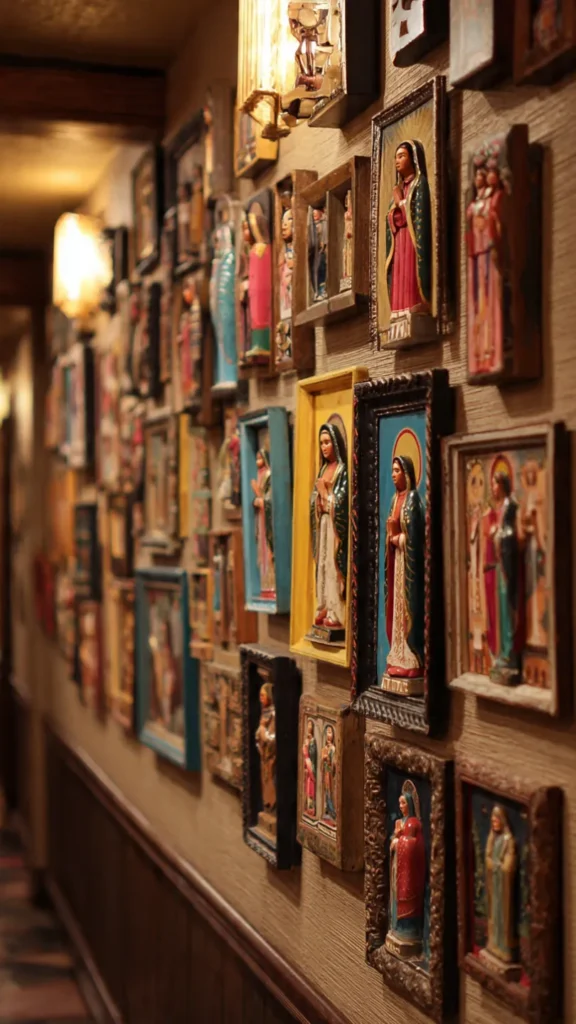
Folk art brings soul and cultural depth to Southwestern hallways, celebrating the region’s rich artistic traditions. Santos, hand-carved and painted religious figures from New Mexico, represent centuries of devotional art and woodcarving skill. Retablos, religious paintings on tin or wood, add color and spiritual dimension to walls. Even if you’re not religious, these pieces represent important cultural heritage and showcase exceptional craftsmanship worthy of display and appreciation.
Beyond religious folk art, consider incorporating painted wooden animals, traditional masks, or contemporary pieces by Southwestern folk artists that continue these traditions with fresh perspectives. The vibrant colors and naive style of folk art provides wonderful contrast to the more refined elements in your hallway, adding authenticity and preventing the space from feeling overly designed or formal. These pieces remind us that Southwestern style celebrates human creativity and spiritual expression.
Create a gallery wall arrangement that feels organic rather than rigidly planned, varying sizes and spacing to create visual interest. Mix folk art with other Southwestern elements like small textiles, crosses, or decorative pottery for a collected, personal display. The key is celebrating these pieces as important cultural artifacts rather than mere decoration, honoring the artists and traditions they represent while bringing their warmth and spirit into your daily life.
12. Natural Stone Accent Walls
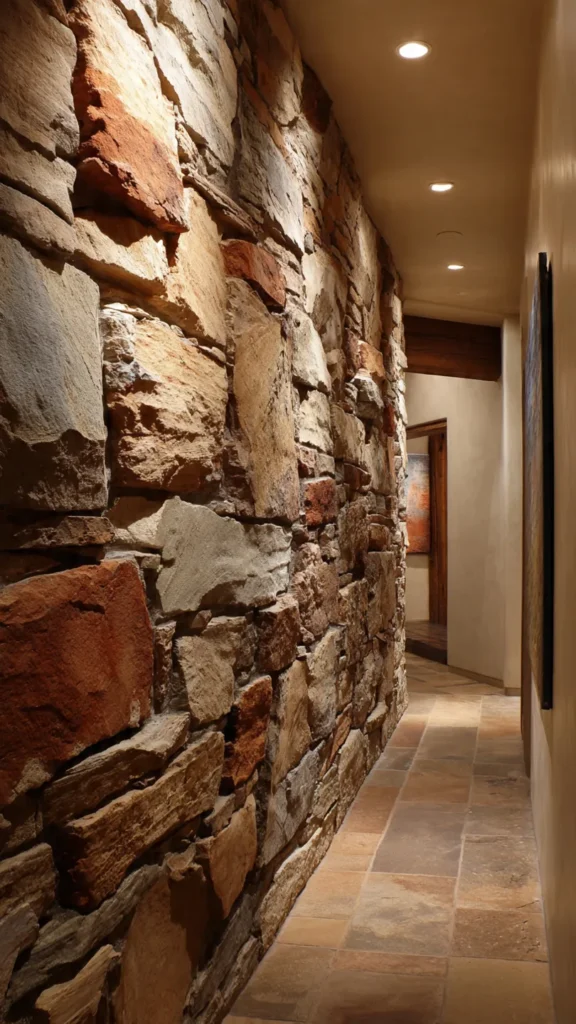
Natural stone introduces raw, elemental beauty to Southwestern hallways while providing textural contrast to smooth plastered walls. Whether using river rock, stacked stone, or cut flagstone, these materials connect your interior directly to the Southwestern landscape. The irregular surfaces create ever-changing patterns of light and shadow throughout the day, adding visual interest and organic beauty that manufactured materials cannot replicate. Stone also brings cooling properties appreciated in desert climates.
Select stones in desert tones ranging from warm tans and honeys to rust reds and soft grays. The natural variation in color and texture prevents monotony while maintaining the warm, earthy palette essential to Southwestern design. Consider using stone on a single accent wall rather than throughout the entire hallway to create maximum impact without overwhelming the space. The contrast between smooth plaster and rough stone adds sophisticated visual interest.
Installation techniques vary from mortared stacked stone to dry-laid flagstone depending on your desired look and structural requirements. Incorporate subtle lighting to highlight the texture and depth of your stone wall, with uplights or downlights creating dramatic shadow play across the irregular surface. The permanence and solidity of stone also communicates the enduring quality of Southwestern architectural traditions, connecting your contemporary home to centuries of building with local natural materials.
13. Pueblo Revival Stepped Details
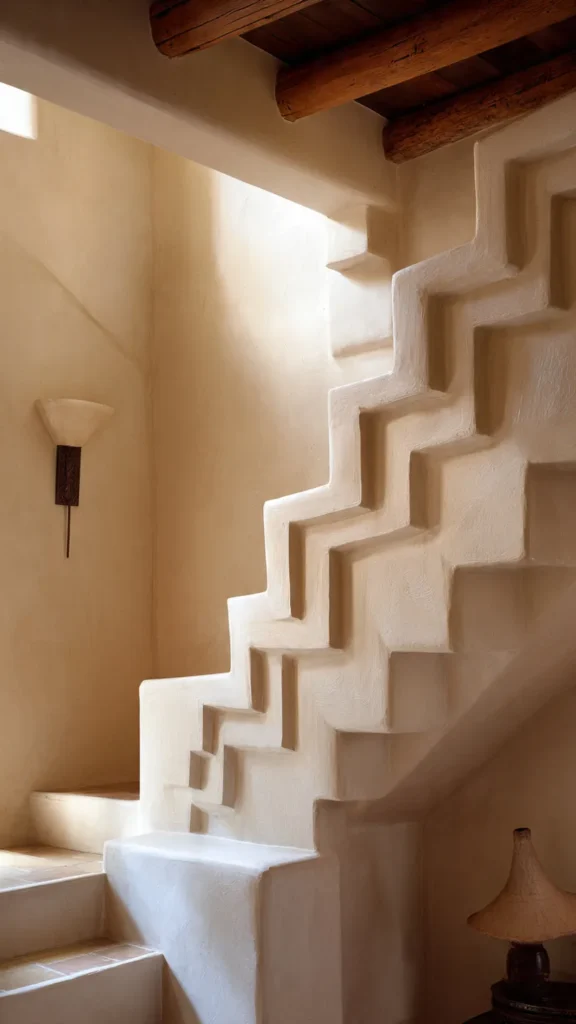
Pueblo Revival architecture draws directly from Native American pueblo structures, incorporating their distinctive stepped geometric forms into modern buildings. These architectural details, whether appearing as decorative parapet outlines, stepped niche surrounds, or geometric ceiling transitions, add authentic cultural references while creating bold visual interest. The clean, angular geometry provides striking contrast to the soft curves of arches and rounded wall corners elsewhere in your hallway.
Incorporate stepped details at the junction of walls and ceilings, creating a decorative crown molding effect that’s distinctly Southwestern. These can be constructed in plaster, wood, or even painted on for a more budget-friendly approach. The strong horizontal and vertical lines create architectural rhythm and draw the eye upward, making hallways feel more spacious. The geometric precision also balances the organic, handcrafted elements found in textiles, pottery, and folk art.
The stepped motif can be repeated throughout your hallway in various scales, from large architectural elements to small decorative details on shelving or door surrounds. This repetition creates visual unity while celebrating the geometric traditions of pueblo architecture. The bold, graphic quality of these stepped forms also photographs beautifully, making your hallway highly shareable on visual platforms while maintaining deep cultural authenticity and architectural significance.
14. Handcrafted Pottery Collections
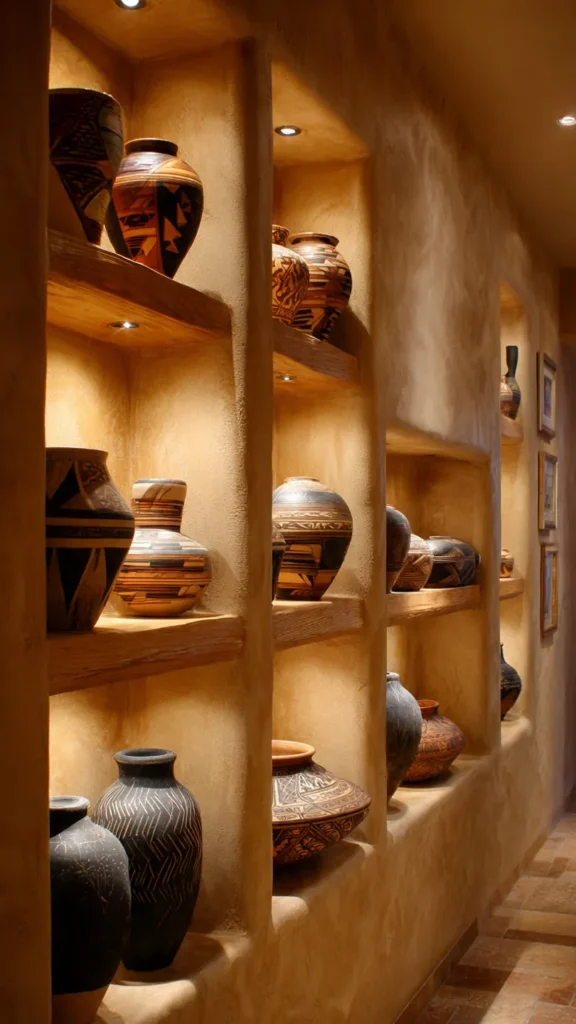
Southwestern pottery represents some of the world’s most sophisticated ceramic traditions, with techniques and designs passed down through generations. Displaying a curated collection in your hallway creates a personal museum that honors these artistic traditions while adding sculptural interest and cultural depth. From the geometric precision of Acoma pottery to the burnished elegance of black-on-black Santa Clara pieces, each pot tells a story of skill, patience, and cultural continuity.
Create display areas that showcase your pottery collection without crowding. Built-in niches at varying heights provide perfect stages for individual pieces, allowing appreciation of each pot’s unique form and decoration. Open shelving offers another option, particularly for larger collections, with careful spacing that prevents visual clutter while creating impact through repetition. Lighting is crucial; position spotlights or LED strips to eliminate harsh shadows while highlighting the curves and surface decoration of each piece.
Mix pottery from different pueblos and time periods to create a collection that shows the breadth and evolution of Southwestern ceramic arts. Include both traditional and contemporary pieces, demonstrating that these are living traditions continuing to evolve. The earthy clay bodies and natural pigments used in traditional pottery harmonize perfectly with your hallway’s color palette while the sculptural forms add three-dimensional interest. Rotating your display periodically keeps the hallway feeling fresh while protecting valuable pieces from excessive light exposure.
15. Warm Ambient Lighting Layers
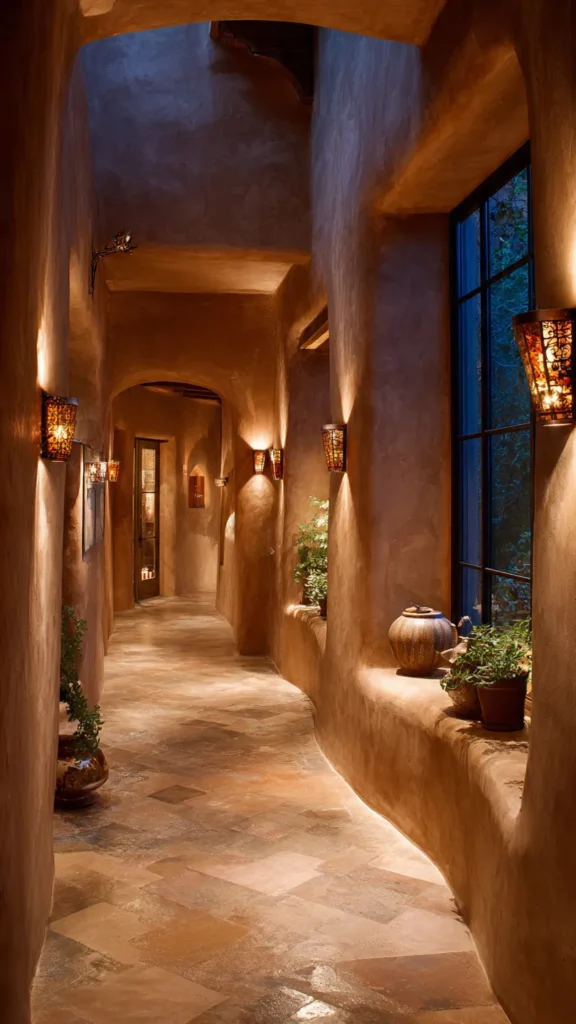
Layered lighting transforms Southwestern hallways from mere passages into welcoming spaces with ambiance and depth. Rather than relying on a single overhead fixture, combine ambient, task, and accent lighting to create flexibility and atmosphere. Warm color temperatures around 2700K-3000K enhance the earthy tones of terracotta, wood, and plaster while creating the golden glow associated with Southwestern sunset light that makes these spaces so appealing.
Ambient lighting provides overall illumination without harsh shadows or glare. Consider cove lighting hidden behind vigas or in ceiling details that wash walls with soft, indirect light. This approach highlights the texture of plastered walls and stone accents while avoiding the institutional feel of ceiling-mounted fluorescent fixtures. Dimmer controls allow you to adjust light levels throughout the day, from bright and energizing in morning to soft and relaxing in evening.
Accent lighting showcases your hallway’s special features, from pottery collections to textile displays. Small LED spotlights or picture lights draw attention to artworks and create focal points along the hallway’s length. Wall sconces provide decorative elements while contributing practical illumination, and their placement at intervals creates visual rhythm. The interplay of these lighting layers throughout the day adds drama and interest, ensuring your hallway never feels static or boring despite being a transitional space.
Conclusion: Creating Your Southwestern Sanctuary
Transforming your hallway with warm Southwestern desert design elements creates more than just a passage between rooms; it establishes a beautiful transitional space that celebrates cultural heritage, natural materials, and artisan craftsmanship. Each element, from terracotta tiles beneath your feet to exposed vigas overhead, contributes to an aesthetic that’s simultaneously timeless and deeply rooted in a specific place and culture. The warm, earthy palette creates psychological comfort while the handcrafted details add soul and authenticity impossible to achieve with mass-produced materials.
The beauty of Southwestern hallway design lies in its flexibility and scalability. Whether you’re working with a grand entrance hall or a modest corridor, these principles adapt to your space and budget. Start with foundational elements like paint color and flooring, then layer in architectural details, lighting, and decorative elements as time and resources allow. The collected, evolved-over-time quality that results will feel more authentic than a space decorated all at once.
Remember that the most successful Southwestern hallways balance multiple elements without becoming cluttered or theme-park-like. Select pieces you genuinely connect with, whether that’s a stunning piece of pottery, a beautiful textile, or the perfect wrought iron sconce. Quality always trumps quantity in creating spaces with lasting appeal. Your hallway should reflect your personal journey and taste while honoring the rich cultural traditions that inspire Southwestern design.
As you develop your Southwestern hallway, consider it an ongoing project rather than a finished space. Add to your pottery collection, rotate textile displays seasonally, refresh plantings, or adjust lighting as needed. This living, evolving approach keeps your hallway interesting while preventing the stagnation that can occur in transitional spaces. Most importantly, create a hallway that makes you smile every time you walk through it, a space that welcomes you home and celebrates the warm, authentic beauty of Southwestern desert living.